Nonfunctional grass fills landscape voids




Q. This new law about removing “nonfunctional” grass or lawns has got me stumped. Where do I start to figure out the water use of my landscape?
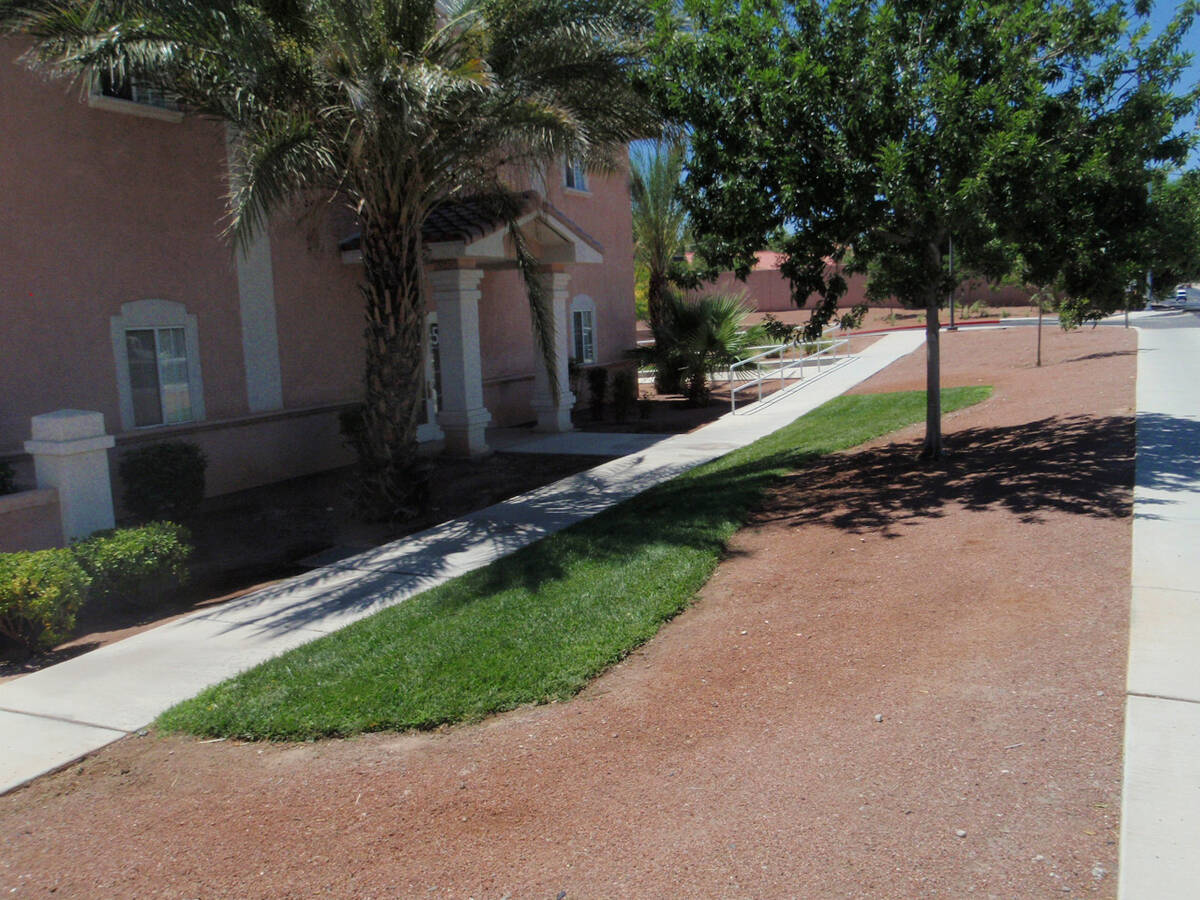
A. “Nonfunctional” lawns are lawns that fill the voids or extra spaces in a landscape design. These voids are like the spaces between your fingers. Our concern is on the fingers (trees and shrubs), not using water in the spaces between them (voids). Nonfunctional lawns aren’t used for anything except beauty or aesthetics in a landscape. Fill landscape voids with nonwater using artwork, fences, structures, boulders, mounds and elevation changes. In my opinion, the use of lawns to fill voids speaks to a lack of creativity and under-appreciation of where we live.
Other nonfunctional lawns are used on slopes or small areas as an inexpensive way to address difficult parts of a landscape design. Functional lawns, on the other hand, are typically flat, square or rectangular and provide a relatively safe surface for roughhousing and play. One of the purposes of community parks and schools is to provide permanent safe play areas.
Lawn grass requires 5 ½ to 7 ½ feet of water every year. By the time water losses are added in for normal irrigation practices, leaks, runoff and puddling, the amount applied climbs (conservatively) another 12 to 24 inches every year. This means we must apply 6 ½ to 8 ½ feet of water depending on the type of lawn chosen. A well-managed, 500-square-foot lawn (10 feet wide and 50 feet long) receives anywhere from 28,000 to over 35,000 gallons every year. Lawn areas would be placed into a “very high-water use” category. If these nonfunctional uses for lawns are eliminated, then this amount of water can be saved.
These savings could be gobbled up by choosing the wrong plant or using too many plants in a landscape. All plants need water. Some plants use more than others. Select smaller trees in scale with the home because big plants use more water than small plants. Use fewer trees and large shrubs. Pick plants with a purpose in mind. Shade the south and west walls and windows of a home with deciduous trees or shrubs. Provide shade in high-use outside areas.
Where does your landscape fit? A low-water-use landscape requires an average of 2 feet of water or less over its entire surface each year; a medium-water-use landscape requires 2 to 4 feet of water and a high-water-use landscape uses over 6 feet of water. This means allocating water for shady areas.
Landscape water use accounts for 60 to 70 percent of the gallonage recorded on your water bill. Your July water use invoice helps determine your maximum exterior water use and where your exterior water use fits in this scheme.
Q. What is your opinion about artificial lawns? I’ve heard both positive and negative things about them.
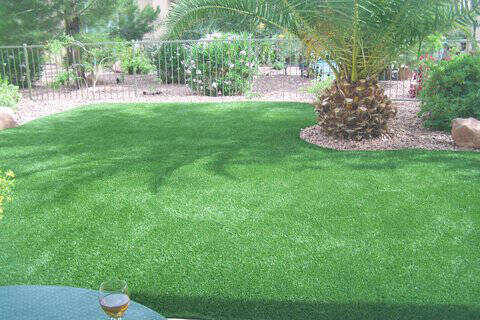
A. Twenty years ago I could spot artificial grass from a long way off. Not anymore. Probably what gives high-quality artificial lawns away now is their perfection. Depending on its quality, installation and maintenance, artificial grass can look very good.
Artificial lawns have their good points (they don’t use water or require any sunlight) and their bad points (they get hot). During mid-March through September their surface temperature, just like sidewalks and streets, can reach 170 F in full sun, whereas lawns are cool to the touch. Lawns can transfer these cooler temperatures to the homes they surround (at the expense of irrigation water).
Research has demonstrated that the same cooling effect can be accomplished without a lawn by shading the walls and windows with low-water-use trees and shrubs on the hot sides of the home.
Have a purpose other than beautification for artificial grass that you install. In our climate I would strongly suggest shading artificial grass from early spring to the midfall months. Remember that artificial lawns require regular maintenance and replacement over time. They essentially function like an outdoor carpet.
Q. I can’t decide between a chitalpa and a palo verde for a hot south-facing front yard. What do you suggest?
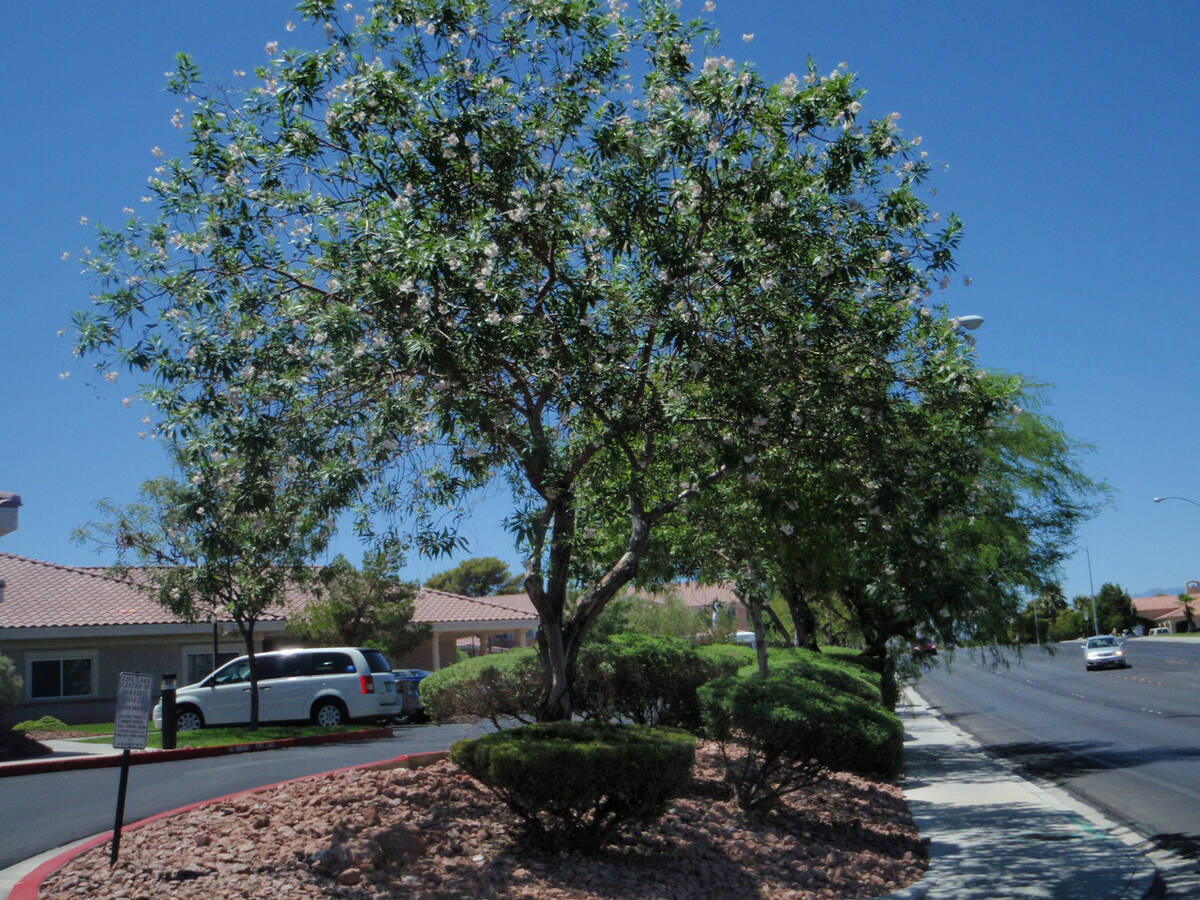
A. The palo verde is lower in its need for water than the chitalpa, but they are similar in size. I tend to lean toward the palo verde for a couple of reasons. There is a very good expose on chitalpa written by Rick Heflebower of Utah State University Extension regarding a disease problem (leaf scorch, dieback and leaf drop) that I have seen in some trees here. He maintains that this disease is present among all chitalpa trees. Leaf scorch might be a reason to eliminate this tree from consideration.
The second reason is the potential for water savings by palo verde. Make sure to plant other low-water-use plants on the same irrigation valve, an irrigation design technique called hydrozoning.
There are basically two types of palo verde trees available commercially and both are from our Sonoran Desert: the blue palo verde and foothills palo verde. The foothills palo verde survives with less applied water than the blue palo verde and is truly low in its water use. However, the foothills palo verde is not as eye-catching as some varieties of blue palo verde.
Q. I have two Raywood ash trees in my landscape. One of these trees has some limbs dying. Should I remove it?
A. I would sprinkle irrigate a large area under the canopy of the tree weekly for about a month before deciding whether to remove it. Irrigate it normally as well. If you see new growth during this time of extra irrigation, then it does not have an ash disease but just needs some extra water. If there is no response from this extra water, then plan to remove it.
The problems with ash trees are two-fold: many perform better when surrounded by a lawn rather than rock, and they are susceptible to a disease specific to ash trees. This disease looks very similar to a lack of water (i.e., drought). That’s why I tell you to irrigate under the tree first. Give it a few weeks of warm weather and see if there is new growth resulting from this extra water.
This ash disease is called ash decline in Arizona and ash dieback in California. It is very common on Raywood ash in California. I have seen this disease on other ash trees here as well including Modesto, Bonita and Fan Tex (Rio Grande).
By the way, besides preferring improved soils, ash trees will get very large, up to 50 feet tall and wide, so be sure you have the landscape space and can afford to water it.
Q. I am purchasing a large Chinese pistache tree from a local nursery that is being planted for free. I have heard some horror stories about how these trees are planted. Is there anything I should do before it is planted?
A. The major complaints I have heard from homeowners who have gone down this road are the lack of soil preparation and the size of the hole dug for these trees. Maybe this practice works well outside of Nevada, but our soils are bad. The complaints are not about the trees themselves. These trees appear to be very good quality. Be prepared to tip this planting crew for their extra work and have extra soil amendment available for them at planting time.
To circumvent this problem, make sure the planting hole is dug wide enough and a good quality soil amendment is added to the backfill. I like to see about 25 percent amendment added to the backfill at planting time. The planting hole does not have to be dug any deeper than the roots (provided there is no drainage problem) but it should be dug wide and the soil amended with a good quality compost when it’s planted.
By the way, water should be added to the planting hole as the amended soil backfill is being added. This helps remove air pockets. If planted this way, these trees will not need another irrigation for about a week during cool fall weather.
Bob Morris is a horticulture expert and professor emeritus of the University of Nevada, Las Vegas. Visit his blog at xtremehorticulture.blogspot.com. Send questions to Extremehort@aol.com.