Meals on wheels: More food trucks hitting streets as entrepreneurs see new chances
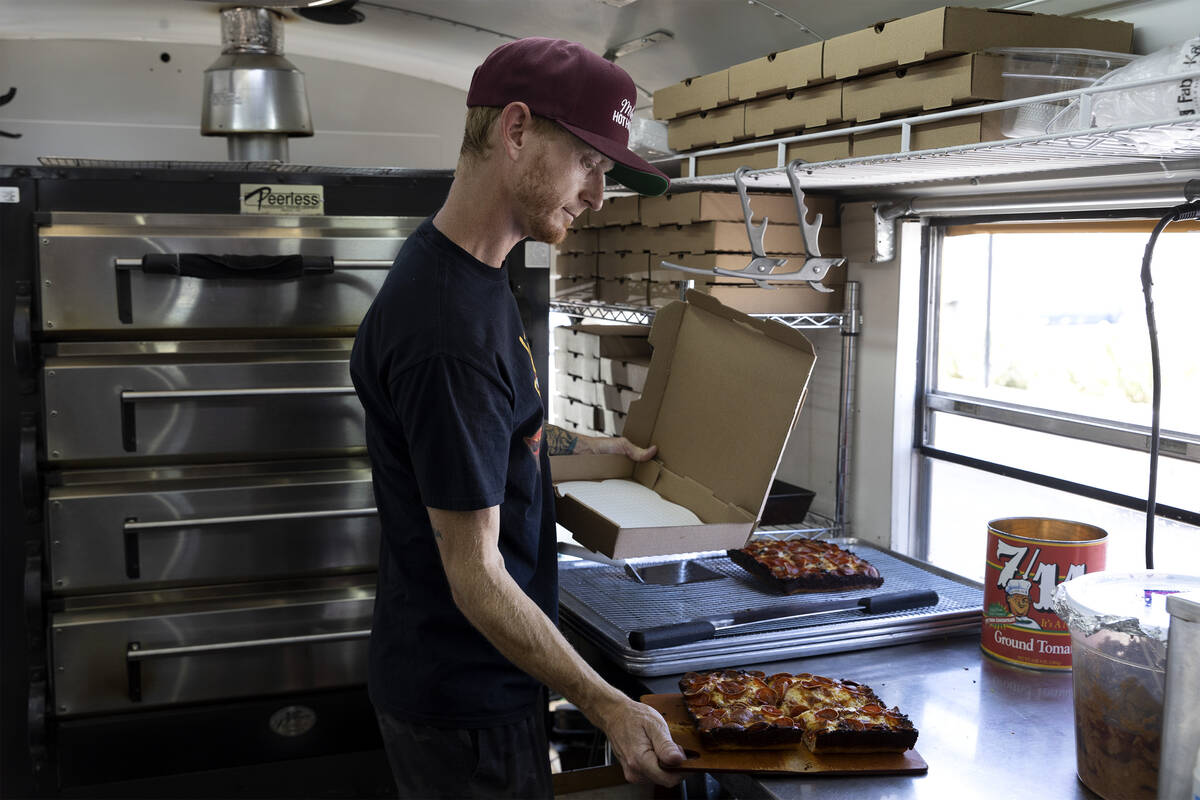





The school bus parked outside of some Henderson breweries four days a week is no ordinary bus. Walk a bit closer, and onlookers will find an open window, with arms reaching out to hand slices of Detroit-style pizza to eager customers.
Izzy’s Pizza Bus, named after owner Brett Geiger’s daughter, first hit the streets full time in 2020, shortly after Geiger was laid off from his Cirque du Soleil job as an audio technician. Like so many pandemic-era businesses, this one was borne out of Geiger’s decision to give his “passion for pizza” a chance. He bought an old school bus from Seattle and spent the summer converting the inside into a working kitchen.
“We figured if it doesn’t work, we’ll move back to Nebraska and be with family,” he said. “So, it was like, either make it or leave. We had no idea, we figured we’d probably just leave. But the support from the community and customers was really cool.”
A booming industry
His career change is part of a growing trend. Twenty percent more licenses for mobile food vendors were issued in 2021 compared with licenses issued in 2020, according to data from the Southern Nevada Health District.
It’s a pattern some say took root out of the mindset shift of many American workers during the pandemic. For food entrepreneurs in Las Vegas, the food truck industry was a chance to test out an idea at relatively low upfront costs.
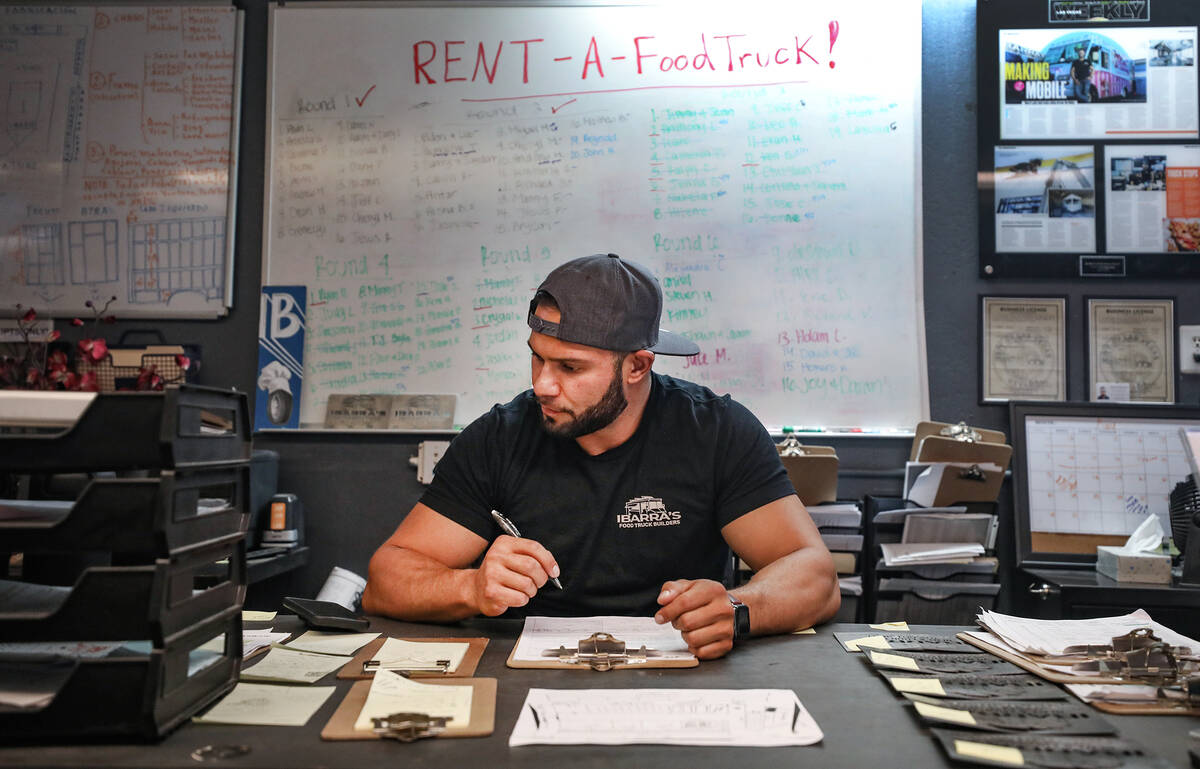
“The food truck (business) is very recession-proof. I’ve seen it my whole life,” said Jonathan Ibarra, who runs Ibarra’s Rent-A-Food Truck with his family. “Whenever things are going down, food trucks and trailers do their best.”
That’s something Geiger noticed, too. In 2020, Geiger and his team worked at or near neighborhood events and businesses with outdoor patios. He started selling about 10 pizzas a day, and today can reach as high as 100.
“I think being out and staying out during those times and really just pushing through built a good name for us and got us a lot of word of mouth and recognition,” he said. “Over the course of the past few months, I’ve honestly tripled my sales and my production. It’s been actually hard to keep up with the growth lately.”
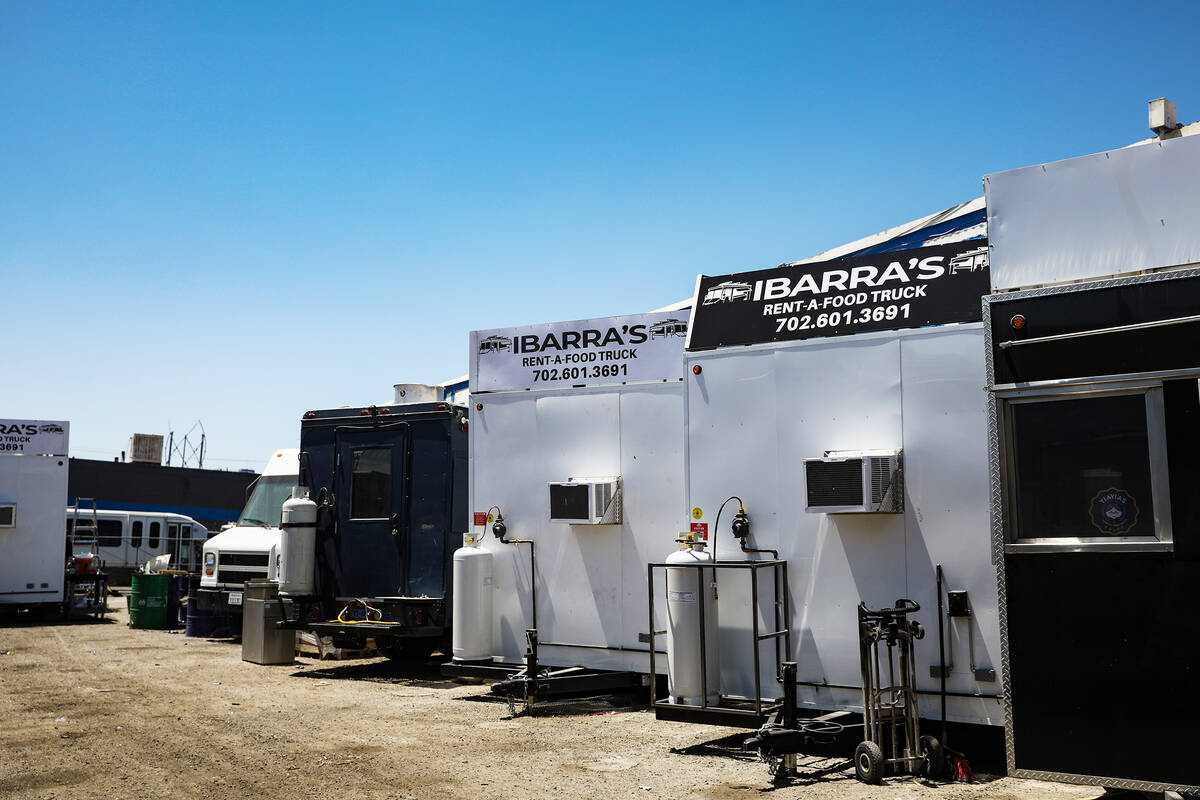
Ibarra’s has been in business since 1993, mostly focused on building custom food trucks and trailers. The team turned its focus in about 2008 to leasing food trucks as a way to significantly lower the cost for the operator and expand their potential customer base. They also help new business owners navigate the permits and licensing required through multiple city and county departments.
Now, the company custom builds 20 purchased or leased units per quarter, he said. A lease costs the owner a $5,000 deposit and the monthly “rent” of about $1,500 to $1,700, depending on the length of the lease. Operators can purchase a truck or trailer, too, but Ibarra estimates that 95 percent of his business comes from rentals.
“I saw a niche that was very important for a lot more people — people wanting to get into the business, but not everybody can afford a $65,000 or $70,000 trailer to start their business, but they could afford $1,500 a month to try the business, get it started,” Ibarra said. “Some of the most successful people from renting the trailers, they have four or five trailers now.”
Gourmet options
Those in the industry say the pandemic was the perfect time to experiment with new foods, businesses and ideas. What was once perceived as fast food with little regulation now can be seen as a gourmet menu on wheels.
“It’s gearing away from the ‘roach coach’ (perception) to where there’s more gourmet options,” said Samantha Silcox, an administrator at Ibarra’s. “Even in the difference in (building) rounds, we’ve seen the food change and shift from standard tacos to have soul food, specialty milkshakes and vegan trailers. People still do tacos and burritos, but they’ll add, like, a southern twist to it.”
That’s the model followed by Global Gourmet, a collaborative group of about 15 food truck operators.
The group takes the view of “elevated street food,” Will Staten, the chef and operator of Cravin’ Creole, said. The operators coordinate with each other to create fusion menus, share leads and do community outreach.
Staten and his partners often park outside of businesses, country clubs and parks when they’re on their own. But their goal is to create events out of food truck groups that draw in people.
First up was ‘Food Truck Wars,’ where four food trucks “battled” by serving their own takes on egg rolls, a rice-based entree and an Asian-inspired dessert in honor of Asian American Pacific Islander Heritage Month in May. On Independence Day, a similar food truck war will encourage customers to participate in a hot dog or slider-eating contest.
“(We want to) let people come and have fun without the super high costs they’re used to paying to go to these events,” said Chef Brittany Ishiwata-Hisey, whose Japanese street food truck Miso Hungry is part of the group. “We want kid-friendly, we want families to come out and have a good time.”
Many new business owners say they don’t think the market has reached its maximum yet. They point to the high prevalence of trucks in Southern California and the variety of venue options as evidence of further growth potential. Manny and Riley Franco of Boulder City, who run the truck Somethin’ to Taco Bout, said they turn down about a dozen events weekly and have only been in business since December.
“It’s not yet saturated,” Manny Franco said. “We got into it in a time where even though there’s been this explosion and all this growth, there’s still more opportunities and there are more trucks to accommodate.”
McKenna Ross is a corps member with Report for America, a national service program that places journalists into local newsrooms. Contact her at mross@reviewjournal.com. Follow @mckenna_ross_ on Twitter.