Colorful flowers attract butterflies
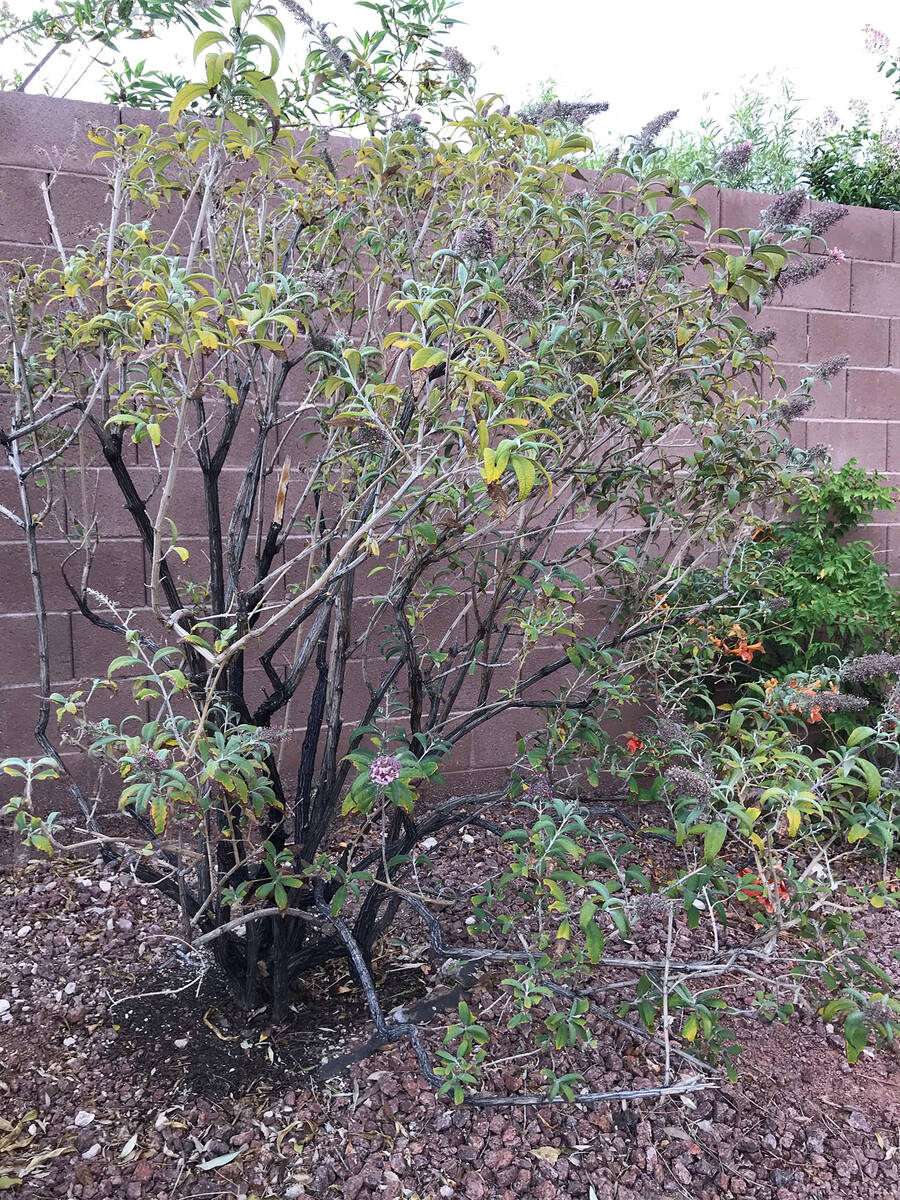




Q. I’m an avid gardener and want to plant host plants for various butterfly species, but especially monarchs after seeing my first one this past October. I am curious which milkweed is the best for me to plant from seed for monarchs and other butterfly species. I’m having a hard time finding seeds for Asclepias erosa (desert milkweed) and I’ve heard it’s sort of difficult to grow from seed. What are some other good host plants for butterflies in our area?
A. I can’t help you but there is a Master Gardener who is quite knowledgeable on this topic. Her name is Anne Marie. She can be reached through the (University of Nevada) Cooperative Extension helpline at 702-257-5509.
When making a spot that attracts butterflies, choose a warm location out of the wind. Choose flowers in yellow, orange, red and pinks that bloom in spring or fall when it is cooler and plant them in large numbers. You want lots of different colors. Include a moist area, salt blocks and shade as well. Think like a butterfly.
Some of these plants are lower in water use (xeric) than others (mesic). Key in the Desert Connections website from the Tucson Botanical Gardens for a complete list of what will work here. Tucson and Las Vegas have a very similar climate (Tucson is more humid but temperatures are similar). Unfortunately, their list combines xeric and mesic plants.
Suggestions of xeric plants include mountain marigold, salvia, penstemon, desert senna, desert milkweed, cosmos, rabbitbrush robe, butterfly bush, desert lavender and desert bird of paradise. In wet areas (mesic) include lantana, hollyhocks, coneflowers, asters, violets and perennial herbs like dill (left to flower of course).
There is a butterfly habitat you can visit at the Las Vegas Springs Preserve and volunteers there can help you with the selection of plants that attract them.
Q. I want something evergreen between the block wall and the pool that will provide use an extra 1-2 foot of privacy above the existing 5-foot block wall. The other side of the block wall is a noisy street. This area of the backyard receives nearly full sun most of the year.
A. Plants don’t muffle noise. Cement walls do. The other problem is I don’t know what plants the nursery or nurseries have available.
Walls don’t use any water. I would recommend extending the wall higher , finding vines to cover it and using the wall as a design feature. This will give you a feature that will muffle noises from the busy street and save water at the same time.
I recommend visiting Chris Martin’s landscape plant site at Arizona State University (near Phoenix) and using a minimum winter temperature (winter freezing) above 20 F when searching for plants to use in our area.
Q. I’m going to buy a lopper for pruning. What do you recommend?
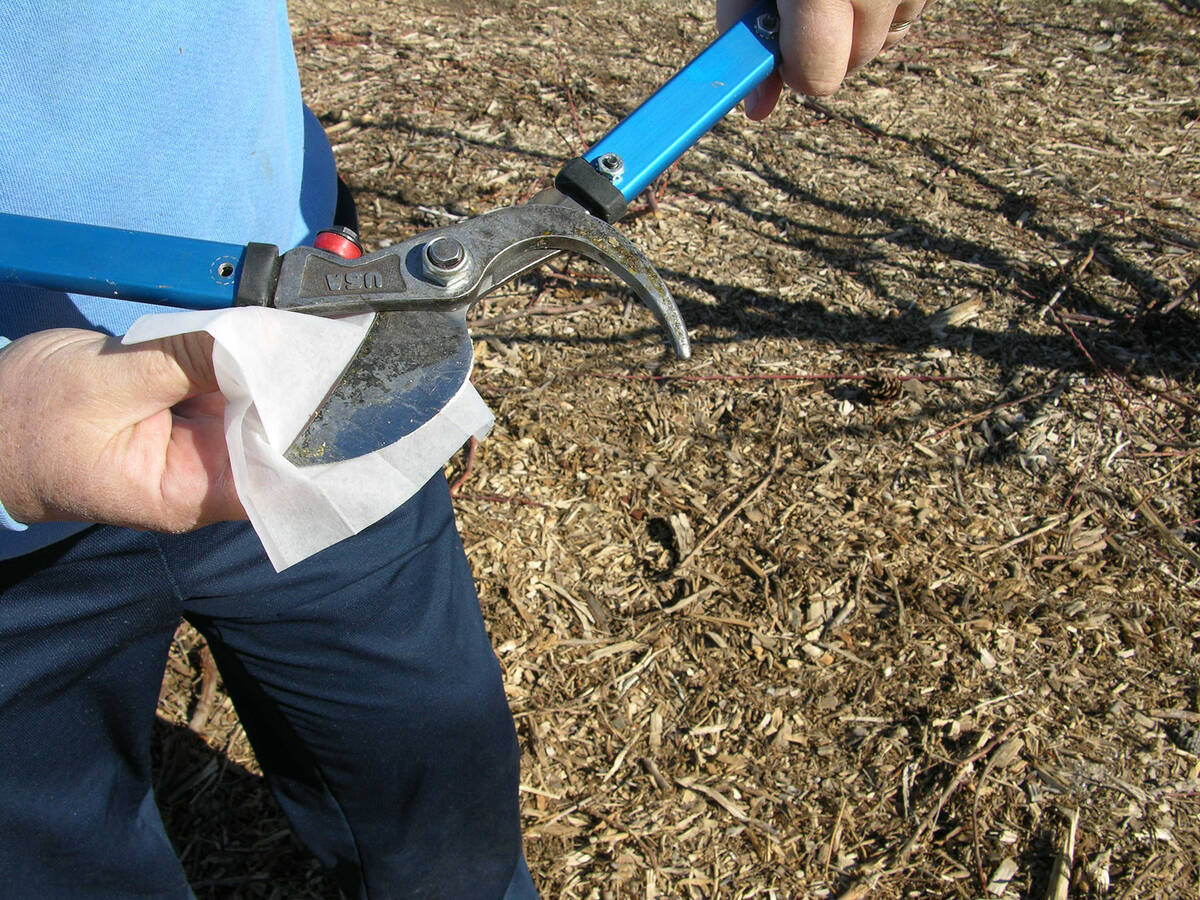
A. A lopper is a pruning tool that can easily remove branches over a half-inch in diameter and up to about an inch or even inch and a half at most. Infrequently I use a pruning saw on limbs that are approaching 2 inches in diameter and above. Most regular pruning can easily handle a lopper.
There are short-handled loppers and long-handled loppers. For pruning fruit trees, I recommend a lightweight lopper with handles over 30 inches long. The pruning blades should be made from tempered steel because it can be made very sharp and holds this edge longer. Most good loppers should cost about $75 and up. Names of good loppers include ARS, Felco and Hickok. I have two loppers; both are Hickok with 28-inch and 36-inch handles.
The pruning saw I use is a battery-operated reciprocating saw with a pruning blade attached to it. I make sure it is cleaned thoroughly with alcohol before I start pruning. These specialized blades are made specifically for pruning limbs.
Q. I am getting ready to prune my 15-foot-tall apricot and 20-foot-tall peach trees. Can I prune below the main crown?
A. I think what you are asking me is if you can lower the height of the trees. Lowering the heights of fruit trees makes it easier to harvest the fruit, spray the tree and prune it.
You can lower the height of any tree about 25 percent without difficulty. Removing more than this much requires three or four years of pruning. Ultimately, the peach can be lowered to 15 feet and the apricot can be lowered to about 12 feet without problems. The maximum height you should allow these trees to grow should be equal to the distance between neighboring trees that shade them.
Fruit production might lag after extensive pruning one or two years in the peach and two to three years for the apricot. Peach trees may have more difficulty recovering from excessive pruning than apricot.
The apricot tree is easier to prune than the peach tree because more branches are left after pruning. Pruning peach trees is more difficult because it requires more removal of wood than the apricot.
Pruning fruit trees in the desert is different than pruning in nondesert regions. When pruning here you must be careful to not prune out too much wood because of sunburn and consequently attracting borers. Start on the north side of the tree when removing large branches. The north side of the tree is more “forgiving” of the removal of large branches because it’s in the shade.
Whenever pruning fruit trees, start at the bottom and work your way up. Because the peach tree has larger fruit than apricot, more space between branches will be needed when you’re finished pruning.
The peach tree will have only four or five major branches coming from the central trunk when you’re finished. Remove excessive “main scaffold limbs” first. Peach trees are also pruned to an open center because it grows naturally like a shrub. The apricot tree grows more upright and so it is usually pruned to a more upright form. This form is called a shortened or “modified central leader.”
Your result should allow sunlight to penetrate the inside canopy of the tree to encourage fruit production throughout it. For this reason, branches are hand pruned more like a feather. Remove any crossing or broken branches.
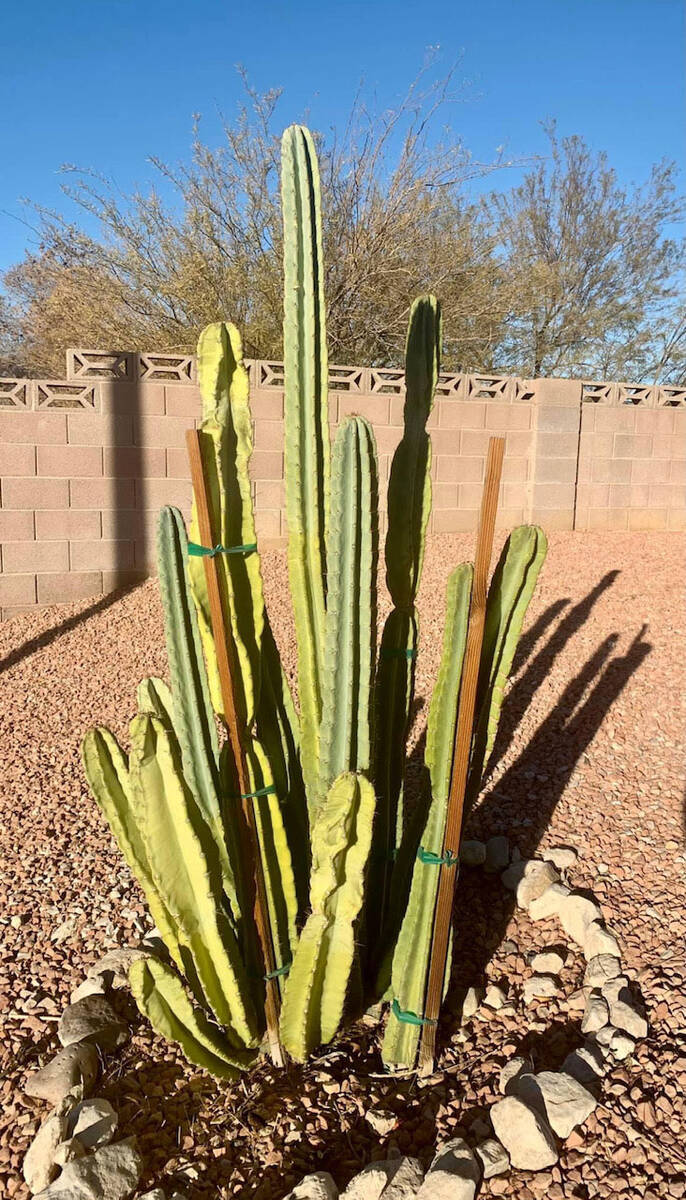
Q. I have a Peruvian apple cactus that appears to be getting more yellow. When I talk to local nurseries, they want to sell me fertilizer but when I talk to people on the internet, they say cacti don’t need fertilizer. I’m confused. What say you?
A. I think it might be the cold temperatures, intense sunlight or poor drainage that is discoloring it. It’s probably not a fertilizer issue. We see discoloration during winter cold weather on many different plants including many of the cacti from South America. I think it will grow better on the east side (shade in late afternoon) in full sun rather than in intense sunlight and heat and then surrounded by rock, which can get intensely hot on the south or west sides.
It is regarded as very cold tolerant, but I think, like other cacti, it starts to bronze or become yellowish during cold weather.
If you think it needs soil improvement or drainage, try applying light applications of rich compost mixed with about 1 tablespoon of iron EDDHA chelate. Apply it 18 inches from the trunk and out to about 3 feet where there is water.
Bob Morris is a horticulture expert and professor emeritus of the University of Nevada, Las Vegas. Visit his blog at xtremehorticulture.blogspot.com. Send questions to Extremehort@aol.com.