Pesticides should always be last resort




Q. I am wildlife biologist and a gardener. You should retract your statement about poisoning ground squirrels as the poisoned bodies will appear in the food chain of hawks, owls, coyotes, foxes and snakes.
A. You are right. Poisoned carcasses of any animal can enter the food chain of other animals. It is important to make sure that individuals are following all federal, state or local laws or ordinances pertaining to the use of a pesticide (whether it is used to kill weeds, insects, protect plants from diseases or terminate the life of a critter) and that any pesticide is used as a last resort. Make sure to read the pesticide label and follow its directions.
Ground squirrels can rob a tree of almonds overnight. One method to avoid this from happening is to harvest the nuts earlier in the calendar year and dry them in a protected location.
There are different ways to eliminate ground squirrels. Pest control companies exist that focus on “humane methods” and market these options for concerned gardeners. I would refer anyone interested to follow the advice given by the University of California regarding controlling ground squirrels (http://ipm.ucanr.edu/PMG/PESTNOTES/pn7438.html). Please remember that trapping and releasing an animal to another area is illegal in most states and potentially cruel.
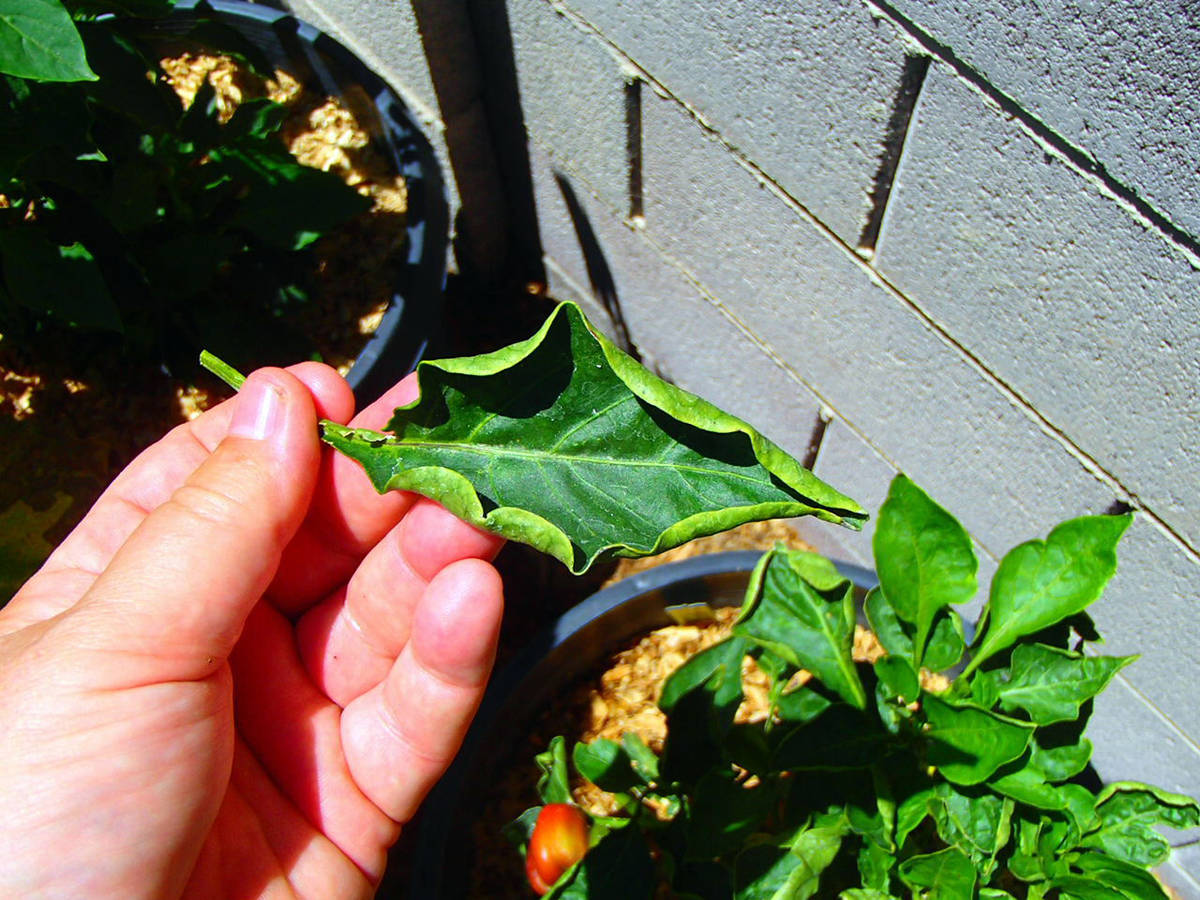
Q. Why are the leaves of my fruit trees cupping?
A. Fruit tree leaves of apples, pears, pistachios, tomatoes and other plants in full sun all day long will sometimes cause the leaves of some varieties to cup or roll. Excessive irrigation and fertilizer, high temperatures, the variety of the tree or plant, overly dry soils, root damage and planting shock are some of the environmental factors that can cause physiological leaf roll in fruit trees. Over time all the leaves on the plant may be affected.
If your plant is showing lots of leaf roll first blame the high temperatures of summer. Leaf rolling won’t hurt the leaves as long as they remain soft and pliable. Next, be careful of irrigation. Irrigation should keep the soil consistently moist for most garden plants and not allow the soil to dry out rapidly. Apply a surface mulch to slow water loss from the soil and reduce plant stress. Wood chips, straw, shredded newspaper applied a few inches deep will slow water loss from the soil, reduce fruit cracking due to irrigation and conserve moisture.
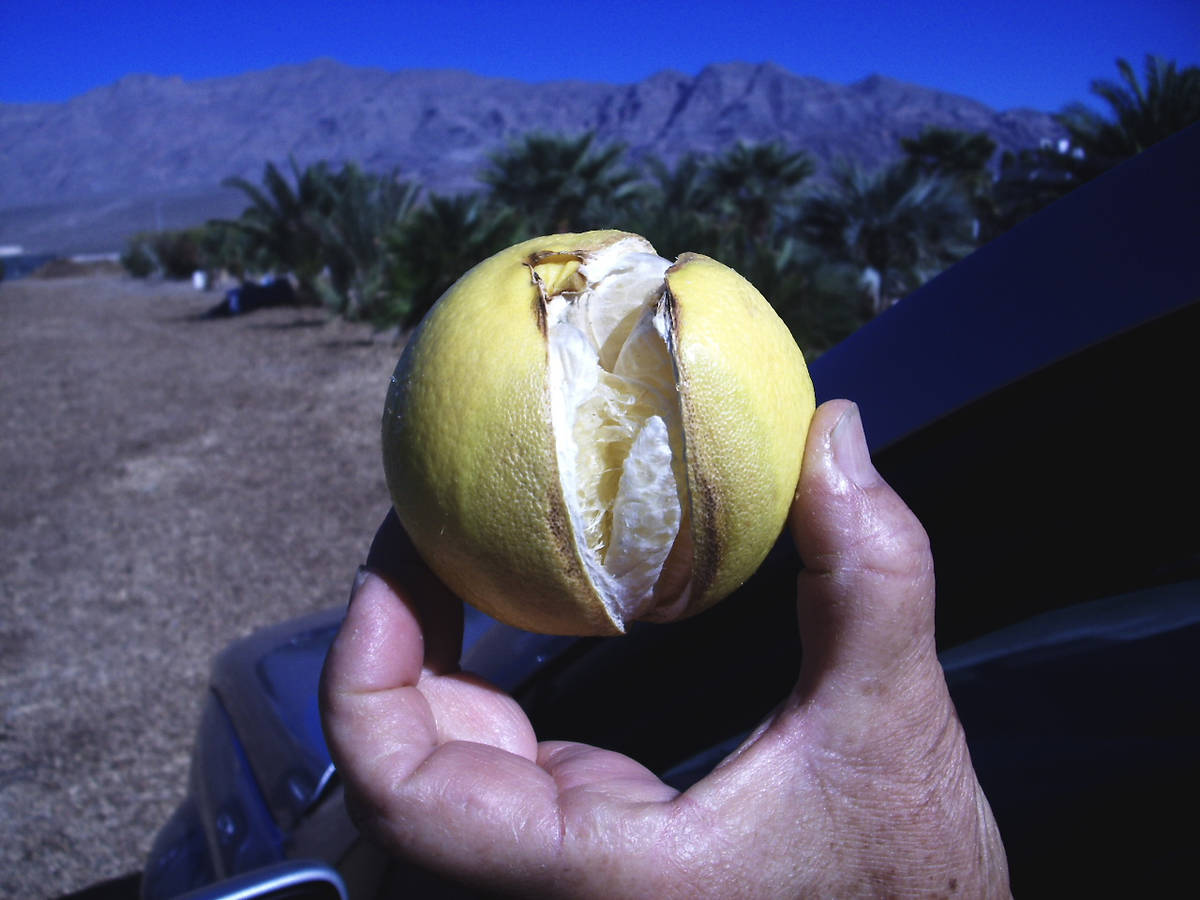
Q. What causes cantaloupe melons to split before they slip the vine?
A. Like any fruit, when the melon nears maturity and the outside rind hardens and irrigation water is “pumped” into fruit, they split. This can happen with melons, cherries, peaches, tomatoes, cucumbers and other botanical fruits. Fruit with a thin skin like cherries are more susceptible to splitting after a rain than thicker “skinned” melons. Fruit splitting can happen soon after an irrigation when the temperatures have created a lot of stress or right after a rain.
Rainwater enters the fruit through the “skin” or rind and causes it to swell and burst. It is due to an “osmotic effect” and susceptible fruits will split when nearly ripe and their sugar content is peaking. Nearing maturity is the time these fruits are full of sugar and primed for rainfall and the “osmotic effect.” “Nearly ripe” is a dangerous time for a combination of fruit and rain.
What to do? First of all, note the variety. Some varieties are more susceptible to splitting. Secondly, harvest climacteric fruit (those fruit that continue to ripen after they are picked) early, before a rain and let them ripen protected after harvest. Unfortunately, melons are non-climacteric and do not ripen further after picking. Protect the fruit from rainwater and apply a surface mulch during hot weather.
Q. Why do my pomegranate trees have large branches lying on the ground?
A. This can happen to pomegranates when they have been in the ground for a short time and not pruned regularly. Pomegranates should have emerging suckers removed from so that only five or six of the larger stems remain. Then side growth is pruned from these main stems to about knee height. This results in larger fruit produced on the remaining stems and fruit produced on lower branches will not lie on the ground.
The remaining stems will begin flowering and bend toward the ground as the heavy fruit bends them over. As these stems get older, they will get stronger. New growth comes from the remaining bent stems and not as sucker growth from the base.
Removing the sucker growth from the bottom encourages the remaining stems to grow strong and erect without crowding them. Removal of sucker growth must be done frequently when they are young until the new growth emerges from the larger stems and not from suckers at the base.
Q. What is the range of N-P-K value in cow manure that I see some landscapers use for grass?
A. The fertilizer content (N-P-K value) of steer or cow manure varies because of what they eat and how the manure is collected and processed. It is considered “low” in fertilizer content as far as fertilizers go. It would take a very small amount of bagged fertilizer to equal the fertilizer content in a ton of manure. Both manures contain about 4 percent nitrogen and lesser amounts of phosphorus (P value) and potassium (K value). They can both be high in salts and rich in good and bad microorganisms.
There is a difference between steer and cow manure. Cow manure is typically derived from cows used for dairy farming. Steer manure is derived from cows fed for meat production. Steer manure typically contains more salt than cow manure and it is considered “hotter” when applying it to plants.
The value in manure is due more to its potential for soil enrichment rather than its N-P-K content. For that reason, it can be mixed into a “hot” compost pile. The heat from these compost piles will help to change the microorganism content and decrease or possibly eliminate those microorganisms that are a potential human health problem.
Research has shown that applications of composted manure can reduce lawn diseases due to its high microorganism count. Application of dry manure is done best with a barrel-type compost spreader.
Bob Morris is a horticulture expert and professor emeritus of the University of Nevada, Las Vegas. Visit his blog at xtremehorticulture.blogspot.com. Send questions to Extremehort@aol.com.