No deal: Colorado River states wave white flag ahead of Trump admin deadline


The seven states that share a disappearing river refused to set aside their differences and missed another deadline from the Trump administration to cut a 20-year deal assigning shortages among them.
John Entsminger, Nevada’s lead negotiator and general manager of the Southern Nevada Water Authority, expressed frustration with a lack of progress in both a statement and an interview Friday, the day before the deadline.
“As I talk with people throughout Southern Nevada, I hear their frustration that years of negotiations have yielded almost no headway in finding a path through these turbulent waters,” Entsminger said in his statement. “As someone who has spent countless nights and weekends away from my family trying to craft a reasonable, mutually acceptable solution only to be confronted by the same tired rhetoric and entrenched positions, I share that frustration.”
The only clue of next steps so far is the official schedule for public input, which promises a decision by Oct. 1, the start of the new water year that runs until the following September.
“This is unprecedented,” said Sarah Porter, director of the Kyl Center for Water Policy at Arizona State University. “For all these years, the states have been able to reach consensus, and they simply haven’t been able to come up with an agreement that they could all sign on to.”
The Bureau of Reclamation is accepting public comments about its draft environmental impact statement until March 2. That document laid out four frameworks for an agreement, which officials from the Lower Basin states of Nevada, California and Arizona said unfairly placed the burden of shortages on them.
It’s unclear exactly when or how, but Interior Secretary Doug Burgum has said his agency will intervene if states cannot come to an agreement.
“We have listened to every state’s perspective and have narrowed the discussion by identifying key elements and issues necessary for an agreement,” Burgum said in a Saturday statement. “We believe that a fair compromise with shared responsibility remains within reach.”
Basin headed for crisis
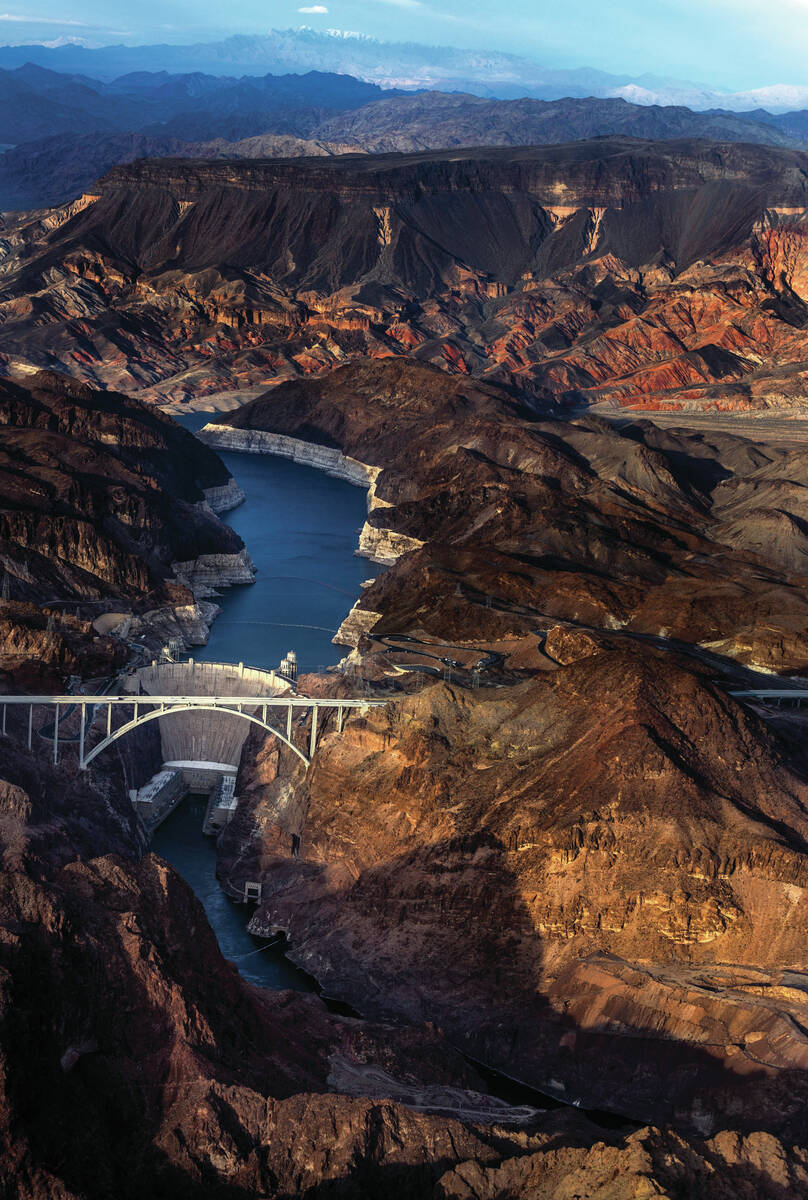
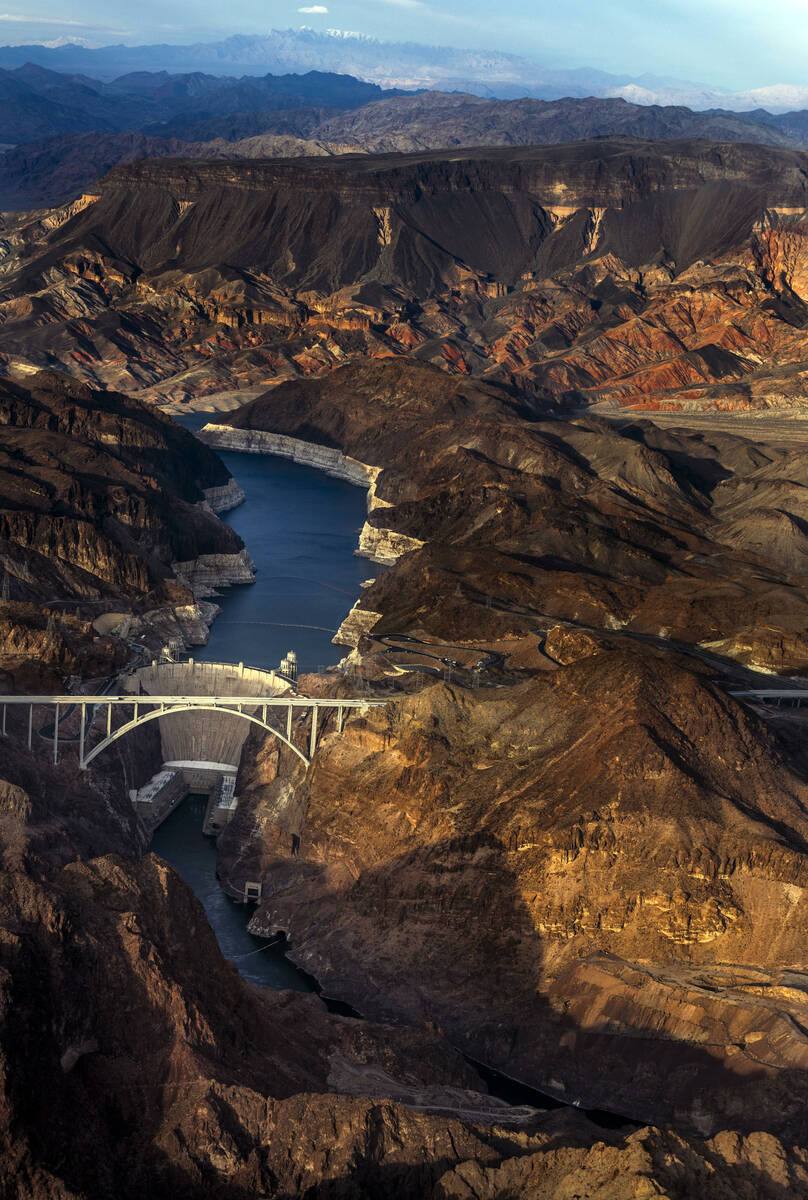
The news came the same day that the Bureau of Reclamation, the agency overseeing the interstate talks under the Interior Department, released a projection showing that Lake Mead is most likely to plunge to 1,034.47 feet of elevation above sea level in November 2027.
That low keeps getting lower — now about six feet below the reservoir’s dip to a record low in 2022.
The projections for Lake Powell, the releases of which set levels at Lake Mead, have declined so much since November that it means about 50 feet less of elevation, the Bureau of Reclamation said in news release. By December, the reservoir could fall below “minimum power pool,” the level below which hydropower cannot be generated, as well as reach a record low.
Concerns abound, too, for outdated infrastructure at Glen Canyon Dam that could delay or prevent releases to Lake Mead if levels get too low. The Bureau of Reclamation may pull water out of an upstream reservoir, such as Flaming Gorge, to keep the basin in compliance with its 1922 compact.
Snowpack this season is poor, with the Colorado Basin River Forecast Center predicting flows into Lake Powell at 38 percent of normal based on current conditions.
“The basin’s poor hydrologic outlook highlights the necessity for collaboration as the Basin States, in collaboration with Reclamation, work on developing the next set of operating guidelines for the Colorado River system,” Acting Reclamation Commissioner Scott Cameron said in a statement.
Upper Basin reiterates argument
The Upper Basin states of Colorado, Utah, Wyoming and New Mexico have argued that they will not accept any mandatory shortages, even though the Lower Basin previously agreed to handle an initial annual deficit of 1.5 million acre-feet alone.
The two basins each have claim to 7.5 million acre-feet of water, according to the Colorado River Compact of 1922.
Upper Basin officials say they already deal with extreme shortages, and must cut off some senior water rights users every year, due to meager snowpack in the Rocky Mountains and losses to climate change.
According to a prepared statement from the four state river commissioners, the states are facing their own deficit this year of more than two million acre-feet, representing reductions to about 40 percent of proven water rights.
“This year is a stark reminder of why all in the Colorado River Basin must learn to live within the available supply, as water users across the Upper Basin are preparing for deep cuts to their water supplies,” the joint statement reads. “These cuts are mandatory, uncompensated and painful.”
Accepting mandatory cuts, which are defined differently in the Upper Basin because of differences in water law, would require action from all four state legislatures, Haas said.
^
Supreme Court could weigh in
The lack of a seven-state agreement is likely to open the door to a lawsuit between states and the federal government, costing taxpayers millions and delaying any tangible progress by years. Experts say the Colorado River can’t wait, as it faces an annual deficit, extensive overuse problems and poor projections for reservoirs.
Lawsuits between states are assigned to the U.S. Supreme Court, which likely would appoint a special master who has more technical water knowledge, Porter said. In looking at past water lawsuits brought to this level, Porter said they can take an average of about eight years to come to a resolution.
Such a path is a gamble to Anne Castle, a fellow at the University of Colorado, Boulder, who served as the assistant secretary for water and science at the Interior Department in the Obama administration.
“Somebody is going to lose, and that is high-stakes poker for both basins,” Castle said. “It’s sort of an all-or-nothing proposition, unlike an agreement, where you can much more carefully craft an equitable solution that allocates the burden of the reduced flows that we’re all experiencing in an equitable way.”
Nevada officials haven’t commented on what they are doing to prepare for a complicated and expensive lawsuit, though states like Arizona, Utah and Colorado have begun to set aside millions of dollars for a defense.
In his statement, Entsminger said he and Nevada Gov. Joe Lombardo “are prepared to go the distance to protect the community you call home.”
“In our DNA, we’re planners,” Entsminger said in an interview. “We have a 50-year resource plan, we have a 100-year asset management plan, and we have a litigation plan. Our plan is to win, but I’m not going to discuss the details of that in public at this juncture.”
^
Opposing statements
Releasing two separate joint statements, governors of the seven states weighed in on the stalemate on Friday. Those governors met with the Interior Department in Washington, D.C., last month.
Lombardo, Arizona Gov. Katie Hobbs and California Gov. Gavin Newsom reaffirmed their past public positions that the Upper Basin needs to commit to accepting some degree of shortage over the next 20 years.
“Our stance remains firm and fair: all seven basin states must share in the responsibility of conservation,” the governors said. “Our shared success hinges on compromise, and we have offered significant flexibility, allowing states without robust conservation programs time to gradually develop these programs in ways that work in each state.”
That position still doesn’t seem to land well with the northern states.
Colorado Gov. Jared Polis, Wyoming Gov. Mark Gordon, New Mexico Gov. Michelle Lujan Grisham and Utah Gov. Spencer Cox said they believe officials are advocating in their constituents’ best interest.
“We have come together in good faith throughout this process, and are putting every tool on the table available to us, including releases from our upstream reservoirs, meaningful voluntary conservation both now and in the future, and continued strict self-regulation of water supplies,” the statement said.
John Berggren, a regional policy manager at the nonprofit Western Resources Advocates, said he believes it’s time for the states to get more serious about how they can solve their present problems.
Experts have long called for the basin to beef up its efforts to add water to the system, such as through more widespread water recycling and ocean desalination.
“What we need now is to come up with the most creative, innovative way to respond to the changing hydrology, rather than press statements and sticking to legal arguments,” he said. “If the basin states aren’t going to have an agreement, then it’s up to Reclamation to protect the system.”
Contact Alan Halaly at ahalaly@reviewjournal.com. Follow @AlanHalaly on X.