Pneumonia plagues bighorn herd in Boulder City




Have you heard the one about the bighorn sheep with pneumonia?
Believe it or not, it’s an actual ailment, including those at Hemenway Park.
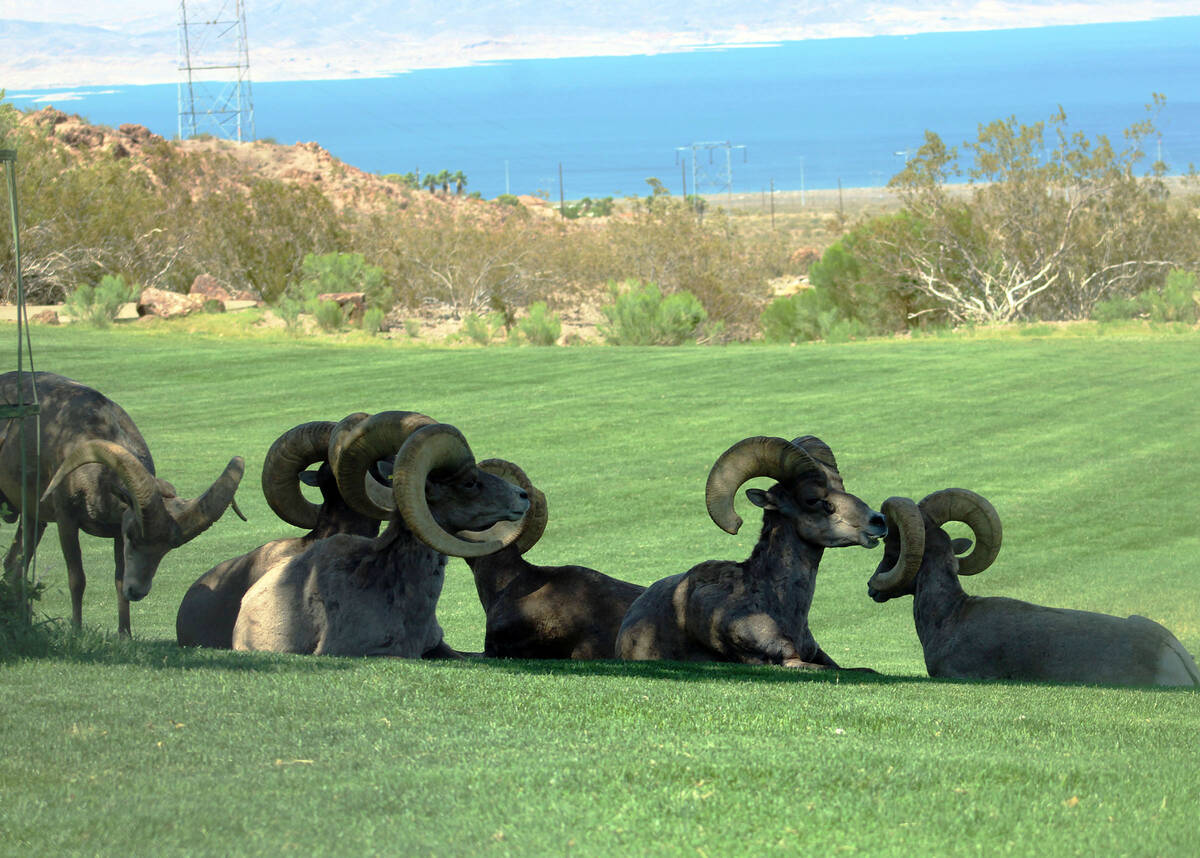
A recent Las Vegas Review-Journal article regarding the transporting of bighorn from near Valley of Fire State Park, stated that pneumonia is rampant among most bighorn sheep herds, “including the famous Boulder City one that greets visitors at Hemenway Park.”
Based on that, the Review reached out to the Nevada Department of Wildlife, seeking more information on the outbreak among Boulder City’s unofficial mascots.
Erin Wood, a game biologist for Nevada Department of Wildlife out of their Las Vegas office, works with all game species, but with a focus on bighorn sheep. She shared some background about the disease issues affecting bighorn sheep and what that means for Nevada’s bighorn population.
“You may hear of pneumonia or respiratory disease causing large-scale mortality in wild sheep populations, which is true, but it’s usually the result of a more complex system,” she explained.
Wood said there are many naturally-occurring pathogens that cause pneumonia in bighorn sheep, and animals are normally able to clear the infection like humans with a cold. However, it is the bacterium Mycoplasma Ovipneumoniae, usually shortened to M. ovi or Movi, that causes the widespread and devastating effects on wild sheep populations.
“M. ovi was introduced to wild sheep via domestic sheep and goats from Europe in the 19th century,” she said. “As settlers expanded westward, their livestock came into contact with native wildlife and passed M. ovi into the bighorn sheep population.”
The expansion of mining, railroads, and sheepherding through north and central Nevada left very few bighorn sheep herds unaffected, mostly in the far south, she said. By the 1960s, disease, overhunting, and other factors left only about 3,000 bighorn sheep left in the state and about 20,000 in North America from an estimated high between 1.5 and 2 million.
“Numbers have increased since then thanks to reintroduction efforts across their range, and Nevada now has the largest M. ovi-free population of desert bighorn sheep in the Muddy and Black Mountains,” Wood said.
M. ovi is highly contagious, resistant to antibiotics, and is often mild or symptomless in domestic sheep and goats (so they are rarely tested for it). It attaches itself to the lining of the sheep’s trachea and lungs and leaves the sheep susceptible to additional infection. The mild pneumonia that a bighorn was able to clear before becomes lethal when that bighorn is infected with M. ovi.
“When it gets into a wild sheep population, typically through nose-to-nose contact with domestic or wild sheep, you see die-offs of all age groups followed by little to no lamb survival for years,” she said. “Lambs are particularly susceptible because their immune systems are underdeveloped and ewes tend to form nursery groups and rear lambs together, increasing their exposure.”
Wood went on to say that adults may also become infected, survive, and become carriers of M. ovi, passing it through the herd for years. Some herds are able to clear the initial infection and rebound and some herds die out due to chronic infection and no lamb survival. There are also many strains of M. ovi, just like the cold or flu, which affect populations differently.
One population can also become infected with multiple M. ovi strains, and each strain can have different rates of mortality or susceptibility to become carriers. This is the case with the River Mountains herd and the sheep of Hemenway Park.
“The River Mountains bighorn sheep herd is a remnant population, meaning they did not die out in the 19th and 20th centuries and have continuously occupied the River Mountains,” Wood said.
They were used as source stock for much of the reintroduction work for desert bighorn sheep across the West with over 70 translocations from this population since 1968.
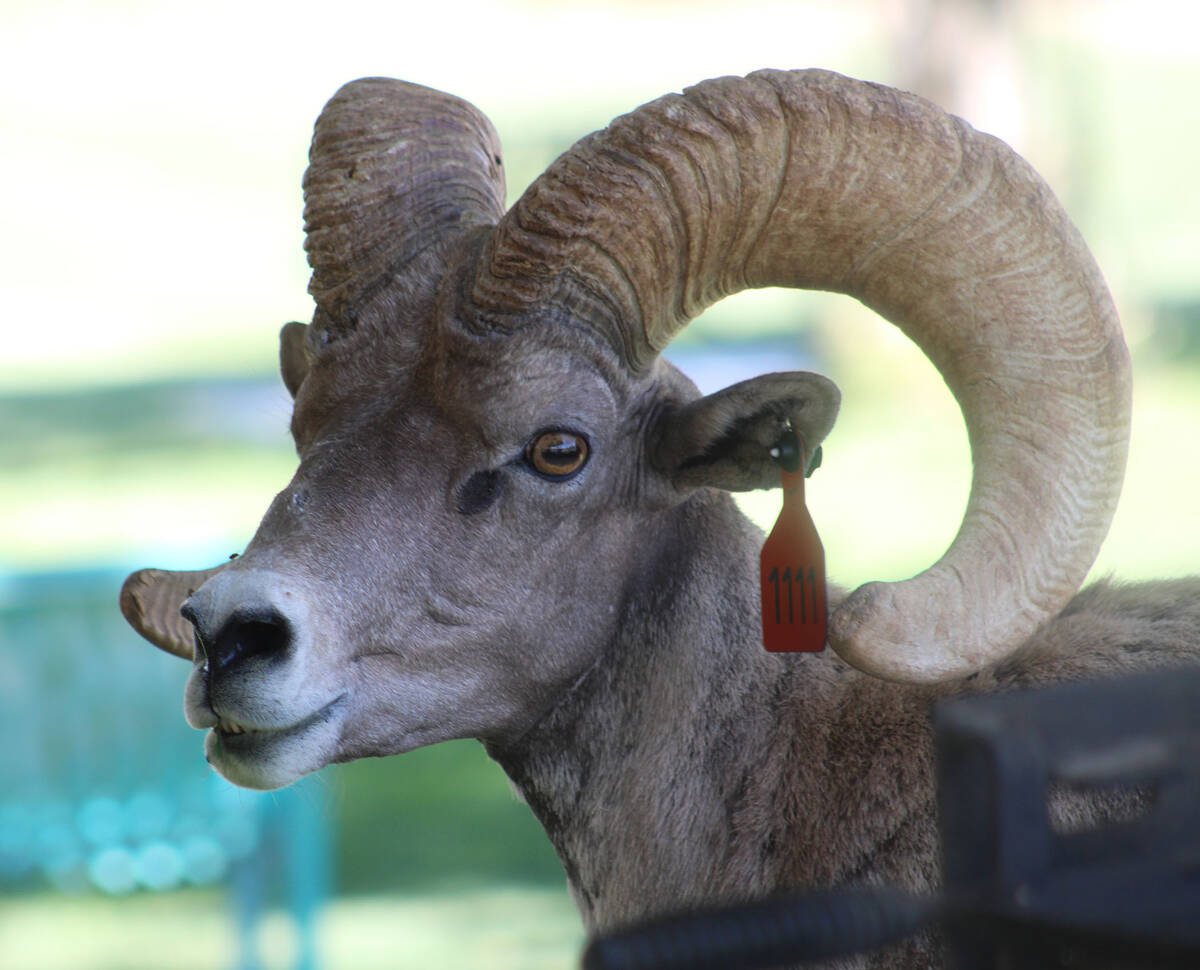
In 2013, M. ovi was found here after several bighorn were found dead and many were observed coughing,” Wood said. “The River Mountains population has been tested periodically since then to monitor their status, and a total of four unique strains of M. ovi have been detected here.”
Wood finished by saying drought has also been a compounding factor, keeping animals in poorer condition and less able to fight off infections.
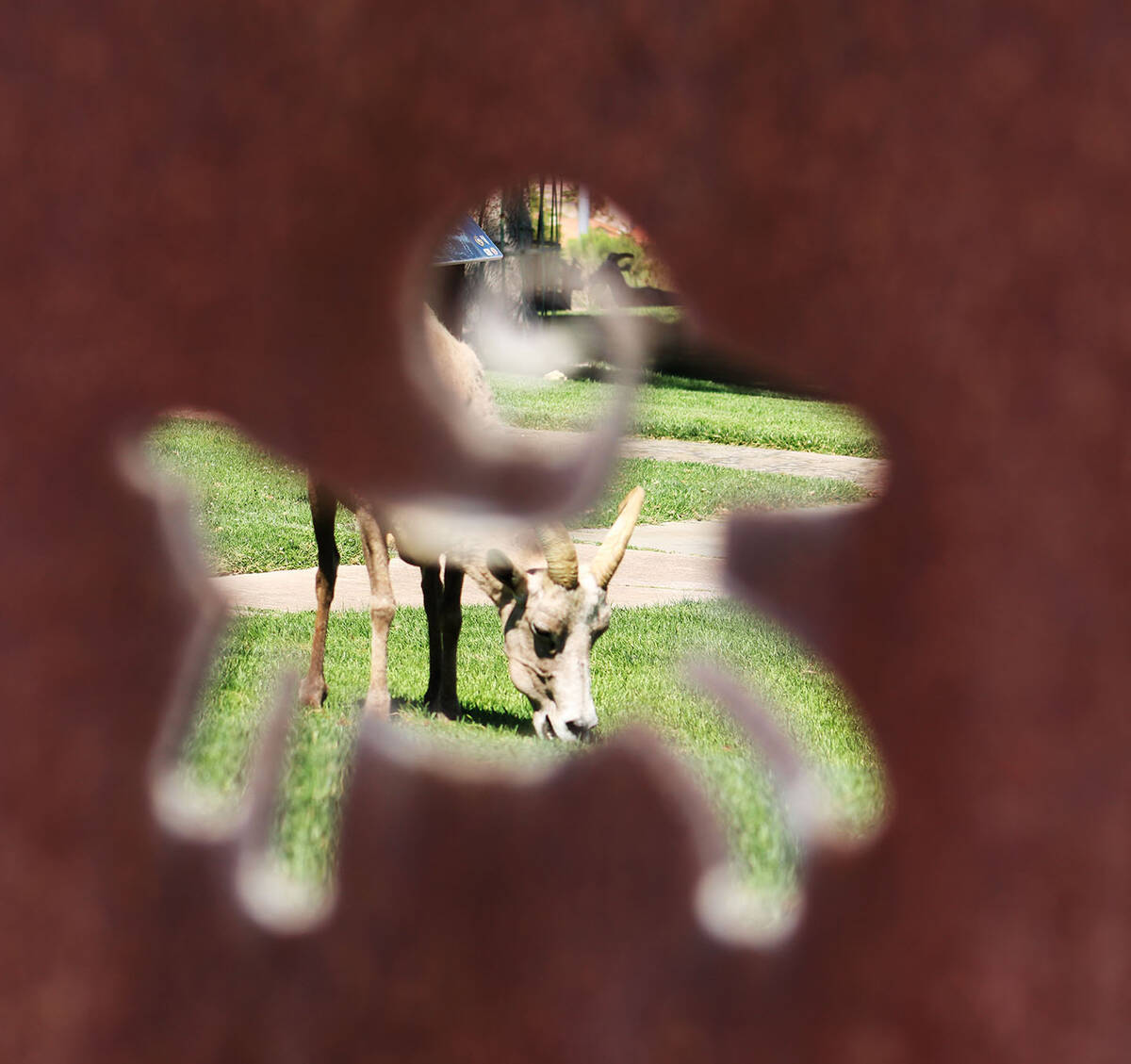
“Hemenway Park offers a tempting source of food, water, and shade during the hot summer months, but it also gathers bighorns in large numbers and increases the potential to spread disease among the herd,” she said. “Despite these setbacks, the River Mountains bighorn sheep keep persisting in their home and there is still hope that they can survive.
Bighorn outreach
The NDOW will again be hosting a community outreach regarding the bighorn herd at Hemenway Park at 401 Ville Dr. Every Sunday in July, NDOW employees will be on hand from 9 a.m. to noon to discuss the state mammal and answer questions.
For more information, contact NDOW’s Lauren MacLeod at lauren.macleod@ndow.org.