Local artist has a rock and roll past and a serious attachment to Afghan blankets




They come to his small apartment above a boat storage yard on the northern edge of Boulder City at all hours, day and night.
“It’s almost midnight and I hear someone outside my front door saying, ‘Hey, Jeffrey, are you home?’ I go to the door and there is a 6-foot-3 biker standing there. He hands it to me, gets back on his bike and rides off.”
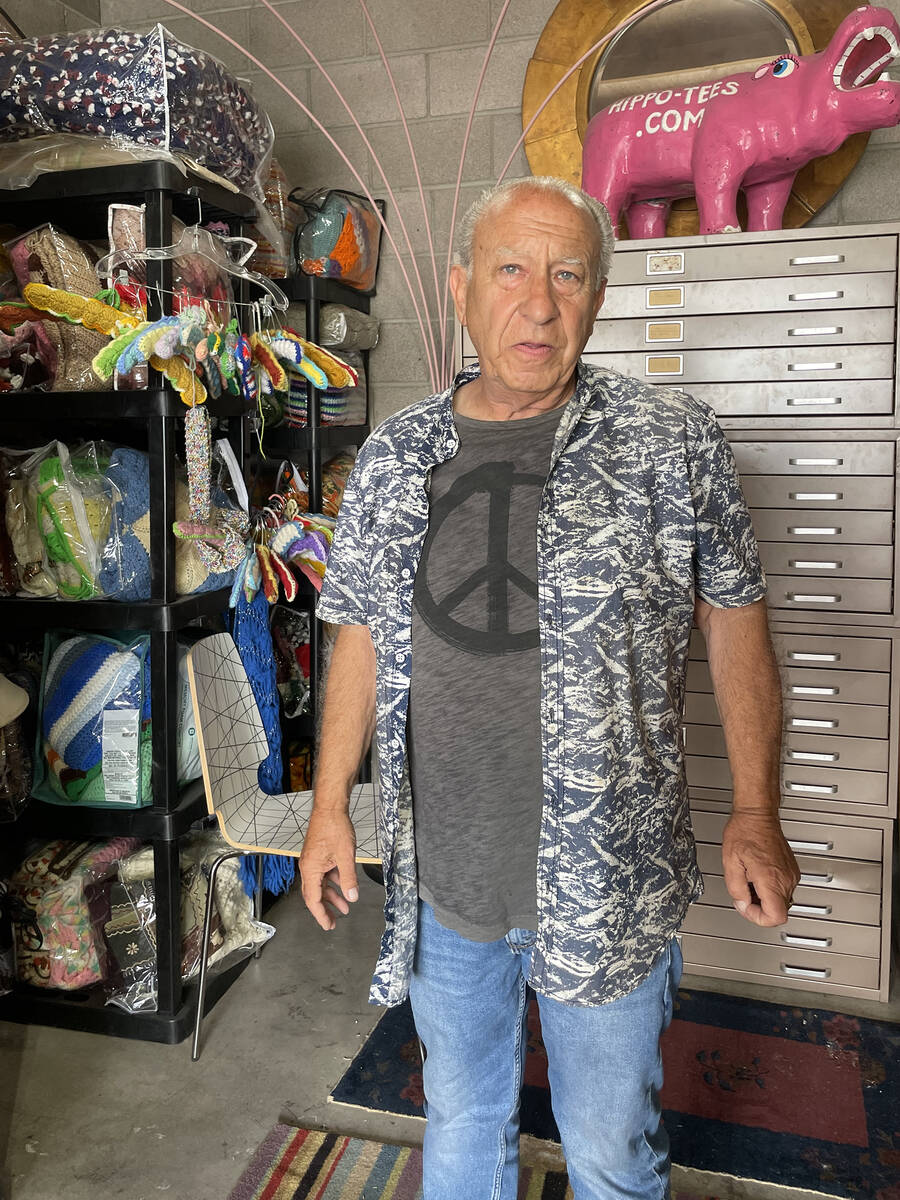
“It” is a hand-crocheted blanket known popularly as an Afghan and “Jeffrey” is Jeff Axelrod, a local artist and collector known by many as Afghan Man, whose story goes way deeper than just the piles of colorful blankets in his storage unit.
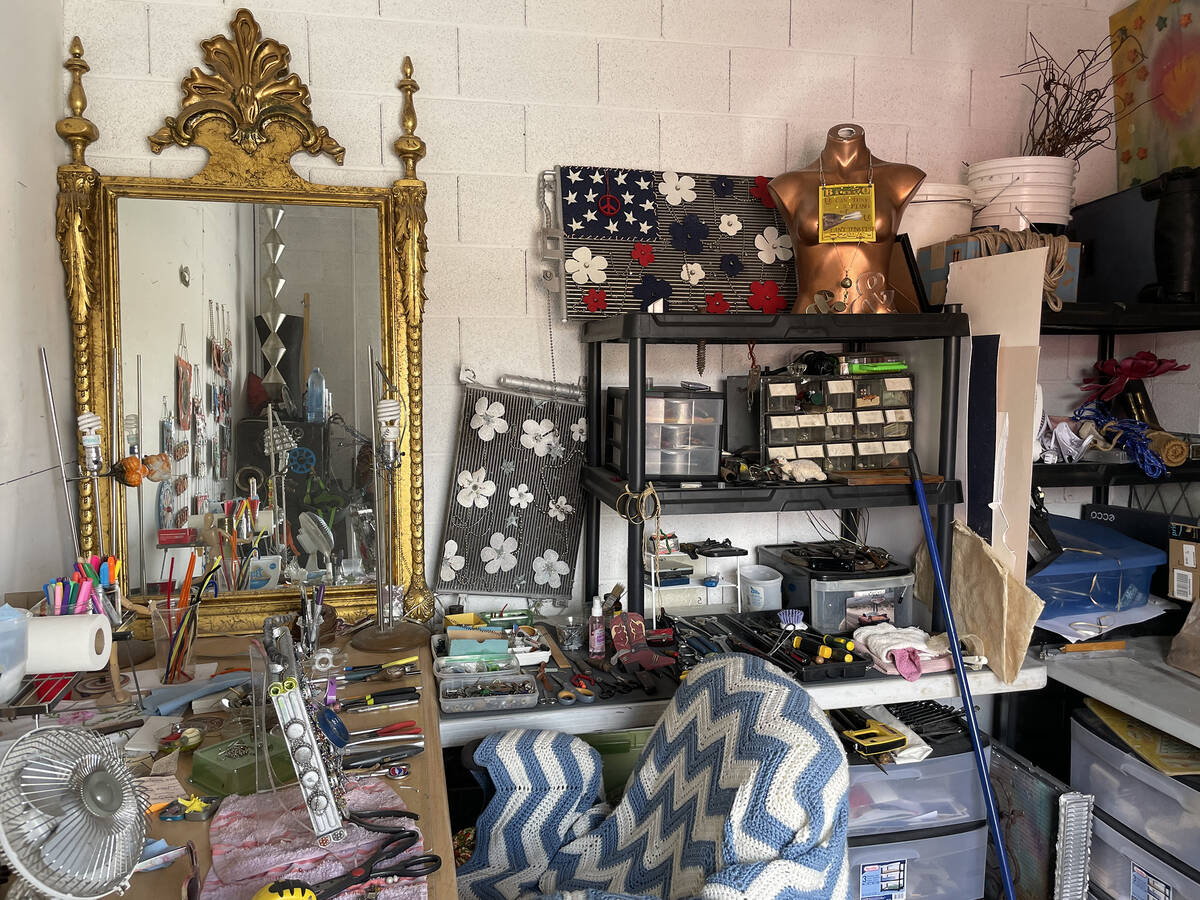
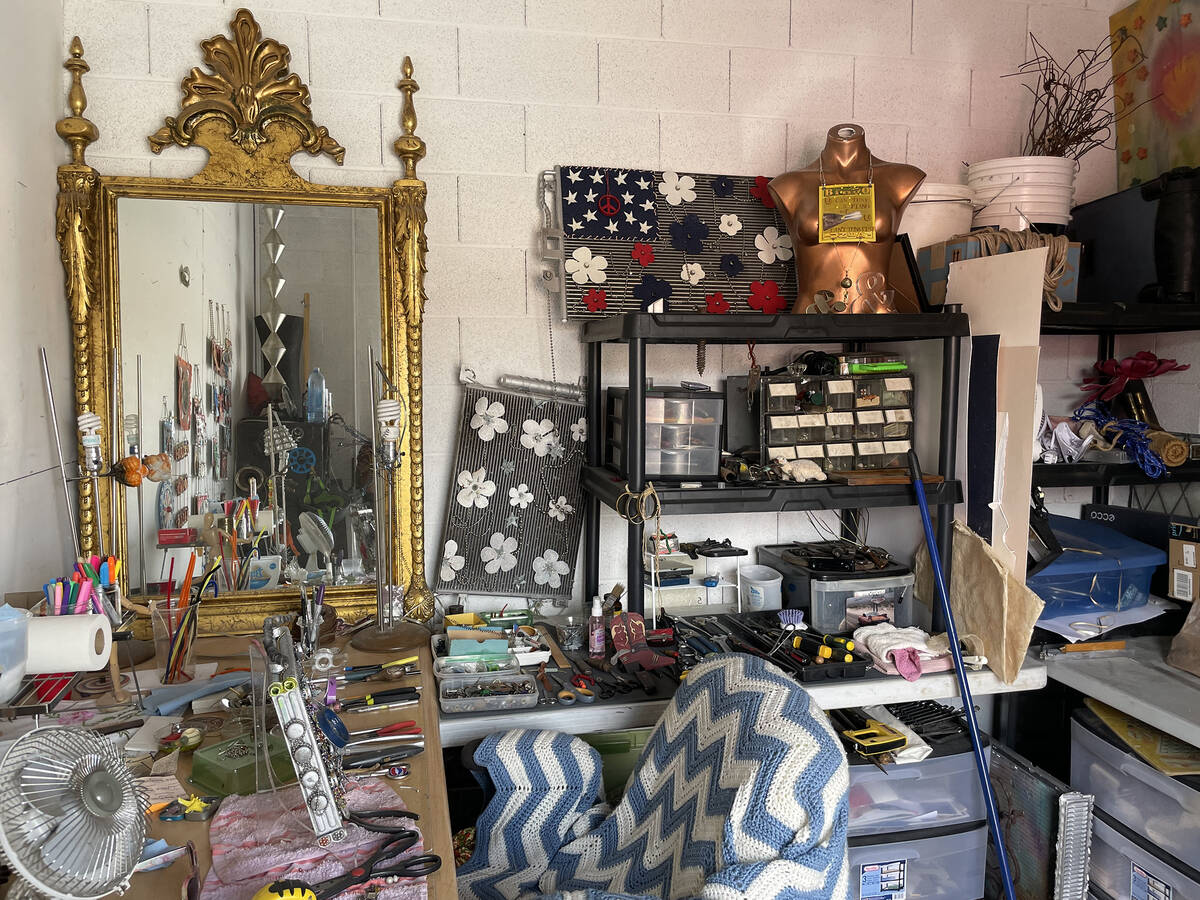
Walking into his apartment is like entering an explosion of raw creativity. Every surface of every wall is covered with artwork he’s created of a type called “assemblage” or art created by assembling disparate elements —often everyday objects —that are often salvaged by the artist. Axelrod is constantly on the hunt for odd-but-beautiful items for his art, which is what led him to the blankets.
“I volunteer a lot to help clean out old houses or buildings like churches and I probably came across an Afghan doing that and was just struck by it and started collecting,” he said.
He has hundreds in a bay in the storage yard. Enough people know about his collection that they reach out to him with blankets they found at a yard sale or that someone was about to throw out. Axelrod accepts them, has them dry cleaned and bagged and then they get stacked on shelves.
Handmade Afghan blankets sell on various websites for hundreds of dollars each, but Axelrod has no interest in selling them (however, a visitor to his home will nearly always end up taking one home with them).
“To me, they are just art,” he explains. “I mean, look at these! Every one of these represents probably a year of someone’s life that they took to make it. I love the texture and the colors and the patterns.”
He tells a story about two blankets, one all bright white and the other a rainbow explosion of color. “I tell people, look at this one,” pointing to the white Afghan. “I gave that one acid and it turned into this!” indicating the color explosion.
And, speaking of acid…
Axelrod has a history forever tied to sex, drugs and rock and roll, his fascination with blankets notwithstanding.
At root, he is a businessman with the soul of an artist. He moved from Boston to New York in the 1960s and by the latter part of that decade owned a gas station and two parking lots in the area of the city known as Chelsea.
“We were always pretty wild,” he recalls about his group of friends. “We would go out to a restaurant dressed up like it was Halloween and order food but tell them we would not use utensils and just eat Viking-style.”
His friends told him he needed to move to the West Coast so he got rid of the gas station and got to California as a stowaway.
“I had friends who were stewardesses and they said they could get me on. So I put on every piece of clothing I owned and packed everything else into a small duffelbag and they snuck me onto a plane and stashed me in a bathroom. When we finally took off, they took me out of the bathroom, handed me a glass of champagne and plopped me into a seat in first class.”
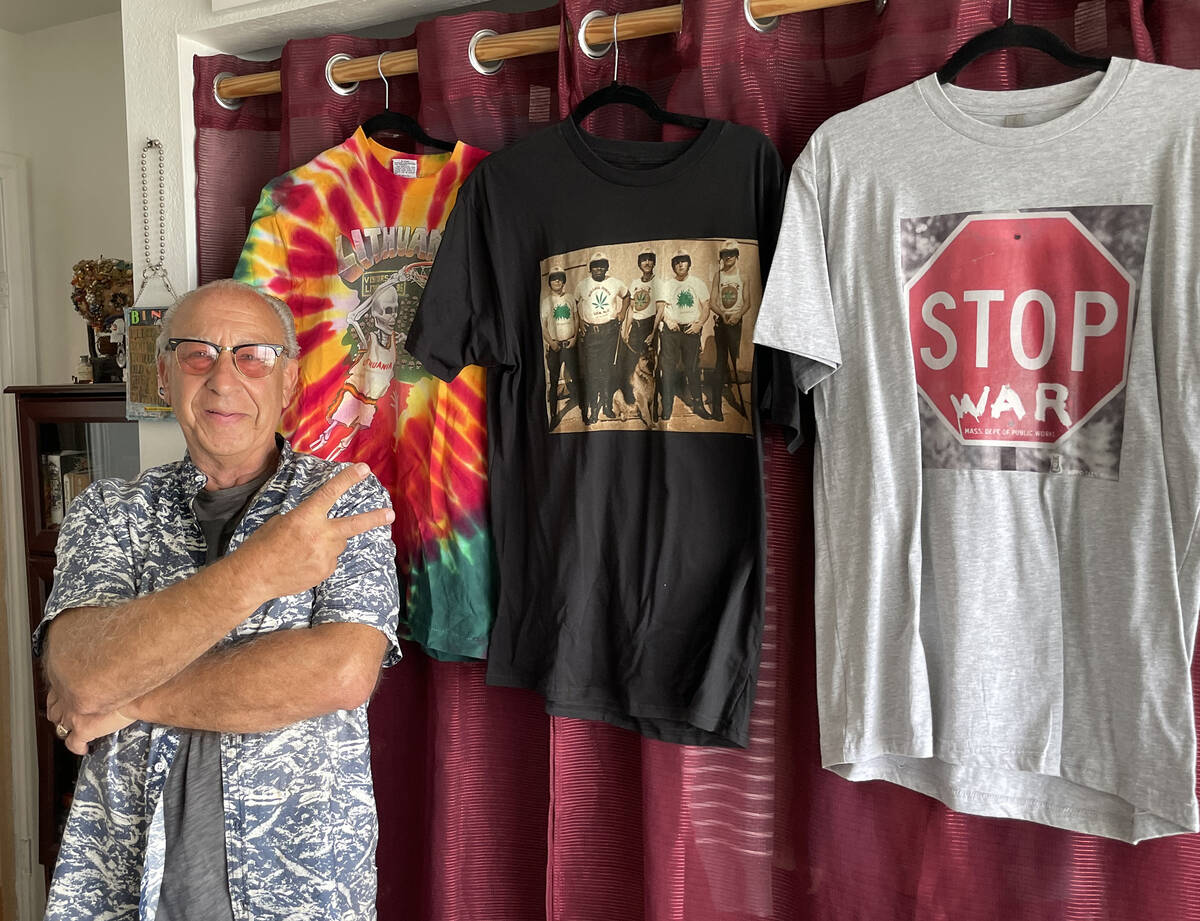
That was 1969. He made his way from Los Angeles to San Francisco, where he met Barry Anderson and John Bulka. Barry was an artist and John could build anything out of scraps and Jeff was the business guy. They decided to try making silk-screened T-shirts for the bands around the Bay Area and Hip-O-Potamus Creations was born in 1970.
Their first rock and roll client was the guy who ran the Winterland auditorium who asked if they could do 40 custom shirts for a show happening in just two days. “We had no idea how to do 40 shirts that fast but we said yes and they sold out and that was really the beginning.”
Name a big band from that era or name a graphic trope and Hip-O-Potamus was probably involved. The skull and roses that became synonymous with the Grateful Dead was theirs as were the trippy mushrooms that adorned album covers and countless T-shirts for the Allman Brothers. Their pot leaf designs were ubiquitous during the first attempt to legalize marijuana in 1972. There were epic parties and stories that can’t be told in a family newspaper. There were setbacks that almost put them out of business.
Like when they were working in a warehouse in Marin and the fire inspectors came by and told them that they could not continue without a fire exit and that they had one day to correct the issue. Problem, the building had only one entrance at the front. “The art guys painted a big red square on the back wall and stenciled the word ‘Fire Door’ onto it. When the inspectors came back the next day, they came in the front door, looked across the room and saw what looked like a door. They said we were good and left.”
As good as rock and roll was to the company, the real tsunami of business began in 1977 when they met a young Bay Area filmmaker named George Lucas who tagged them to do T-shirts for his new movie called “Star Wars.”
“It was never-ending,” he recalls. “For several years, it seemed like we did nothing but Star Wars merch. We would print it by the truckload and it was still not enough.”
At some point in the mid 1980s, Axelrod started to branch out. Among other ventures, he turned a friendship with one of the heirs to the Fairmont Hotel in San Francisco into a business that made high-end bathrobes for most of the big-name hotels in the U.S. Eventually, he started doing his own artwork, which is what led him to Boulder City.
“I have always used unusual materials and have for years painted using tea. My interest in different kinds and colors of tea led me to a tea convention in Las Vegas,” he explains. He was introduced to the woman who ran the convention and that turned into a relationship and he moved in with her in Sun City Anthem. When that relationship ended, he made his way to Boulder City. “I bounced around town for a while. First up by Hemenway Park and then in the mobile home park on the west end of town.” Eventually, a friend offered him the space above the boat storage yard.
While he sold Hip-O-Potamus to Winterland Productions decades ago, a version of the company carries on online under the name of HippoTees.com and you can still order custom shirts designed by Barry and sold by Axelrod.
But he is really all about his art these days and seems on a constant hunt to find beauty in the mundane, be that in a disused and discarded blanket or the cut-off end of a banana peel that he has dried and decorated with glass beads and combined with pieces of sandpaper into a collection of flowers that sits above the sink in his small but functional kitchen.
“I love Boulder City,” he says. “I can always find something out here that someone is going to throw away that I can turn into art.”