Remote wildlife refuge offers beauty, diversity
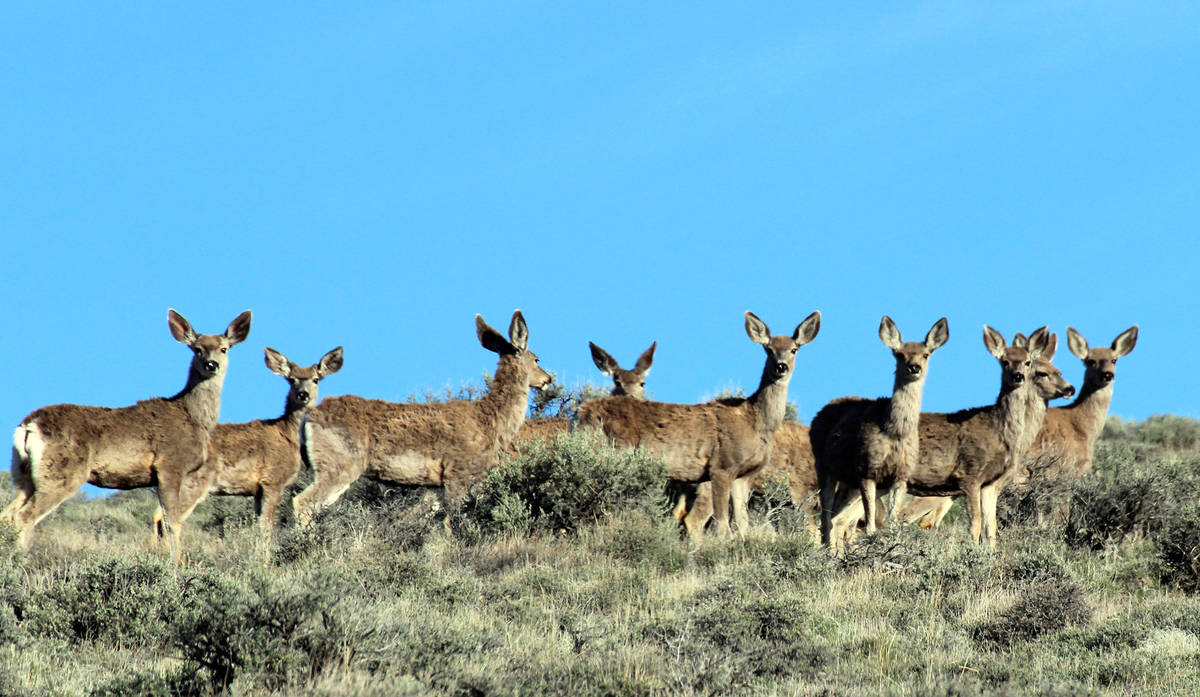
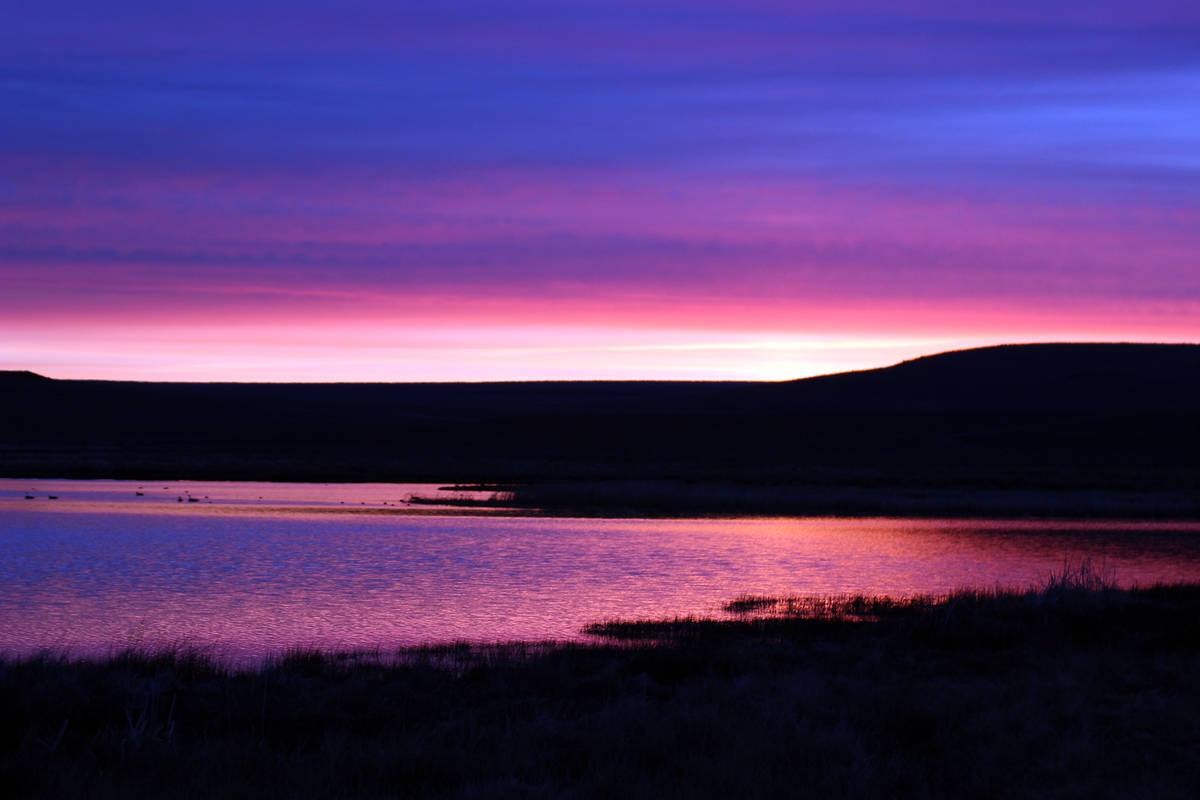



If you are a wildlife photographer, aspire to become one or simply enjoy a very remote place “where the wild things are,” consider investing some of this long summer in a visit to Sheldon National Wildlife Refuge in extreme northwest Nevada.
The refuge lies on the state’s northern border and extends slightly into Oregon. Encompassing more than 900 square miles, it was established in 1931 to protect the American pronghorn. It is also home to more than 270 wildlife species including California bighorn sheep, mule deer, mountain lion, bobcat, pygmy rabbits, greater sage-grouse, porcupine, American pika, beaver and a wide variety of waterfowl and other birds.
Just getting there requires commitment as it’s a slightly more than 10-hour drive from Boulder City, depending what entrance you use, but the rewards are great. The refuge is a landscape of rimrock tablelands, open high desert of sagebrush, as well as narrow gorges, ponds and lakes and geothermal hot springs. The best times to see pronghorn are in the late summer and in fall when they can be seen feeding and finding water.
In this remote area of the state, your own camping gear constitutes the accommodation of choice. In Sheldon, camping is permitted year-round in designated campgrounds or with a backcountry permit. Virgin Valley Campground provides fire rings, tables, pit toilets, potable water and a warm-spring pool. Campgrounds at Catnip Reservoir, Big Spring Reservoir, West Rock Spring, Fish Springs and Badger have fire rings and pit toilets. Other designated camping spots throughout the reserve just have fire rings. Download the map before you leave home for camping locations that will suit the time of year you will be arriving. Elevations range from 4,235 to 7,294 feet so temperatures will vary.
Driving around the refuge is one of the best ways to experience the diversity of the place. Highway 140, which crosses through the refuge east to west, is the only paved road. Virgin Valley Road and county roads 8A and 34A are improved gravel, but all other roads are unmaintained so venturing onto them requires a high-clearance vehicle, preferably four-wheel drive. The vehicle should have good off-road tires, with spares, for some roads have very sharp rocks, such as obsidian. Wet weather often turns many of the roads into muddy messes and they become impassable.
The refuge offers no services, so be sure to bring all your own supplies before heading in. It’s especially important to have a full gasoline tank; I recommend bringing extra fuel in cans if you plan on doing a lot of exploring. Depending where you enter the park, you can fill up at Denio, about 14 miles from the east boundary; in Winnemucca, about 100 miles southeast; or in Gerlach, about 70 miles to the south. From the west, the closest community would be Adel, Oregon, about 23 miles away.
The refuge is open year-round and there are no entry fees. It is managed as part of the Sheldon-Hart Mountain National Wildlife Refuge Complex. To download maps or get detailed driving directions, visit www.fws.gov/refuge/Sheldon/. For more information, call refuge headquarters at 775-941-0199.
Many of Deborah Wall’s columns have been compiled into books about hiking in the Southwest. She is also the author of “Great Hikes, a Cerca Country Guide” and a co-author of the book “Access For All, Seeing the Southwest With Limited Mobility.” Wall can be reached at Deborabus@aol.com.
Directions
Take U.S. Highway 95 north for 241 miles to State Route 376 north in Nye County. Stay on State Route 376 north for approximately 100 miles and then travel on U.S. Highway 50 west for 12.7 miles. From there get on Interstate 80, heading west, in Battle Mountain and travel for 87.6 miles. At that point, follow Interstate 80 west and U.S. Highway 95 for 83 miles north to State Route 140 in Humboldt County. Continue on State Route 40 for 109 miles until reaching Sheldon National Wildlife Refuge.