Pomegranate rind, skin can vary in color
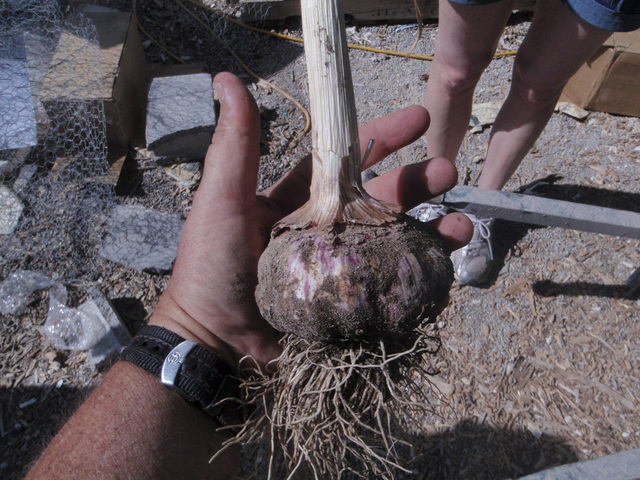




Q: I planted a pomegranate tree two years ago and this year it produced six fruits. One was of decent size while the others were on the small side. When the large one split, I picked it only to find the inside was light pink. The seeds were well-developed but not the expected red color. What can I do to improve the fruit on this tree?
A: The key question will be how sweet the fruit was. Some pomegranate varieties will have fruit where the insides, the arils, never develop a dark red color. Some can be quite pale and anemic-looking in color.
You would not expect this on a pomegranate variety such as Wonderful, which has dark red outer skin while the fruit inside, the arils, are also dark red. Because this type of pomegranate represents probably more than 95 percent of all our pomegranates planted, everyone thinks a pomegranate has to be dark red on the outside and dark red on the inside.
This is not true. There are several varieties of pomegranate that are not. Pomegranate rind or skin can vary in color from lemon yellow through all shades of pink and red all the way to purple. The insides can be nearly white to dark red or even purplish red. The key to whether they are ripe is the taste.
If you have one of these varieties that is not red, you will never get dark red on the inside or the outside no matter what you do. A good example is a fairly common variety that we call Utah Sweet. You will find quite a few of these growing in the Las Vegas Valley.
When a pomegranate is ready for harvesting, the insides will become sweet tasting. The amount of “pucker” or tannins or bitterness will vary as well from extremely “pucker” to very sweet with very little “puckery” flavor depending on the variety. But the key to when it is ready is how sweet it is, not necessarily what color it is.
If your variety of pomegranate is the darker red type, just wait longer and leave it on the tree. If it is a variety that will never turn dark red, then look for the fruit splitting and begin to start sampling for sweetness. Depending on the variety, pomegranates begin to ripen in September and can last well into November. Wonderful pomegranate is usually ready right around Halloween.
Q: Is buffalo grass an acceptable turfgrass for our climate? I am aware its appearance is nothing like tall fescue or hybrid Bermuda grass. We are looking for a grasslike look without the high-water use and also the medium to high maintenance that conventional turfgrass demands.
A: Actually, the newer varieties of buffalo grass look as good as anything else. Buffalo grass is similar in its growth to hybrid Bermuda since both are warm-season grasses. In other words, both buffalo grass and hybrid Bermuda grass will turn brown in the wintertime. Bermuda grass can be overseeded in the fall to maintain a green lawn during the winter. Buffalo grass should not be overseeded.
The newer buffalo grasses have come a long way but the problem is getting the good varieties locally. You would have to order it from out of state via the Internet. I would use plugs rather than seed.
Research done by Arizona State University has demonstrated that buffalo grass uses about the same amount of water as hybrid Bermuda grass, which is 25 to 40 percent less than tall fescue. So there would be no water savings over hybrid Bermuda if you were to plant buffalo grass.
Buffalo grass grows more slowly and requires less fertilizer than either tall fescue or hybrid Bermuda grass. In fact, buffalo grass does not like nitrogen fertilizer and does worse if you fertilize it.
The advantages of buffalo grass are that you don’t have to mow it as often and it does not require, nor should it ever have, high levels of nitrogen fertilizer applied to it.
Bareroot fruit tree orders from the University of Nevada, Cooperative Extension Master Gardeners Orchard in North Las Vegas are strong and some varieties are nearly sold out. If you need bare root fruit trees for a late January or early February delivery in Las Vegas, you need to get your order in now. You can email me for a list of the trees still available at extremehort@aol.com.
Bob Morris is a horticulture expert living in Las Vegas and professor emeritus for the University of Nevada. Visit his blog at xtremehorticulture.blogspot.com.