Beer-loving burro adopted by Goldfield


Most everyone loves a good animal story. Here’s one of particular interest, something to go searching for in the tales of Nevada’s Yesteryear.
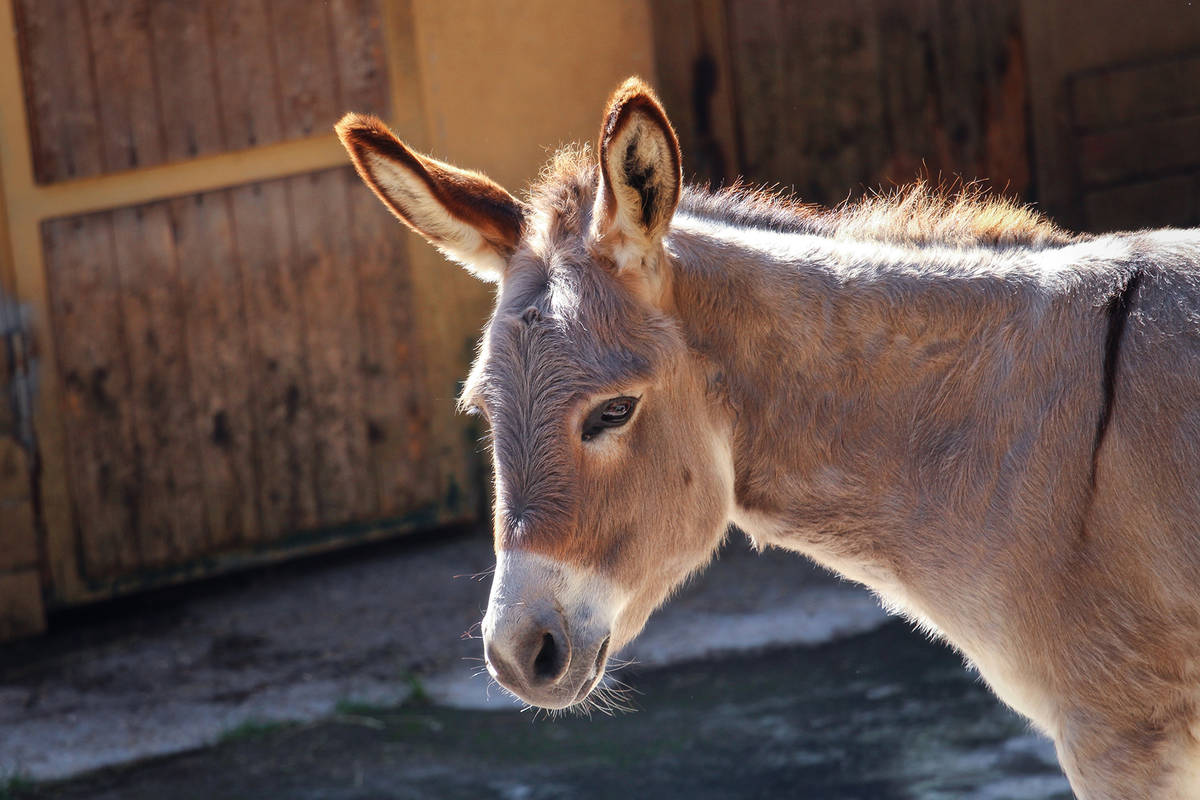
In the mining town of Goldfield around 1912, lived a tiny burro by the name of Smokey. Donkeys had once been used in the area to pull the ore cars out of the mines. But when that use ended, the burros were turned loose to fend for themselves. Pioche, in the mountains of northern Lincoln County had a few, so did the town of Goldfield and most likely other places as well.
These ownerless donkeys now simply foraged in the garbage cans of the towns, the restaurants and saloons, etc. Smokey was one of these. Historians say his particular favorites were cigar butts he found discarded along the streets of the business district where many of the saloons still operated. The call for saloons in mining towns never slacked.
One day Smokey happened upon a half-full beer bottle and took a liking to that, too, as one writer described, “developing a well-known enthusiasm for the beverage.” This became understood among the bartenders in Goldfield and they began to save the leftovers of beer bottles in a bucket for Smokey to drink from.
Witnesses reported Smokey would come ambling along the street, lower his head and gently shove open a swinging door and wander into one of the saloons at the corner of Crook and Main, maybe into the Palace, the Hermitage, the Mohawk, the Northern, or down a bit further to the Monte Carlo. It didn’t matter which one was first. The routine was simple. Bartenders put out the bucket of saved beer and Smokey would cherish every drop.
Historians again note that, “sometimes he would twitch his ears for more and a friendly miner would order another round, just for Smokey. He was a town favorite.”
Alcohol has the same effect on burros as it does on humans. They get drunk, too. After drinking his fill from as many of the saloons that he wanted, Smokey would normally stroll to a wall somewhere, lean up against it and fall asleep.
At times, it was reported, “he became so inebriated he would lie down and snooze right on the sidewalk. But the tolerant people of Goldfield paid no attention, even the ladies picked up their long skirts and just stepped off the sidewalk into the street, to walk around his sleeping form.”
As might be imagined, the children of Goldfield loved Smokey and made a great pet out of him. He took part in many of their games and activities. They would bring him scraps of food and pet him. And oftentimes, too, he would be just too drunk to respond. Smokey just didn’t know his limit.
Tobacco and alcohol stunted the growth of Smokey and he remained smaller than most all his life. He also learned, it is said, “to plead eloquently for a drink with his big eyes and big ears pointed silently at some friend until they could withstand him no longer and give in.” He was Goldfield’s “most accomplished, but lovable, town alcoholic.”
Time passed and, in 1914, either from natural causes or from a long period of indulgence, one day Smokey was found dead. The town garbage collector, Shorty Nolting, loaded the little body into his wagon and sent word around town. As he drove up the road to the town dump, the children all flocked into a small procession following behind. A small grave was dug and Smokey lowered in. The children held a small funeral service.
(Adapted from a story by Harold’s Club, 1953, and the Nevada Historical Society)
Dave Maxwell is a Nevada news reporter with over 35 years in print and broadcast journalism, and greatly interested in early Nevada history. He can be reached at maxwellhe@yahoo.com.