Vet warns about dog injuries in summer




It’s not uncommon this time of the year to see people walking their dogs with temperatures 100 degrees and above or worse yet, seeing them left in a parked car.
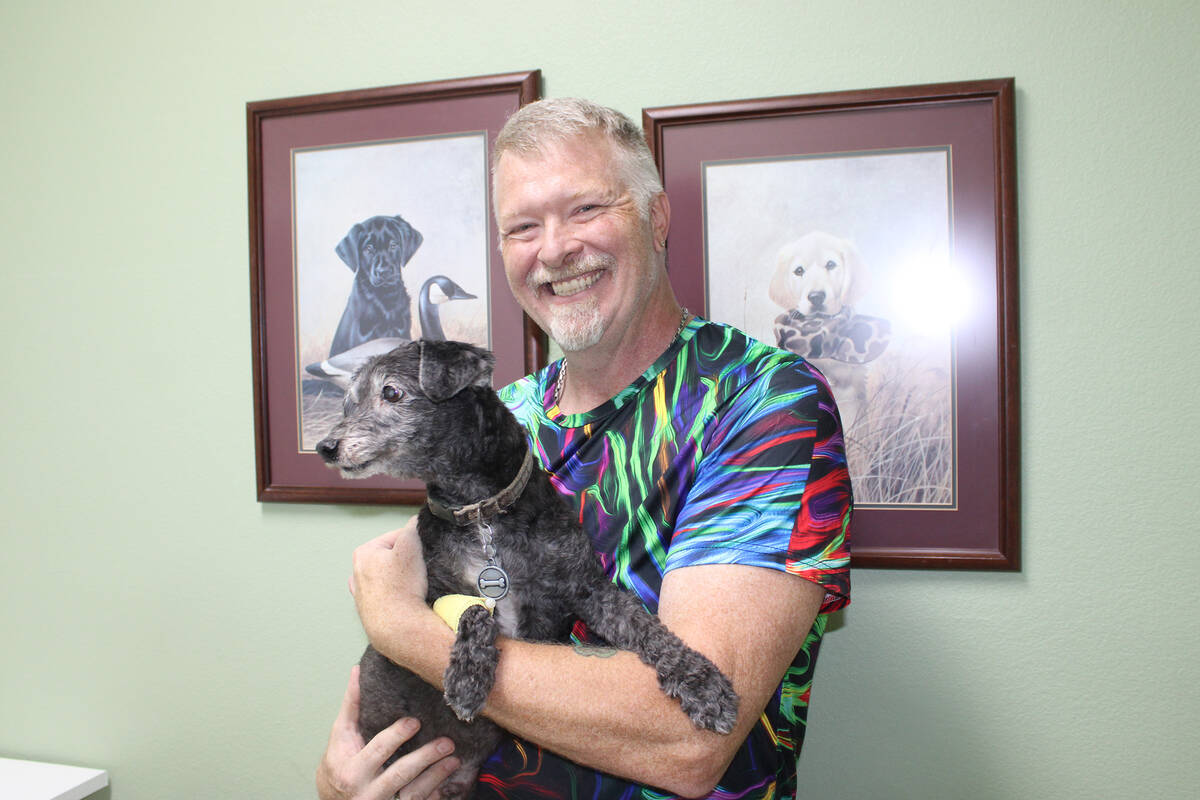
Dr. William Flannery, owner of the Greatful Pet Animal Clinic in Boulder City, urges people to use common sense when it comes to their dogs and offered tips of when it’s best to walk them.
“My recommendation this time of year and up through September and even going into October is that you’ve got to be an early bird,” he said. “So, 5 a.m. to 7 a.m. or maybe 7:30 a.m. is best because after that the temperatures begin to rise. Mornings are usually your best and safest.” He said that’s because the pavement or sidewalks have had time to cool down a bit.
“I’ll tell people, take your shoes and socks off and go and stand on it (sidewalks). If you can’t take it, there’s a chance your dog will burn its pads, so they shouldn’t walk on it either. I also tell people, put a jacket on and walk around the block and see how you feel.”
If owners choose to shave their dogs down, he recommends it’s done once a month through the summer.
For those who may not be early risers, with temperatures still at or above the triple-digit mark in the evenings, Flannery said your best bet is to wait until at least 9 p.m. That way the temperature and sidewalks are a bit cooler.
“It’s both the radiant heat that comes from the ground from the asphalt, concrete or even dirt as well as the heat from the sun,” he said. “If there’s no breeze blowing, those walking surfaces can become 140 to 150 degrees pretty quickly, just like the insides of cars.”
He said, like humans, dogs can suffer from heatstroke. Dogs pant to expel extra heat from their body. The ironic thing is, he said he often sees more heatstroke cases when the temperatures hit 90 degrees than in the middle of summer, when owners are more conscious about the heat. Symptoms of heatstroke begin with heavy panting followed by vomiting, diarrhea and extreme lethargy and finally into a full collapse.
“At that point, it’s an extreme emergency and they need to be brought in and cooled off as soon as possible,” he said, noting that if symptoms persist, seek medical help. “People have gotten better in terms of pet care in the summers and their awareness but things still happen.”
He noted that older dogs and those that are short-nosed such as a pug or bulldog, are more susceptible to heatstroke than many others.
Short-haired dogs or those that are missing patches of hair need to have baby sunscreen placed on their skin when outdoors.
“A dog’s skin can burn just like ours,” he said.
Flannery discussed the seriousness of when pets are left in vehicles. While this time of the year it seems that is obvious to avoid, it happens. And owners should be aware that even if it’s 70 degrees outside, within 10 minutes, temperature can hit nearly 90 degrees inside a vehicle.
“It can be really frustrating,” Flannery said of when he sees or hears of cases involving pets in a vehicle. “Oftentimes it’s, ‘Oh, I’m just running into the grocery store for five minutes.’ And then they run into their friend and it’s now 10 minutes and then there’s a long checkout line. So, five minutes can turn into 25 or 30 minutes and in that extreme heat, you can cook them (pets). I hate to say it but it’s true. A cracked window does not work. It doesn’t allow enough heat to come out, so inside those cars, it’s like an oven and can get to 130 to 140 degrees in a matter of minutes.”
He added, “This time of the year, instead of them driving around with you, just leave them at home where they’re safer and nice and cool.”
As for those that are outside dogs year-round, Flannery said that ideally, they would be allowed in the home. If not, it’s important that they have plenty of water, a shaded area and possibly a mister or fan.
Ron Eland is editor of the Boulder City Review. He can be reached at reland@bouldercityreview.com or at 702-586-9523.