Nevada wants to cut its own Colorado River share for emergency conservation need
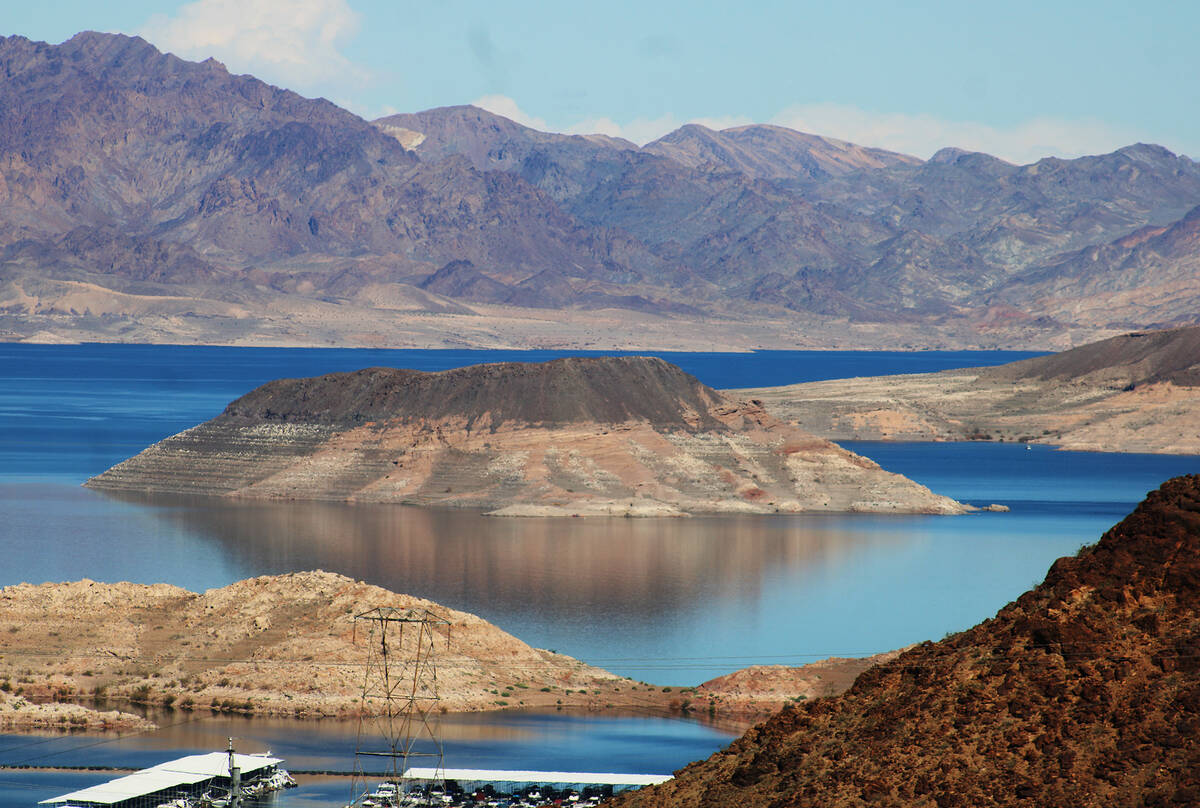





Nevada, along with its sister states of California and Arizona, has proposed taking a significant cut to its share of the Colorado River, pending approval from officials from each state.
Through a news release earlier this month, the Lower Colorado River Basin states of Nevada, California and Arizona said they are willing to up their commitment to stabilize the river’s water supply with a plan that would deliver up to 3.2 million acre-feet of water savings through 2028.
The announcement came after the Upper Colorado River Basin states — a group that includes Colorado, Utah, New Mexico and Wyoming — last month called for a third-party mediation process as the two groups continue talks toward a new Colorado River water plan. About 40 million people depend on the river for their water supply.
During the negotiation process among states, Lower Basin officials had offered to take cuts of 1.25 million acre-feet annually, while Upper Basin officials maintain their water users have nothing more to give and regularly face shortages.
“This proposal is about moving from ideas to implementation,” said John Entsminger, general manager of the Southern Nevada Water Authority, in a statement. “Now is the time for every water user in the Basin to double down on water conservation as we face historically dry hydrology.”
For Nevada, that could mean a 50,000 acre-foot annual cut to its 300,000 acre-foot total allocation over the next two years, according to Bronson Mack, a spokesman for the Southern Nevada Water Authority. One acre-foot of water is roughly enough to sustain two single-family households for a year.
Under the 1922 Colorado River Compact, Nevada’s share is the smallest of any state; and even as the Las Vegas Valley has added hundreds of thousands of residents since the early 2000s, conservation measures and water recycling have allowed the valley to use less than it did at the turn of the century.
Last month, in order to keep water flowing into Lake Mead by preserving Lake Powell levels, the Bureau of Reclamation and Interior Department said it would move water into Lake Powell from an upstream reservoir and reduce flows into Lake Mead. Below a certain level in Lake Powell, the federal government says it’s not sure any water could move downstream.
A dire snow season
According to a letter from the Lower Basin states to the Interior Department shared with the Las Vegas Review-Journal, in both 2027 and 2028, Arizona will contribute 760,000 acre-feet of its 2.85 million acre-foot allocation, while California will commit 440,000 acre-feet of its 4.40 million acre-foot share.
Snowpack in the Rocky Mountains has failed to deliver this water year, with water managers bracing for what’s expected to be a runoff season that rivals 2002, the year that ushered in the modern notion of mega-drought in the American West.
Record low levels at Lake Mead could halve hydropower production at Hoover Dam as soon as this fall, the Bureau of Reclamation said after it declared it was reducing releases from Lake Powell.
It doesn’t appear that Lower Basin officials are off the topic of more cuts and conservation in the Upper Basin, however.
The Lower Basin states called for the Upper Basin to “step forward now with verifiable water contributions to help stabilize the system and support a near-term, seven-state bridge,” maintaining it cannot solve the Colorado River crisis alone.
To implement the proposal, the Southern Nevada Water Authority board, Arizona Legislature and California water agencies must approve it. It will require federal partnership, too, state officials said.
In the letter to the Interior Department, the states say they will explore creating a plan to conserve an additional 700,000 acre-feet of water by August, with minimum contributions of 100,000 acre-feet from Nevada and 300,000 acre-feet from California and Arizona. Seeing that through would require federal funding, the states say.
The proposed cuts are not final and subject to change, the states insist. The announcement should not be interpreted as a “waiver, relinquishment, or modification of any party’s rights, claims or defenses” under federal law, they said.
Contact Alan Halaly at ahalaly@reviewjournal.com and Bryan Horwath at bhorwath@reviewjournal.com