Best plum to grow in the Mojave Desert? Horticulture expert explains



Gardening in Southern Nevada always has its challenges.
Horticulture expert Bob Morris gives advice on planting trees and caring for fruit trees in the Mojave Desert:
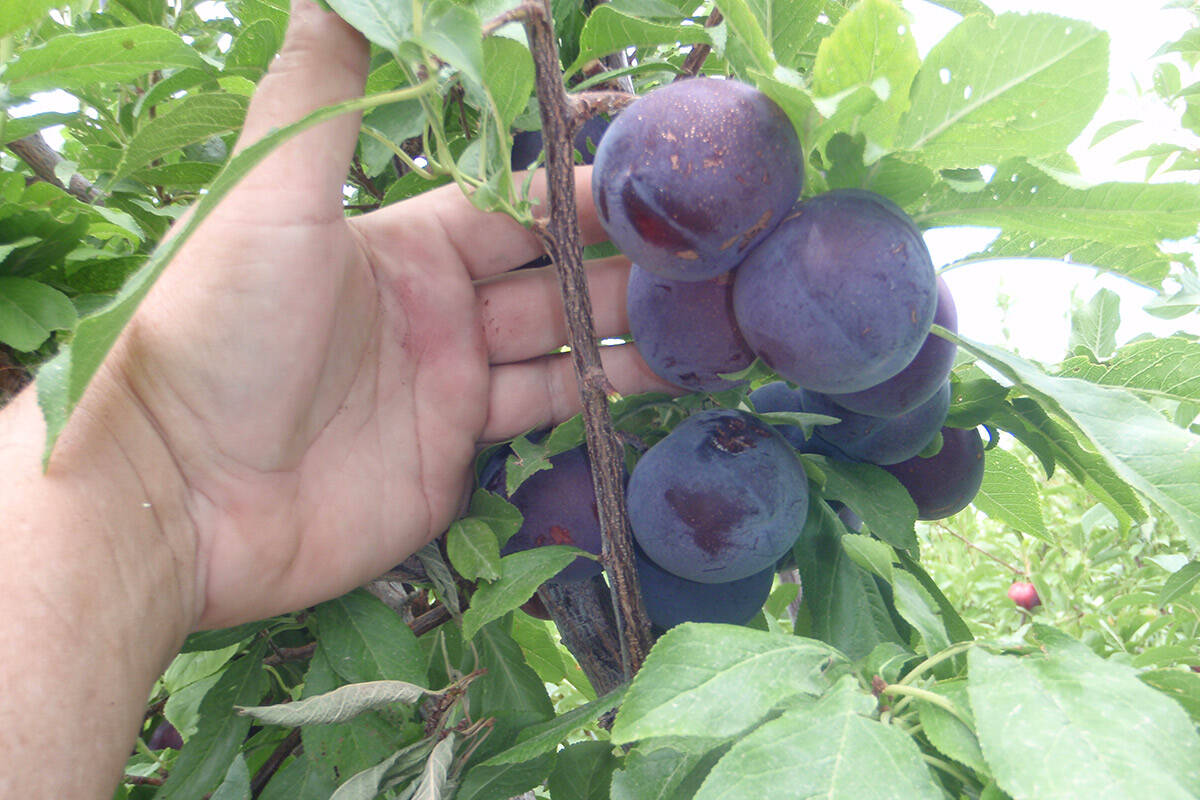
Q. I planted some fruit trees in Searchlight, Nevada, which is at about 3,500 feet of elevation. My plum tree, although large, produces sick-looking fruit that are not edible. Is there anything I can spray or treat the tree with to improve the fruit or do I have to start over?
A. It sounds like you have a bad variety of plum. No, there is nothing you can spray or use on the fruit tree to improve the fruit. The fruit will stay the same regardless of the fertilizer or sprays you use. Unfortunately, you must start over.
All plums will not work in the desert. The variety you select is very important. If you are dead set on plums then I would suggest you decide on whether you like hard or soft fruit. Although many will work, of the soft-fruited varieties, buy ‘Santa Rosa’, ‘Catalina’, ‘Burgundy’, and ‘Burbank’ which are purple or dark red. I have found them to produce good fruit in the desert.
Don’t forget pluots. Pluots are hybrids of plum and apricot but produce fruit that look like plums. Of the red pluot varieties that have performed well and productive, include ‘Flavor King’, ‘Dapple Dandy’, and “Flavor Grenade’.
This is a good climate for plums or pluots but avoid hot locations. All of them need to be thinned for larger fruit. They grow best on eastern or northern exposures, 8 to 10 feet apart, unless grown in the shade of other trees like in an orchard. Plant them in amended soil and cover the soil with wood chips. Any of the semi-dwarfing rootstocks work well.
Q. I have a parking area that never gets any shade. I want to plant something there that would shade the car. Can you suggest a tree for that spot?
A. Trees use water. Larger trees use more water. With our water crisis and plant water use I would avoid planting trees. Instead, I would construct a shade structure. Shade structures don’t use any water but will require regular maintenance instead.
Materials that require less maintenance are made from cement and aluminum or steel. If you want it to decorate it with plants, use vines instead. Vines planted at the corners and allowed to grow along the top will require less water than a tree.
Bob Morris is a horticulture expert and professor emeritus of the University of Nevada, Las Vegas. Visit his blog at xtremehorticulture.blogspot.com. Send questions to extremehort@aol.com.