Check my sources — please

Much has been written in the Boulder City Review opinion pieces recently about “scientific research” and factual data regarding in the COVID-19 pandemic and efforts to prevent and treat the disease. This includes (false) claims from other opinion authors that research has shown that masks are “ineffective at preventing the spread of COVID” (Savord, Oct. 27, and that vaccinated people transmit the virus to others “at a higher rate, and with more serious symptoms” than a person with natural antibodies (Ishihara, Nov. 24).
Seldom — if ever — however, are the sources of this information identified, or the veracity of the data being reported established or contextualized. (Both the false claims above are repudiated by scientific consensus views based on the totality of the current evidence; see Centers for Disease Control and Prevention study summaries, with bibliographic references, of “Community Use of Masks to Control the Spread of SARS-CoV-2” and “SARS-SoV-2 Infection-Induced and Vaccine Induced Immunity” at cdc.gov.)
With the 21st century’s decentralization of news and information, and the accompanying explosive growth of social media and its associated “news feeds,” the era of a few nonpartisan, reliable sources of information trusted by the vast majority of Americans appears to have ended. And so, with the great splintering of (partisan) information in the current social media age, comes a new responsibility: to be our own fact checkers and reference sleuths.
As a medical researcher for more than 20 years, I can personally attest to the slow, iterative and arduous work that sound scientific research requires, including the report of study findings to research colleagues and the general public. The gold-standard of the scientific process is the peer-review system, for everything from applications for grants that help fund research, to the publication of study results in specialized outlets — in this case of COVID — professional medical journals.
“Peers,” in this instance, are other experts with advanced training and research experience in one’s field. The system, imperfect as it is, nevertheless is the best that has been devised, and has played a pivotal role in a modern era of truly astounding scientific advances in our understanding of everything from the fundamental matter of the universe, to the breathtaking biological diversity of our forests and oceans, to — yes — human infectious disease.
To the surprise of some, scientists are trained to be highly skeptical of new scientific theories and findings. This is especially true of “revolutionary” or fantastic new claims of discovery, whether that discovery is a new planet, animal species or a powerful new treatment for a pandemic disease like COVID.
This is also why publishing any scientific study in a reputable peer-reviewed journal is so very difficult and time consuming; intense skepticism can only be overcome with replicable and irrefutable evidence.
Scientific studies published in such journals are intensely interrogated by several established experts in the field (typically anonymously), and they usually all must agree on the validity and accuracy of the research before it is published. Research scientist authors also typically contextualize their findings and detail the limits of their study design, the results the research generated and the authors’ conclusions. Indeed, publishing a single study in a top-tier science journal is a major career accomplishment.
In past American eras, print, radio and television journalists were trusted sources of news and information. Legendary broadcast-TV news anchors such as Walter Cronkite and Edward R. Murrow were among the most trusted individuals in America in their time. When they reported on important news, nearly all Americans trusted their journalistic integrity, including fact checking and sources, and assumed their reporting was unbiased by partisan politics or other confounding influences.
This is no longer the case. In the new media landscape, we must now all take personal responsibility to investigate the news and information we consume. It is now up to us to critically evaluate what we consume and educate ourselves about what is a trustworthy source.
In the case of the science of COVID, we should ask ourselves if there is a scientific consensus on the issue at hand — whether it’s the effectiveness of masks or the transmissibility of a new variant. We should also dig a little deeper when presented with “facts.”
This might mean investigating what the Vaccine Adverse Event Reporting System numbers actually mean rather than assuming they represent large numbers of fatalities and severe adverse reactions due to COVID vaccinations, as some have insinuated. (Hint: they don’t. See vaers.hhs.gov.)
As the Omicron variant looms as the next chapter of the COVID-19 pandemic and existential issues from climate change to eroding democratic institutions face us at every turn, it’s time to make sure we all do our homework. Critically evaluating the sources of our news and information is now essential. Our lives, and the survival of our democracy and planet, may depend on it.
The opinions expressed above belong solely to the author and do not represent the views of the Boulder City Review. They have been edited solely for grammar, spelling and style, and have not been checked for accuracy of the viewpoints.
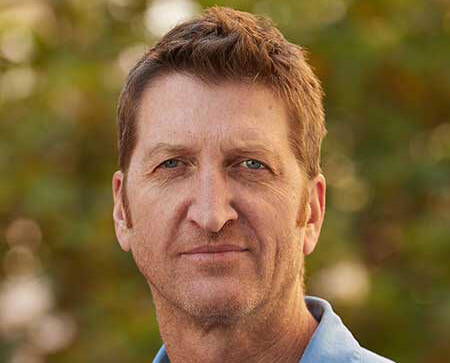
Daniel Benyshek is professor of medical anthropology at UNLV and a proud Boulder City resident.