VOLTZ: Lost opportunities in better water use


Our City Council plunged ahead with further consideration of SNWA’s (Southern Nevada Water Authority) two poorly thought-out water projects on March 14. City Council failed to ask some basic questions before SNWA undertook a wasteful $2.66 million feasibility study using our money. City staff did not think strategically or cautiously about these projects.
To quickly recap, SNWA offered to give us back $26 million of our water purchases for construction of a pipeline to mix raw water at the Black Mountain Reservoir (tank) with treated wastewater, then irrigate city-operated golf courses, parks and other public facilities.
The second proposal involved re-use of the city’s 1930s right of way from Lake Mead to the mothballed water treatment facility, sending processed wastewater to an injection well somewhere east of Hemenway Park. This project generates return-flow credits justifying more development in the Las Vegas Valley. Boulder City receives no direct benefit from these credits, but SNWA would fund all capital costs to build option two.
Several basic questions city officials could and should have asked and answered before making any decisions include:
1. If wastewater treatment plant enhancements brought the water quality from Grade C to Grade A, would that product be usable on the federal cemetery, Veterans Memorial Park and the two city golf courses without harming turf, trees and shrubs? Wouldn’t the federal EPA and/or the Nevada Division of Environmental Protection be able to answer this question?
2. How much money could be saved in capital and operating costs by truncating the pipeline and pumping directly to irrigate only these four facilities?
3. If the city seriously conserved its own water use, not the paltry 5% already committed, could the treated wastewater supply 100 percent of year-round irrigation at the same four facilities?
4. What happens when the multi-decade riparian environment created from discharged wastewater disappears? Why wasn’t the state Wildlife Department’s habitat division consulted for an analysis, without cost to Boulder City, of impact on wildlife species?
5. Why wasn’t the U.S. Geological Service consulted, again at no cost to Boulder City, on whether an injection well anywhere in the Hemenway Valley would enter Lake Mead?
6. Why was BC given four poorly-justified, bloated project options by SNWA without any local citizen input or an SNWA representative present at two city Utility Advisory Committee meetings to answer questions?
One can only speculate that the zest for securing funds from other government agencies temporarily clouded the judgment of city officials on the hard realities of implementing either of these two projects.
They do not address our serious water supply problems today, nor years into the future by the time either project would be designed, sent out for bid, approved, built, and operating.
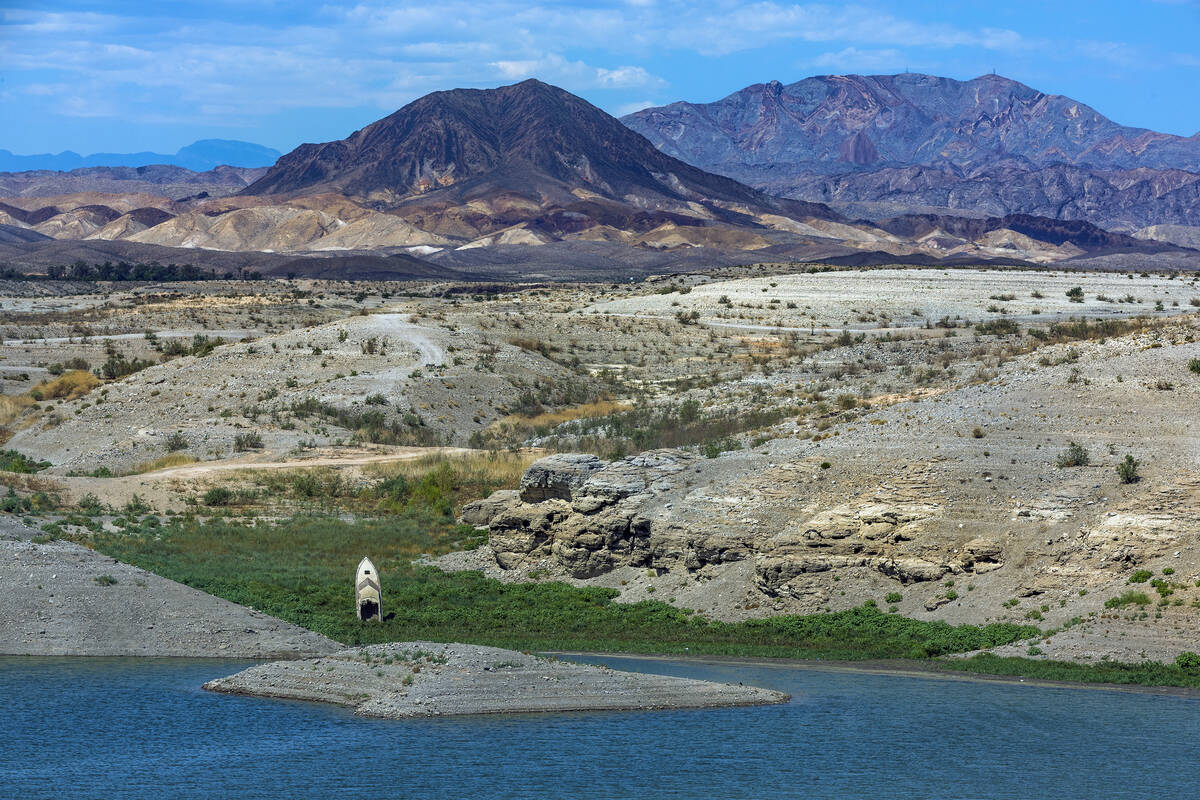
We have been in the grips of more than two decades of drought in the Colorado River Basin. In Boulder City and the southwestern U.S. generally, we have foolishly assumed Mother Nature will solve the problem of too much water use and inadequate supply. We have completely lost that reckless gamble.
For those who say Boulder City’s three billion gallons of annual water use represents a small portion of total Colorado River water demand, that doesn’t excuse Boulder City from doing what it can to be a responsible water user and acknowledge that we live in a desert, not a place with 40-plus inches of rainfall per year.
In only the last few days, the federal Bureau of Reclamation (BOR) has announced two options for cutbacks of Colorado River water usage: An across-the-board, flat percentage reduction of river draws or cutbacks based on water rights seniority. Either way, Southern Nevada and Boulder City are ill-prepared with concrete plans to reflect new water supply cuts. The BOR has been remiss in not mandating cutbacks years ago. Already the city’s purchased-electricity costs increased by millions of dollars because inexpensive Hoover Dam power has been declining with Lake Mead water levels. We face utility rate increases soon.
The city has embarked on an extended campaign of guilt tripping and nagging residents about their water use when the city itself uses over one-third of the three billion gallons. Shouldn’t the city be setting an example and leading on cutting back its own excessive water use more than 5 percent through fixing broken and non-functioning irrigation and removing far more turf from the two golf courses and elsewhere? Incidentally, none has been slated for removal at Boulder Creek. After months of direct, specific suggestions to city officials, there has been relatively little action or movement on either of these obvious water conserving strategies. Why the serial failure to act?
We can hope that the joint meeting of City Council and the Utility Advisory Committee on April 26 includes frank discussions about all these items and a renewed commitment to take decisive action now, rather than promoting more fiddling and dithering.