Choice to help others is ours to make


People in this country suffer and die every day because we have made choices ignoring their very existence and well-being. Whether you care about it or not, whether you think about it or not, this is cruel, sightless and insensitive on our part.
I’d use more descriptive words, but I think you get the picture.
I’m astounded, saddened and disgusted that we care more about any number of fleeting preoccupations in our daily lives and dismiss the very existence of millions of Americans. Consider how our very bad choices in policies and elected officials have brought us to ignoring millions.
Think about work and jobs. Bet good money there aren’t many who think it’s just fine to enter into adulthood and not have a job of some kind. Everybody should work. Be productive. Make something of themselves. That’s the American way.
Yet, funding is spent on keeping people unemployed. The longer a person is unemployed, the less desirable he or she becomes to business. So people are paid meager unemployment benefits for a short amount of time, lose skills and become part of a permanent pool of the unemployable. I don’t want to see a permanent pool of unemployed folks, do you? I want solutions.
Maybe Congress should appropriate the funding for a federal job guarantee where people could earn an appropriate, livable wage at positions benefiting their communities. This wage would become a price anchor affecting all wages. Automation and new technologies could replace workers, who no longer would have to do dangerous or menial work. Real people could work at improving their communities with skills only humans could perform.
This is not a new or radical idea. The Civilian Conservation Corps was established and funded by the federal government beginning in 1933.
The CCC put hundreds of thousands of young men to work on environmental conservation projects. These employees also “fought forest fires, planted trees, cleared and maintained access roads, reseeded grazing lands and implemented soil-erosion controls.”
I don’t know about you, but these types of endeavors seem like exactly what could be used today on a much larger scale.
The country had different priorities at that time and so did President Franklin Roosevelt. Congress appropriated funding for many programs of FDR’s New Deal, just as Congress could do today, if we had our priorities straight and if we thought about the welfare of the individuals of this country.
What did FDR think? Here are a few words from him in 1936, as he ran for a second term: “The forces of ‘organized money’ are unanimous in their hate for me — and I welcome their hatred.”
He told a crowd that would overwhelmingly vote for him: “I should like to have it said of my first administration that in it the forces of selfishness and of lust for power met their match, (and) I should like to have it said of my second administration that in it these forces have met their master.”
People complain about the condition of our crumbling infrastructure, rundown schools, deteriorating neighborhoods, abandoned factories, kids going hungry and countless families and individuals living on the streets and in cars. Yet, megastructures are built for entertainment, individuals purchase islands, the masses spend hundreds of dollars on cellphones, and we allow our government to spend billions on destruction but comparatively little on the health and well-being of our most precious resource, our citizens.
Perhaps we don’t want solutions. Perhaps we throw up our hands in exasperation and say nothing can be done because the politicians are corrupt and we don’t have the money to pay for what is needed.
Anyway, it’s the fault of “those people.” We can’t do anything anyway, so why try?
I don’t know what makes me angrier: people not caring or people not even trying to find solutions. All I know from my years of working and learning is that we do have solutions. The federal government works in a way that can solve problems, but we have to learn the reality of the economic system to demand what is needed and deserved.
Do you care? Give me a call, and we’ll talk.
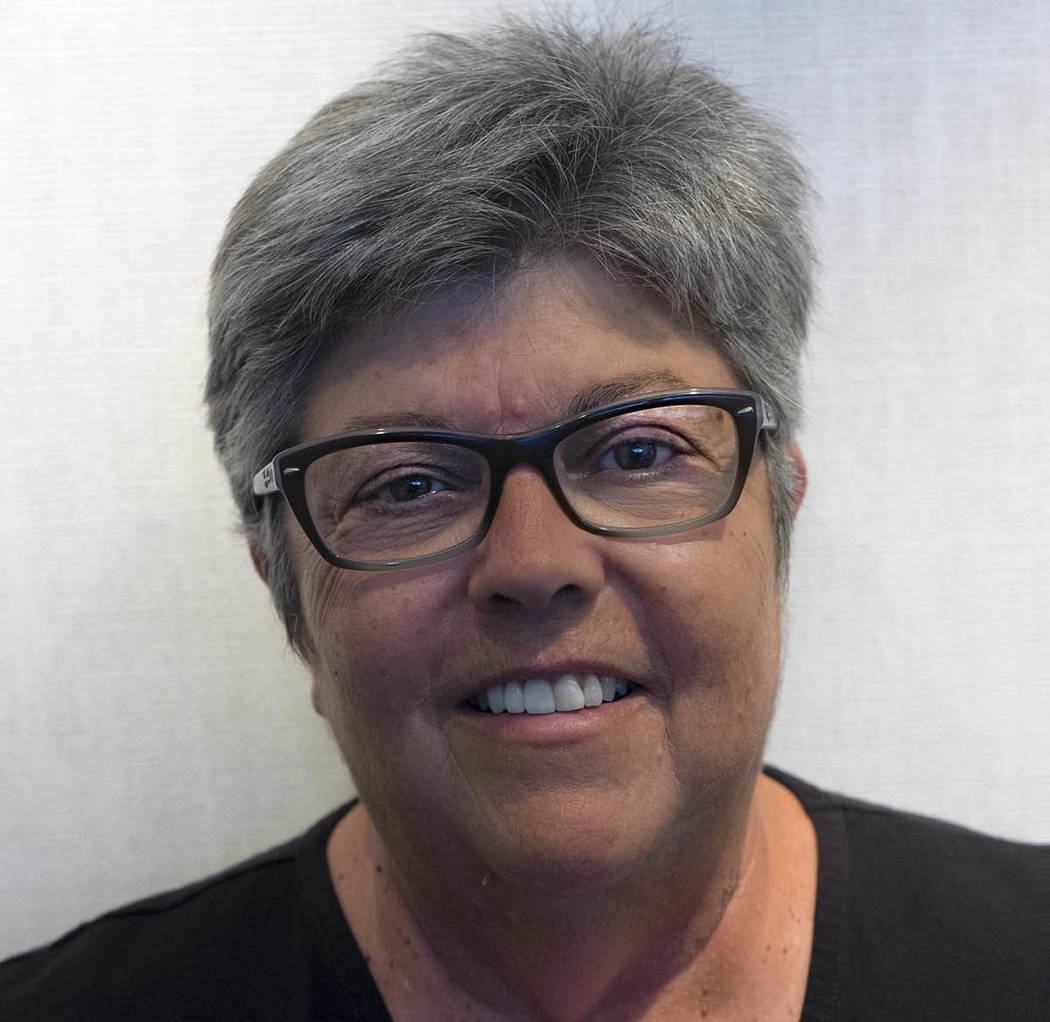
Rose Ann Miele is a journalist and was public information officer for Boulder City for nine years. She is the national outreach director for Real Progressives. She can be reached at roseannrab@hotmail.com or at 702-339-9082.