BC firefighters heed call



Editor’s Note: This is the first in a two-part series featuring the Boulder City firefighters who assisted in the aftermath of the Maui fires.
It’s been a few weeks now since fires ripped through the historic town of Lahaina on Maui, which was a hub for tourism on the island.
While the cause has yet to be determined, what is known is that as of this week the blaze had taken the lives of 115 people, making it the deadliest fire in the United State in more than a century.
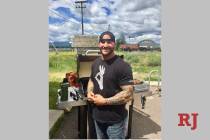
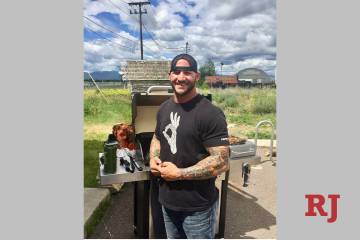
The call from the Federal Emergency Management Agency went out to fire agencies across the country. As part of the disaster declaration on Maui, the Nevada Taskforce 1 was deployed, which is made up of firefighters throughout Southern Nevada. This included a pair of firefighters with Boulder City Fire Department ties, firefighter/paramedic Carl Ford and Reserve Battalion Chief Mike Porter (who will be featured next week’s edition).
Ford received the call the night of Thursday, Aug. 10, that he’d be leaving the next morning for Maui and ended up being there for 16 days. As each day passed, more resources and firefighters from around the country arrived to help with the fires and search for victims.
Ford’s role was more on the logistics side, which included supporting his fellow firefighters, ensuring they had food and water, while driving some of the larger emergency trucks to different parts of the island.
“I was a very small cog in a very big wheel but I’m glad I was able to help,” he said.
Like many, Ford watched the news and saw the aftermath of the fires in the town of Lahaina, a community that, with few exceptions, burned to the ground. But watching it on the news and being there in person were two different experiences.
“It was total devastation,” he said. “The town was wiped out. In talking with the locals, they told us about the history of that town. It’s a small town and there’s just so much closeness within that community.”
Having been a firefighter for the past 12 years, Ford has seen what fires can do and the wake of devastation they can cause.
“I have a history in wildland firefighting, so seeing the aftermath of wildland fires is not foreign to me,” he said. “But still, it doesn’t matter how many times you see it, it’s often the utter devastation of what Mother Nature can do and what she is capable of.
“We were the first task force there, along with Washington, who put boots on the ground. Everyone wanted to get to work and help in any way possible.”
Many officials have said that the Maui fires were almost the perfect storm. Not only has the area been in a drought, and thus grasses were very dry, but couple that with wind gusts of around 80 mph whipped up by Hurricane Dora, the fires spread at a rate faster than many residents had ever seen.
“The dry vegetation and high winds don’t mix very well,” Ford said. “With high winds, fire can be so unpredictable.”
Regardless of where it is in the country, when bringing in resources from so many different agencies to fight a fire or deal with its aftermath, a game plan is needed and strictly followed.
“Just like any incident, we work off the ICS (Incident Command System) structure, that way when it comes to inter-agencies, everyone has the same playbook,” Ford said. “When we showed up there was no power or water. The things we take for granted, when they’re not here, you really have to think about it. The power company had linemen out there from the day we got there and I swear they worked straight through. Those guys were the real heroes.”
Now that he’s had a few days to digest what he saw on Maui, he said the kindness of the island residents is what will stick with him.
“They welcomed us with open arms and were extremely nice,” Ford said. “Even though they had lost everything, anything they could do to help they were trying to do so. Even though we were the ones there to lend assistance, they were the ones asking what we needed. That’s the thing that stands out the most, just how welcoming they were.”