Wet winter likely to boost lakes’ levels
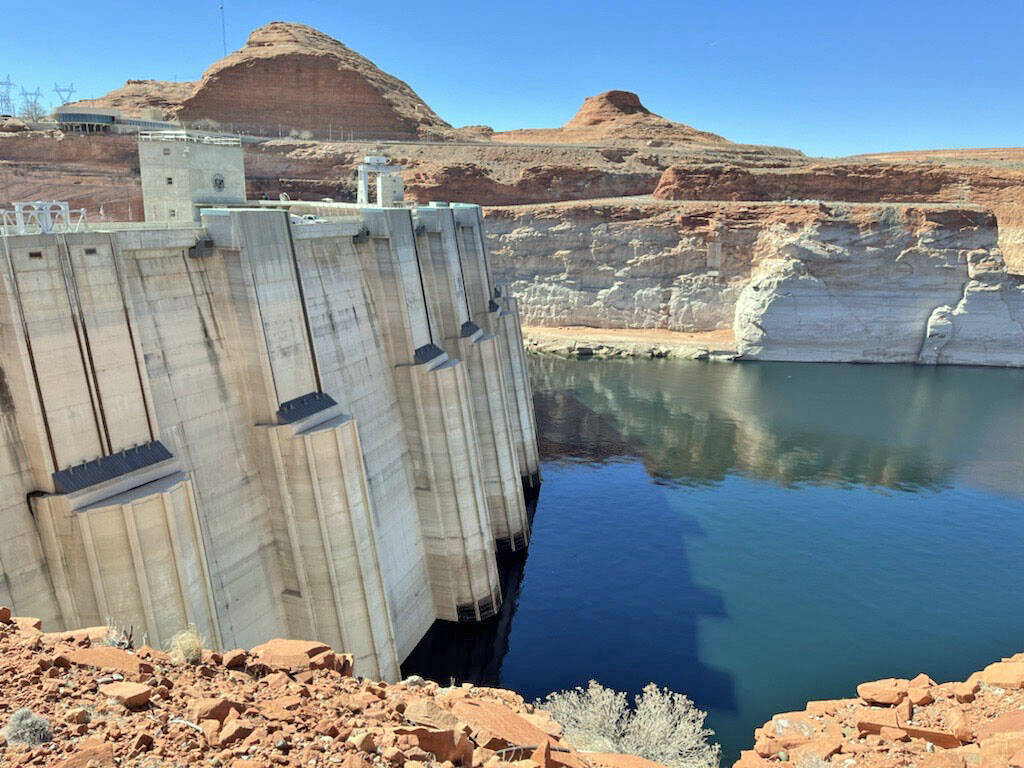




One of the Colorado River’s two major reservoirs is expected to collect better than average runoff this year, thanks to an unusually wet La Niña pattern that dropped a deluge of snow up and down the basin.
Lake Powell, the nation’s second largest reservoir that sits on the border of Utah and Arizona, is expected to receive 117 percent of its average inflows as the heavy snowpack melts in the western Rockies during the all-important April through July time frame, said Cody Mosier, a hydrologist with the Colorado Basin River Forecast Center.
Snowfall in recent months has brought snowpack levels across much of the Upper Colorado River Basin to roughly 139 percent of the region’s 30-year-average, and it now sits at roughly 85 percent of what is normally seen through an entire snow season with more than two months left before the usual snowpack peak, according to data kept by the U.S. Bureau of Reclamation.
“It’s been a pretty wet December and January,” Mosier said Feb. 7.
Forecasts improving
That’s a welcome forecast for the river system that has seen its water supplies shrivel amid more than two decades of chronic drought and persistent overuse, and is a far cry from the gloomier forecasts that came ahead of the snow season that showed projected inflows into the reservoir below 80 percent of normal.
The West is in its third straight La Niña pattern, which usually brings warmer and drier conditions across the desert Southwest.
“But as we’ve seen this year, that hasn’t been the case,” Mosier said, noting the trend is unusual but not unprecedented.
Part of the rosier outlook for the river is an improvement in soil moisture conditions, Mosier said. Lower soil moisture conditions across the basin have made runoff far less efficient over the past two years.
While this year’s soil moisture levels still sit below normal, they are markedly better than the conditions seen during the past few years, he said.
“Following a wet 2019, we had a very dry, basically three years where I think a lot of these areas are still trying to recover from below normal precipitation,” Mosier said.
The forecast is anything but guaranteed, and a warm March could significantly cut into what has been an otherwise very good snow year, Mosier added — a scenario similar to one that played out last year.
False starts
During the 2021-2022 winter snow season, a banner start to the season through December seemed to put the year on track for a solid snow year. But the storms essentially stopped after the first week of January 2022 and stayed away until nearly the end of February that year.
The latest projections for Lake Mead still show the reservoir falling over the next two years and continuing to drop to as low as 1,010 feet in elevation in September 2024. The snowfalls seen through December and part of January did provide a boost to those projections, though.
The federal government and the seven states that pull water from the Colorado River are scrambling to prevent the lake from falling to those levels. The Bureau of Reclamation has asked the states to come up with plans to cut water use along the river by as much as 2 million to 4 million acre-feet, or reductions of about 15 to 25 percent.
Last month, Nevada, Arizona, Utah, New Mexico, Colorado and Wyoming sent a proposal to the bureau for review for how the states think water use along the river should be reduced over the coming years to prevent Lake Mead and Lake Powell from crashing to points where water could no longer pass through their dams downstream. One day later, California — which holds the highest allotments and most senior rights on the river — submitted its own proposal that would put a heavier burden on the other six states.
The bureau has said it plans to release a draft of the proposed cuts by the end of March.
Contact Colton Lochhead at clochhead@reviewjournal.com. Follow @ColtonLochhead on Twitter.