Proposal aims to protect river
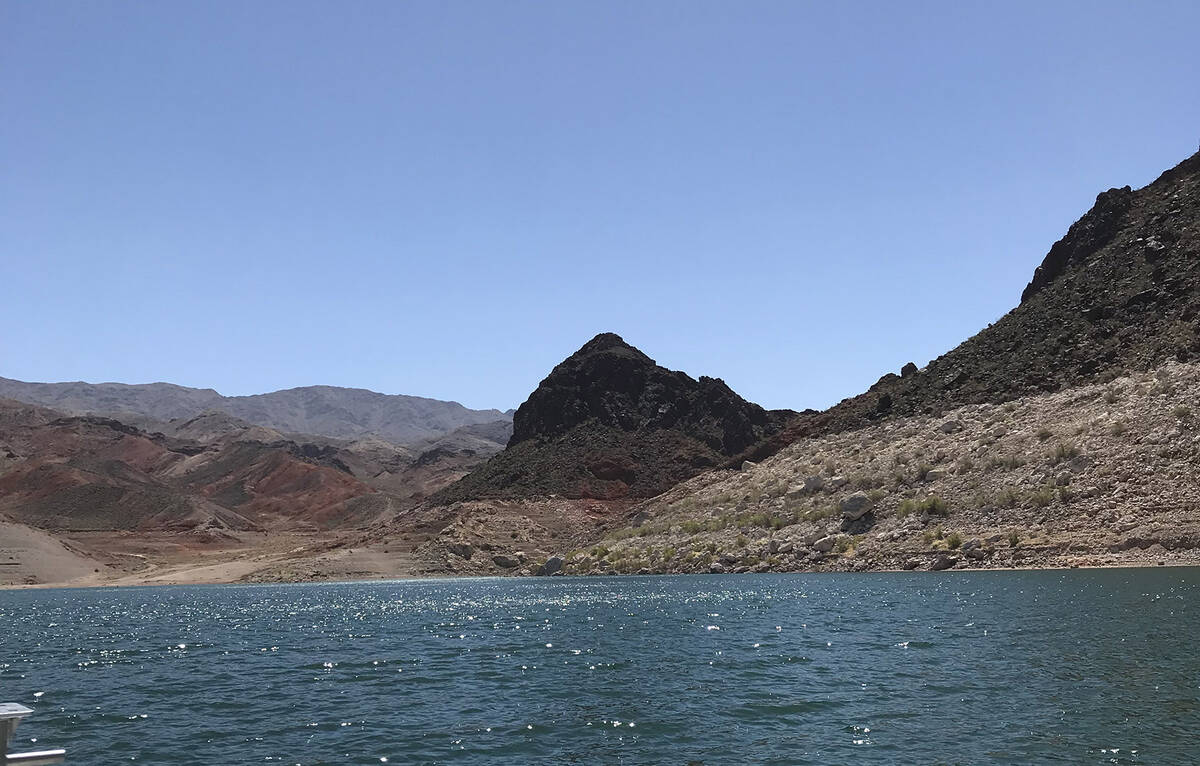




Six out of seven Colorado River basin states have settled on a proposed set of cuts aimed at saving the crumbling river system and preventing Lake Mead and Lake Powell from crashing — with one very notable state missing from the agreement: California.
Representatives from Nevada, Arizona, Colorado, New Mexico, Utah and Wyoming on Monday, Jan. 30, sent a letter to officials at the Department of Interior and Bureau of Reclamation outlining a proposal they say would protect power generation and water delivery at the Colorado River’s two major dams and keep Lake Mead and Lake Powell from hitting dead pool, the point at which water could no longer flow through the Glen Canyon and Hoover dams.
But California, which receives the largest share of water from the river among the states, was absent from the list of states signing off on the letter.
“While our goal remains achieving a seven-state agreement, developing and submitting this consensus-based alternative is a positive step forward in a multiphased environmental review process critical to protecting the Colorado River system,” said John Entsminger, Southern Nevada Water Authority general manager, in a statement.
JB Hamby, chair of the Colorado River Board of California and the state’s Colorado River commissioner, said California is planning to submit its own proposed alternative for water use reductions through 2026, and questioned the legal standing of the plan proposed by the other six states.
“At this time, the modeling proposal submitted by the six other basin states is inconsistent with the Law of the River and does not form a seven-state consensus approach,” Hamby said in a statement.
Last year, California committed to reducing its 4.4 million acre-feet annual allotment from the river by 400,000 acre-feet, or about 9 percent, for four years starting this year as part of an agreement with the federal government to provide funding to Salton Sea restoration efforts.
“California remains focused on practical solutions that can be implemented now to protect volumes of water in storage without driving conflict and litigation,” Hamby said. “We are hopeful that constructive dialogue and mutual understanding between the basin states and the United States moving forward can be only to the benefit of the Colorado River system and all who rely on it.”
Working together
The six states asked the federal agencies to examine their proposed alternative as part the government’s ongoing review of current drought mitigation guidelines as it works toward significantly more aggressive measures to curtail water use along the river that has seen its water supplies plummet amid two decades of drought and chronic overuse.
But the states make clear in the letter and in an accompanying announcement that the proposal is not a formal agreement between the states at this point. The negotiations, the letter reads, “have not yet been completed, and in many cases have not yet begun.”
“We recognize that over the past twenty-plus years there is simply far less water flowing into the Colorado River system than the amount that leaves it, and that we have effectively run out of storage to deplete,” the states’ letter said. “Accordingly, we will continue to work together and with the federal government, water users, Basin Tribes, non-governmental organizations, and other Colorado River stakeholders to reach consensus on how best to share the burden of protecting the system from which we all derive so many benefits.”
Tuesday deadline
The letter came just a day before a deadline of sorts set by the federal government as part of the bureau’s call to action to states to find ways to cut back on Colorado River water use by as much as 30 percent starting this year.
Reclamation Commissioner Camille Touton in June told states they needed to figure out a way to cut water use along the river by 2 million to 4 million acre-feet in order to prevent Lake Mead and Lake Powell from falling to levels that would threaten hydropower generation and water delivery capabilities along a river that supplies 40 million people across the West, including roughly 90 percent of Southern Nevada.
Negotiations between the states have at times turned tense, including accusations of drought profiteering and entities refusing to bargain in good faith.
After states failed to come up with a plan by last fall, the Bureau of Reclamation in November started the process of revising management guidelines for Lake Mead and Lake Powell for water years 2023 and 2024 in order to keep the lakes from crashing further. In follow-up meetings about that process, Reclamation officials laid out three paths the agency intends to examine moving forward, one of which was a plan developed by the states within the Colorado River basin.
In order for such a state-driven plan to be analyzed alongside the bureau’s own alternatives, the agency said a plan would need to be agreed upon by the end of January. The bureau expects to have a draft of that study published this spring, with a final decision on how to implement those reductions across the basin coming sometime around August.
Details of proposal
The proposed alternative outlined by the states’ letter details cuts that would nearly reach the lower-end number of 2 million acre-feet that federal officials have said is needed, while also accelerating cuts agreed to under previous drought measures to trigger at higher elevations.
Virtually all of the mandatory cuts outlined would fall to the lower basin states of Nevada, Arizona and California. There are not mandatory cuts in the upper basin states — Wyoming, Utah, New Mexico and Colorado — which is a notable change from the initial proposal that the Southern Nevada Water Authority submitted to the federal government in December that formed the basis of negotiations over the last several weeks.
Specifically, the proposal calls for accounting for more than 1.5 million acre-feet of water that is lost annually to evaporation and other system losses, a concept that was put forward by the Southern Nevada Water Authority last year and which has drawn support from several other states throughout the basin. Accounting for that lost water would effectively operate as a cut in water allocations, and more than half of that would come from California’s allocation.
It also calls for an additional 250,000 acre-feet in combined cuts to Nevada, Arizona and California when Lake Mead is below 1,030 feet in elevation, and another 200,000 acre-feet in combined reductions in those states when the reservoir is below 1,020 feet.
Whether the cuts outlined in the proposal will be enough to safeguard the river system and satisfy the federal government’s request will be determined in the coming months.
More cuts for Nevada
Nevada receives 300,000 acre-feet of water from the Colorado River annually, an amount that has been reduced to 275,000 under current shortage conditions triggered by Lake Mead’s falling lake level. The letter outlines an additional 18,000 acre-feet in cuts for Nevada.
Locally, Southern Nevada has been successful in implementing various water-saving measures since the drought started and has reduced the water consumed by nearly 100,000 acre-feet annually, while adding roughly 750,000 new residents over the past two decades.
“Nevada’s water conservation efforts over recent decades have put our state in a position to withstand additional reasonable cuts to Colorado River allocations without jeopardizing our state’s economic future,” Gov. Joe Lombardo said in a statement. “I’m hopeful that this framework will lead to a prosperous future for all river users.”
But others worry that the cuts proposed in the letter, should they be implemented, still won’t be enough to stop the decline of the crumbling river and its two major reservoirs.
Kyle Roerink, executive director of the Great Basin Water Network, said the lack of mandatory cuts in the upper basin exemplifies the difficulty of the negotiations and signifies the need for more public discussion through the Bureau of Reclamation’s review process.
“We’re a long way from this being over. This plan, right now, is not one that considers the next 50 to 100 years on the river,” Roerink said. “This is a stopgap effort to get us through the next two years. This isn’t the beginning of the end. It’s just the end of the beginning.”
Contact Colton Lochhead at clochhead@reviewjournal.com . Follow @ColtonLochhead on Twitter.