Lake Powell hits historic low
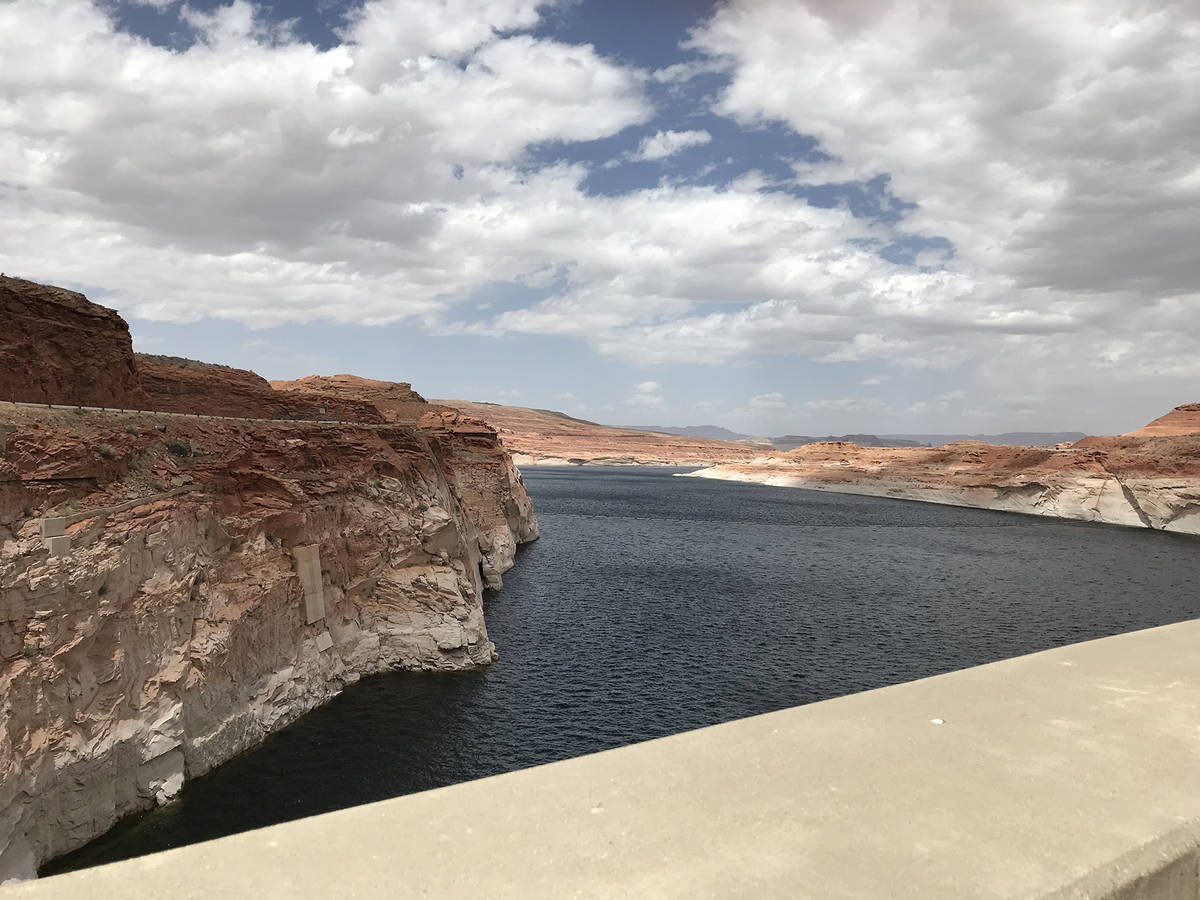





Lake Powell, the country’s second-largest reservoir, reached its lowest water level on record this weekend, according to the U.S. Bureau of Reclamation.
The bureau’s website showed that the lake in Northern Arizona and Southern Utah on Friday, July 23, had dropped to 3,555.09 feet, just below the previous record low set in April 2005 at 3,555.1 feet.
The lake stood at 3,554.9 feet as of Saturday, July 24, according to the bureau.
“This is a benchmark moment,” Kyle Roerink, executive director of the Great Basin Water Network, said Sunday, July 25. “And it’s not going to be the last one this summer.”
Becki Bryant, a bureau spokeswoman in the Upper Colorado Basin, previously told the Las Vegas Review-Journal that smaller snowpack, higher temperatures, less precipitation and dry soils soaking up runoff all contributed to less water flowing into the Colorado River system.
In the first six months of the year, Lake Powell received 2.5 million acre-feet less water than was expected, she said.
The Bureau of Reclamation said this month that additional water from upstream reservoirs will be released this year to prop up Lake Powell. Lake level decline will likely continue until runoff season begins next year.
Roerink said Lake Powell’s declining water levels are indicative of a larger problem in water conservation.
“This calls for our society to question how we manage things moving forward,” he said.
Bryant has said the bureau will continue working with Upper Colorado Basin states on a drought response operations plan.
The additional water being released into Lake Powell this year will not affect how much water is released downstream to Lake Mead, which is nearing its first federally declared water shortage, federal officials have said. A shortage declaration will lead to cuts next year in Nevada’s allocation of Colorado River water.
Last month, Lake Mead broke its previous record low elevation of 1,071.61 feet, and water levels have kept declining. That’s expected to continue until at least November, when agricultural demand for water decreases, according to Patti Aaron, the Bureau of Reclamation spokeswoman for the Lower Colorado Basin.
Echoing Roerink’s concerns, Bronson Mack, spokesman for the Southern Nevada Water Authority, has said that Lake Mead and Lake Powell’s low water levels reaffirm the need to focus on conservation.
Contact Blake Apgar at bapgar@reviewjournal.com or 702-387-5298. Follow @blakeapgar on Twitter. Review-Journal staff writer Jonah Dylan contributed to this report.