BOR project delayed until spring
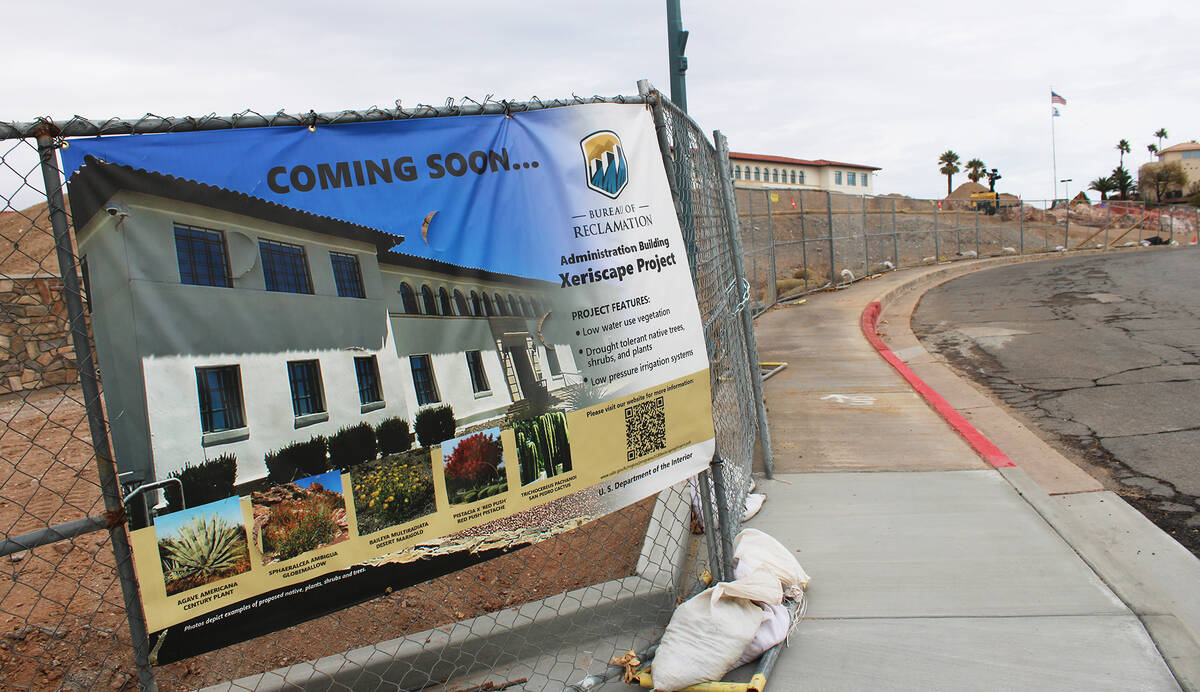
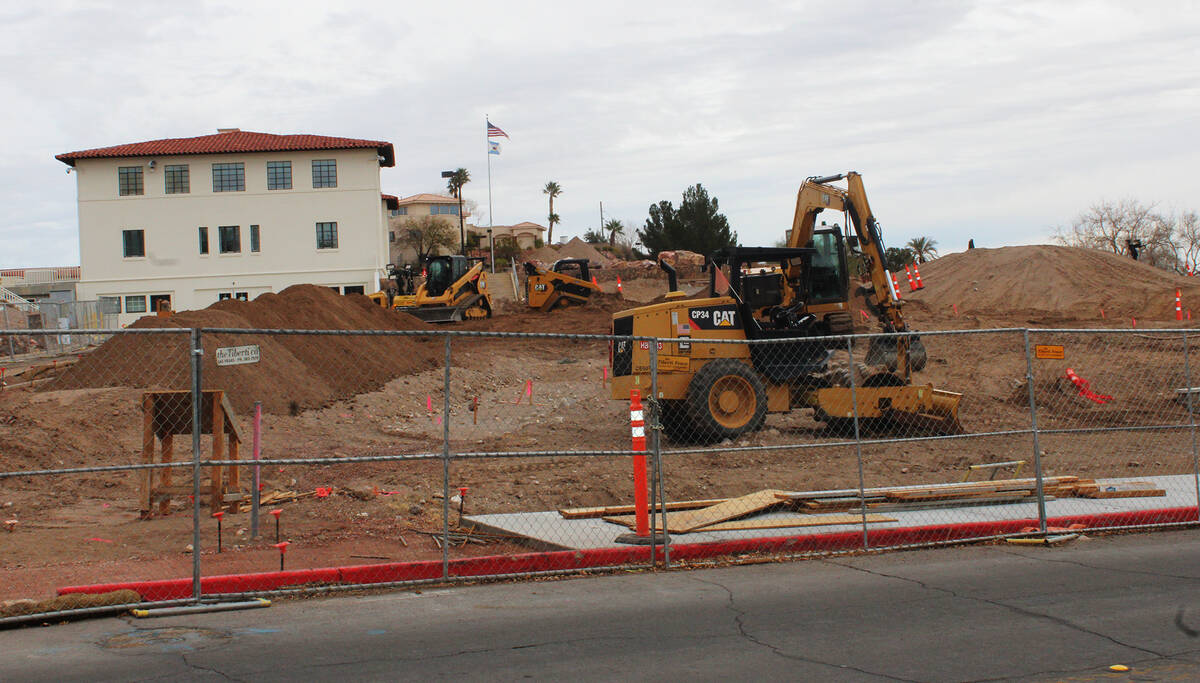



The Bureau of Reclamation’s $4.5 million project to remove grass around its Boulder City offices, which will save millions of gallons of water a year, is taking longer than had been expected.
During an interview with the Review in early August of last year, BOR officials estimated that the xeriscaping would be completed in late fall. But that’s not been the case, as work continues on the project.
Monday, Michelle Helms, regional chief of the office of communications for the BOR, said the project should be done this spring.
“We’re working on this historic site and because of that, it’s not unusual to find pipelines and other previous work that has not been documented,” she said in terms of the delay. “When that happens, we have to stop any further excavation and take steps to determine what we’re working with for the safety of the workers.”
During the excavation, Helms said crews found a significant number of unidentified and unmarked utilities. This led to additional coordination and the removal of these unusable utilities caused a delay when installing new utilities.
The project, which is funded by the Bipartisan Infrastructure Law, will replace the lawn and associated turf surrounding the facilities with low-water usage vegetation, including drought-tolerant and native trees, shrubs, and plants.
When completed, the regional office grounds will feature a meandering path surrounded by small groves of native plants, trees, and shrubs.
Work began on the project last May and prior to that the public was invited to attend an open house to talk with BOR officials and see a conceptual design. That design has since been changed somewhat but the majority of the plan remains in place. Prior to proceeding, the BOR worked with the Nevada State Historic Preservation Office in order to receive its analysis of the proposed work. They also worked closely with the Boulder City Historic Preservation Commission as well as the National Park Service.
“We get that this is a very historical property,” BOR Public Affairs Specialist Doug Hendrix said last August. “That’s not lost on us. That’s the reason we’re taking our time and inviting feedback through the entire process. We want to make sure the community is fully on board as we move forward.”
Huge boulders, which were brought in, have been placed throughout the hill. This will help with erosion and runoff. Irrigation will then be installed but the plants won’t go in until October to ensure they’re thriving and not overstressed by the heat. In the process, the BOR will be switching from municipal water for the irrigation to raw water.
In August, both Hendrix and Lower Colorado Basin Regional Engineer Tonya Hart said that when the project of removing the grass was first announced, the news didn’t go over well with some.
“Initially, it was a mix of curiosity and approval, frustration or flat-out anger,” Hart said last year.
Hendrix added, “When we were taking out the grass and removing the trees, we were changing a view-shed that had been there for 75 years. People were asking why. Now, I think they’re seeing progress, and getting the fact we’re going to be bring something very tasteful back in.”
They also acknowledged that early on, some were concerned that the grass removal was going to extend to Wilbur Square, which is owned by the city and not the federal government. The city is, however, looking at portions of its parks and golf courses where grass can be removed to reduce water usage.
Helms said there will continue to be intermittent closures to Denver Street, Nevada Way and Park Street while work continues.
“I want to make sure people know that we are coordinating all of these closures with the city to make sure they’re aware of what’s going on,” she said. “This way our work is aligning with activities within the city.
“Once this is done, the reclamation headquarters area is going to be very different from what we had before but it will align with other landscapes in Boulder City. There will be historic artifacts and interpretive displays similar to what you’ll find at Hoover Dam. It will be very welcoming and an area that people can enjoy the native plants and learn more about them. It’s going to be a very nice spot.”