Annika Huff turns tragedy into triumph
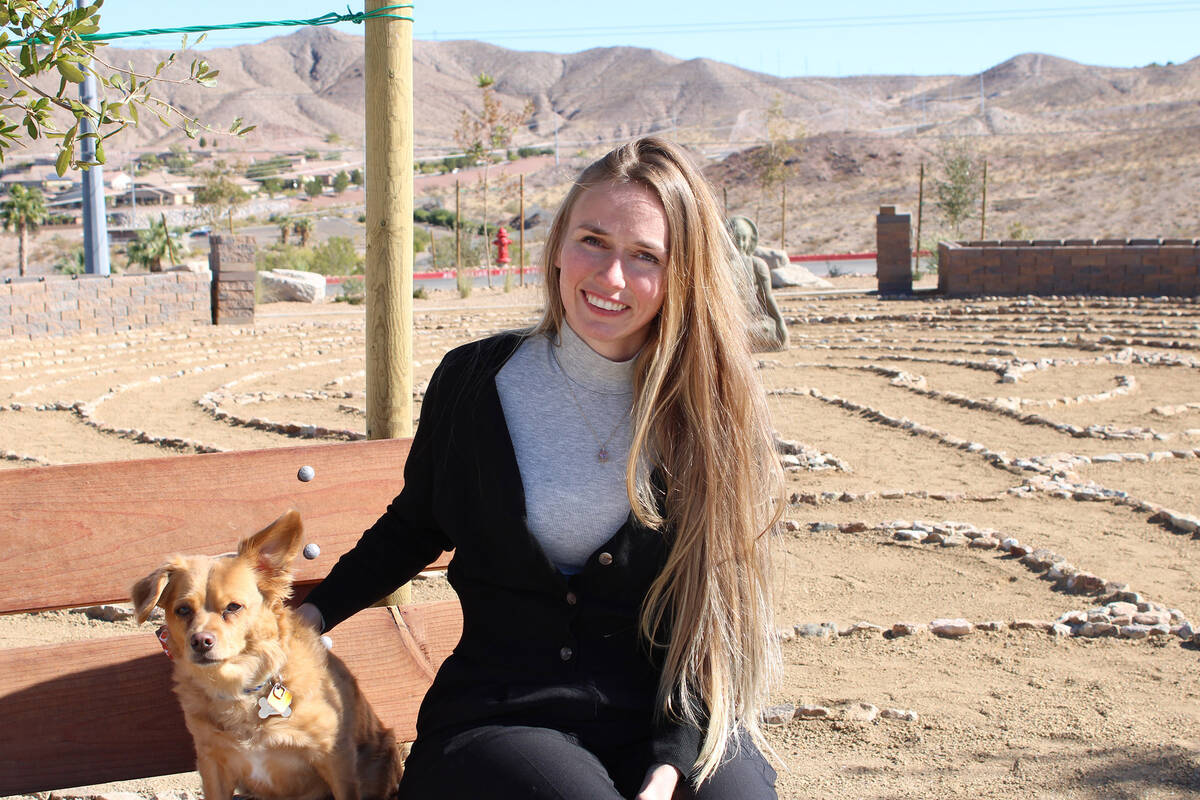





It’s been nearly a decade since 28-year-old Annika Huff found herself at just 93 pounds and clinging to life after just being sold from one sex trafficker, or pimp, to another.
But those memories, especially toward the end of her ordeal, are still fresh in her mind and may always be there as she continues to epitomize the term “survivor.”
“Because of the beatings I had taken, I was dying,” she said. “My trafficker wanted to sell me before I passed away. He sold me to another pimp, who was unaware of my physical condition. This man had traded me for a car.”
She was dying from not only the daily beatings but from a gangrene infection, which had become septic.
“I had probably just a few hours to live,” she said.
“The guy who purchased me called the trafficker and said, ‘Hey, I didn’t pay for a dead body. You need to pick her up or I’m taking my car back.’ My trafficker needed the car, so I was able to convince him to take me to the hospital instead of leaving me in the desert to die.”
While at the hospital, she was treated by staff and met with police detectives. She was treated for two weeks in Las Vegas and another two weeks in California.
Aside from the sepsis, Huff was also suffering from 29 broken bones as well as damage to her internal organs, which left her wheelchair-bound for a period of time.
a negative becomes a positive
Recently, Huff, who has spent years as speaker across the country, was hired as the program development coordinator for the newly-opened Healing Center for sex-trafficked children at St. Jude’s Ranch for Children in Boulder City.
“At St. Jude’s Ranch for Children, we believe that hiring individuals with lived experience is not just a smart idea, it’s a commitment to authenticity and empathy,” said Dr. Christina Vela, CEO of St. Jude’s Ranch for Children. “Their unique perspectives and insights enable us to create pathways to hope and healing for those we serve, as we build more effective programs and build genuine connections.
“Having Annika in a leadership role at the Healing Center is so critical to provide not only accurate insight and tailored solutions that will make way for high-quality experiences, but also, she uniquely understands what these children are going through and that day-to-day impact is immeasurable.”
Huff said for years she’s wanted to work with those fellow victims of sex trafficking. Along the way, she met Vela and the two had spoken about the Healing Center in its early stages. So, when the job opened up, it was a natural fit.
“With this position, I’m helping to create the policies and procedures,” Huff said. “In doing so, we want to make the experience for the kids here as therapeutically and comprehensive as possible. That’s my goal, especially through a survivor’s lens.”
Looking back
Huff grew up in a neglectful and in some ways, abusive household. At 16 she was jumping from house to house and was often a runaway. That’s when she found herself living with her father in Las Vegas. She said it was the last place she wanted to be at that time.
“Our relationship had been very severed at that time and he was an alcoholic,” he said. “I was not only in a new town but he lived in the wrong part of town. I was not in school and was really needing someone to care about me. My needs were not being met, which made me very vulnerable for trafficking.”
Unbeknownst to her at the time, she was targeted on more than one occasion by a trafficker. She said one of the most common locations for would-be traffickers to meet their victims is at a bus stop.
One of those who approached her was a female, who did so in a friendly manner, which was part of the grooming process. This young woman would make sure Huff was fed, looked out for her, met Huff’s father and even gave her a cell phone to stay in touch. Huff was later introduced to the woman’s “boyfriend” who she soon found out was the woman’s pimp.
“Realistically, the grooming time period for any trafficking situation is about a couple different things,” she explained. “They find the vulnerability or needs of that person. I needed someone to care whether I was fed, had clothes or a bed to sleep in. I just needed someone to take care of me and that I was safe. It wasn’t happening at home. The second piece is creating a bond or dependency with the trafficker. The relationship turns into trauma bonding after the trafficking begins. That bond, unfortunately, creates an even stronger bond.”
She met her would-be trafficker one night and by the next day, she was being sex-trafficked. It, too, occurred at a bus stop. She was planning to move out of town and in with a friend who was going to college in Ohio. But that fell through after an encounter with a man and woman who pulled up and asked if she wanted to go and party. Huff had just turned 18.
“I probably had a big, red stamp on my forehead,” she said in terms of being an easy target.
Being victimized
While with that couple from the bus stop, Huff and the woman quickly bonded while the man seemed a bit distant. She opened up to them about her situation and plans to move to Ohio. He offered to take her to the bus stop the next afternoon but “conveniently” was late for the time she was supposed to leave. He offered her cash and a place to stay with them.
“I wasn’t sure what I should do,” she said. “I felt like my golden ticket to a better life (in Ohio) kind of got ripped out of my hands.”
It was the very next day that she had her first encounter with someone who paid her for sex. It was the start of several months of being trafficked. Being that she did not have an emotional bond, as is often the case, with her sex trafficker, Huff said her pimp would threaten her with violence or her family, especially after she asked to leave.
“Absolutely, I feared for my life,” she said. “And the life of my family.”
Huff estimated that five nights a week she was expected to find someone willing to pay for sex.
“There were times when he (pimp) simply didn’t want to go out or I had been beaten so badly by him that I couldn’t go out,” she said. “My face was just too messed up to actually go out. By the end of my trafficking, I was being beaten every few hours to the point I couldn’t get off the floor. There was also torture involved like water-boarding and Russian roulette. I tried to get away a couple of times but the girl he was with, known as a ‘bottom’, was kind of his right-hand man, so to speak. They assist but they’re also often trafficking victims themselves. So, she was always there.”
Her traffickers would take her to Las Vegas casinos, where she was expected to find men to pay for sex. The traffickers would stay in the casino or outside the hotel’s elevators, waiting for her to return.
“We were required to find the buyers and if not, we’d receive a beating for not doing so,” she said. “We were just looked at as property, not human beings.”
This went on for four and a half months.
Following her month-long hospitalization, Huff stayed with people from her church. Her trafficker was later arrested and was sentenced to life in prison in 2016. His accomplice agreed to a plea deal on a lesser charge.
Now, she’s able to share her story with the hope of helping others.