Ultrarunner to push himself to the limit





It’s not uncommon for friends or even family members to try and best one another whether that be athletics, academics or relationships.
But for Tyler Nash and those close to him, they take one-upmanship to an entirely different level. And if successful in his next endeavor, Nash will be king of the hill.
This July, the 2005 BCHS graduate will be attempting something that on the surface sounds impossible. But that’s exactly what pushes Nash to be an endurance runner. He’ll need to muster every bit of physical and mental toughness he has to complete what’s considered the toughest endurance race there is – Badwater, which takes place in Death Valley where temperatures can hit nearly 125 degrees.
The 135-mile run is limited to 100 racers, who must apply and be chosen based on their racing resume. He got a taste of the race two years ago after being chosen to be one of four pacers for one of the top female competitors.
“You start at night and you run on the opposite side of the highway the entire way,” he said. “You go from the lowest point, which is below sea level and you go to the highest point, which is Whitney Portal (8,374 feet). I think there’s a 90-degree temperature difference from the hottest spot to the coldest. It’s definitely a special race and a lot of ultrarunners don’t even want to try it because of the difficulty. Even with all the training in the world, it still may not be enough.”
Nash said between now and the end of July, he’s trying to get in as many miles of running as possible and as the thermometer here in Boulder City increases, that’s even better for him.
“That’s one of the reasons it’s such a special race because you really don’t know how to run a race like this,” he said. “There’s nothing like it so you have to throw yourself in the deep end and hope you’re tough enough. About 90% of this race is mental. You’ll have 100 reasons as to why you want to quit and just one reason to finish.”
Competitors have 48 hours to finish the race. Nash hopes to do it in under 30.
“Right now, the nerves are definitely there,” he said when asked what his feelings are four months out from the race. “The training load is high. The excitement is at a level of a thousand. I’ve been dreaming about this race for probably 10 years. To me this is the Super Bowl of races.”
Ultrarunning, let alone something like a 5K run, was never on the 36-year-old’s radar until a little more than a decade ago.
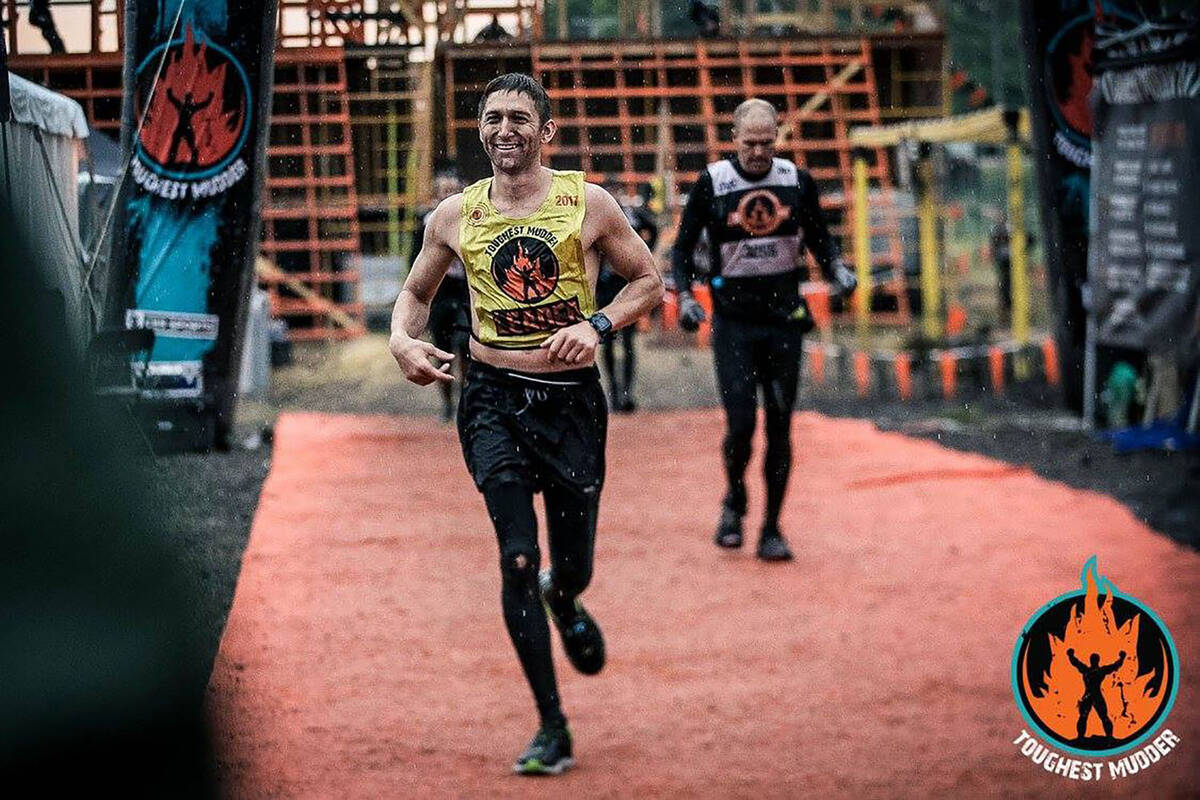
“I never ran in high school or college so this all started very random,” he said of endurance running. “My cousin showed me a video of a 24-hour race he was going to do called World’s Toughest Mudder. It was the first 24-hour obstacle course. When he told me about it, I thought he was crazy.”
Because the race was invitation only, his cousin received a wild card invite but was unable to compete and said if Nash knew anyone interested to let him know. As soon as Nash got off the phone, he decided he wanted to do it but had just six weeks to train for it.
“I told him, ‘I’m in,’” he said of the 2011 race, which took place in New Jersey in the winter. “Before that I had never ran more than two miles. I competed and did pretty well. I think I finished 80th (out of 1,000 competitors) and I thought to myself, ‘I think I’ve got something here.’ So, me, my cousins and dad (Pat) did it the next year.
“My dad was the first to do a 100-mile race and from there, it opened the floodgates for everyone to outdo one another. Then I had friends who wanted to do a 100-mile race. Then it became who can do the hardest race or the longer race. Before we knew it, we were getting faster and eventually competing against some of the best runners in the world.”
To date, Nash has competed in nearly 50 endurance races, with some as long as 250 miles.
“One of the beauties of ultrarunning is that you don’t have to be the fastest guy in the world, a lot of it’s about endurance,” he said. “So much of it is trial and error. There are times that you can’t walk after races. With this upcoming race, I’m anticipating that I’ll get sick during the race and chances of heat stroke are very high. But with this race, you really don’t know what’s going to happen to your body. Mentally you have to realize that no matter how bad it gets, you have to keep pushing yourself. In the world of ultra, this is as hard as it gets.”
After he puts Death Valley in his rear-view mirror, what’s next up for Nash?
“That’s the big question,” the general contractor said. “Every time we’ve done something, we’ve always thought about something bigger. To be honest, I don’t know what’s next but the cool thing is, there’s always something else. Every time you think you can sleep easy, something else pops into your head. The bar just gets set even higher.”