‘Devastating’ cuts: Nevada is first state to file suit over Colorado River plan
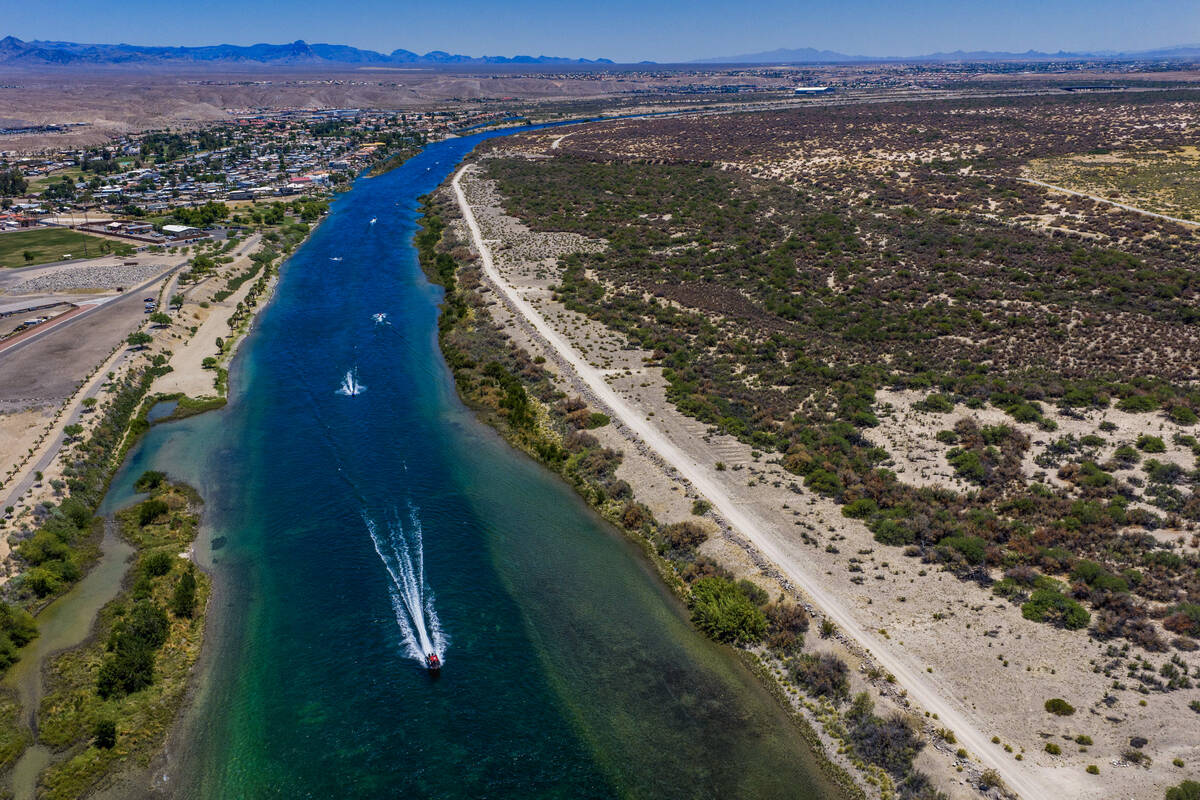
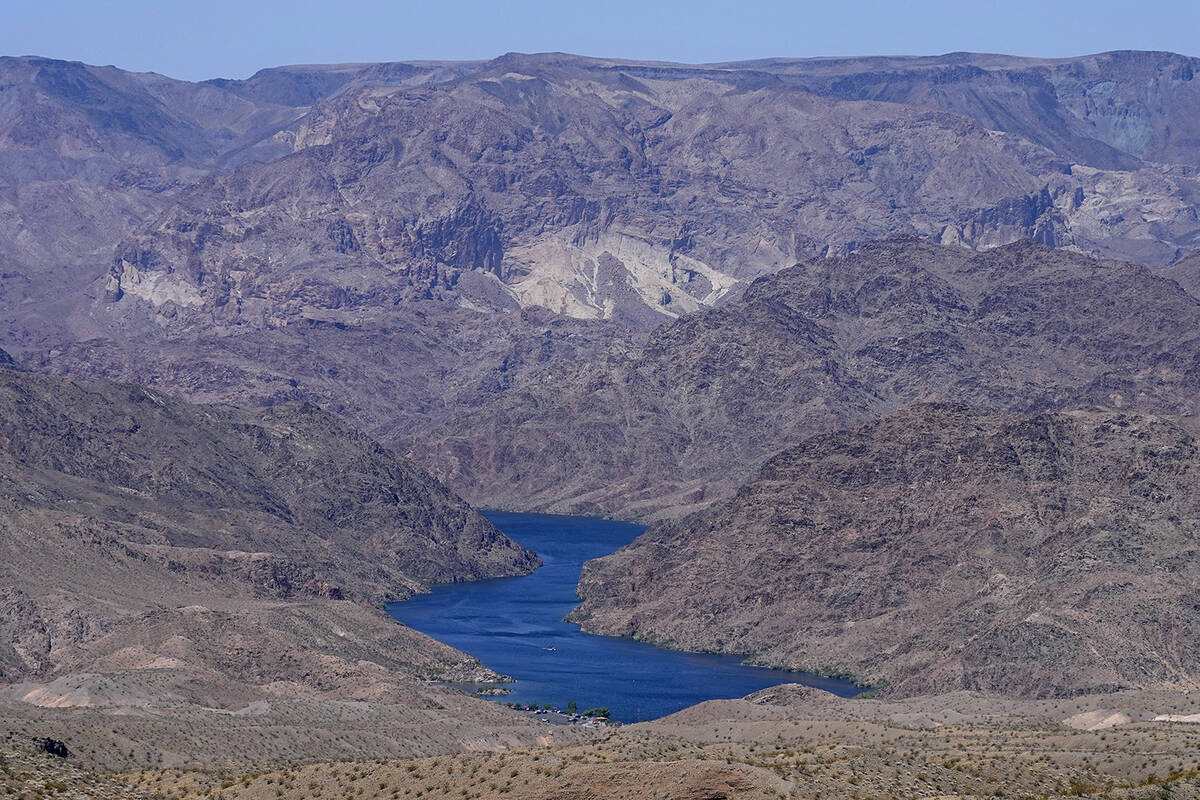





Nevada officials filed a federal lawsuit challenging the Trump administration’s order for cuts in water use Monday, marking a major escalation of tensions between the seven states that share the Colorado River.
The complaint, filed in the U.S. District Court of Nevada, asserts that the U.S. Bureau of Reclamation’s operating plan unlawfully authorizes the federal government to reduce the state’s allocation of the river by up to 71 percent annually sometime over the next 10 years.
Such a cut would slash the state’s share of 300,000 acre-feet down to 86,444 acre-feet. Nevada’s use, after cashing in water recycling credits with its state-of-the-art system, came in at 198,000 acre-feet last year.
“There are four states upstream of us that are facing zero mandatory reductions,” said John Entsminger, general manager of the Southern Nevada Water Authority, in a Monday interview. “That is not going to balance the system. This is a system-wide problem. It requires system-wide solutions.”
Lawyers for the Colorado River Commission of Nevada, the water authority and the state as a whole requested an injunction to halt implementation until federal documents can reflect the toll water cuts would have on Southern Nevada’s $180 billion economy.
“This shortfall will cause devastating environmental, socioeconomic, and health and human safety impacts to southern Nevada and its citizens,” attorneys wrote. “Federal Defendants failed to consider such impacts in any meaningful way.”
‘A matter of survival’
The move comes three days after the Trump administration unveiled its final plan for the river and was met with condemnation from water managers in Nevada and Arizona. It’s the first time in history that the federal government has mandated water cuts on the Colorado River states in the absence of an agreement among the basin states.
While 2027 and 2028 will see allocation cuts that the Lower Basin states of Nevada, California and Arizona have already agreed to, the years 2029 to 2036 could bring much harsher reductions. Entsminger said he felt it was important for Nevada to have its own representation on the issue, but he added he would be surprised if California and Arizona don’t sign on to the lawsuit, considering officials remain aligned in their positions.
No mandatory cuts will be imposed on the Upper Basin states of Colorado, Utah, New Mexico and Wyoming.
Entsminger submitted a letter to all six Colorado River basin states Monday, saying the state’s decision to sue wasn’t made lightly but that “hiding from reasonable legal interpretations in order to defer hard political decisions helps no one over the long term and further endangers our shared resource.”
“This isn’t about political posturing,” Nevada Gov. Joe Lombardo said in a Monday statement. “This is a matter of survival for a community that represents about two-thirds of our state’s citizens and the lion’s share of its economy.”
Even with the savings from the plan over the next two years, federal forecasters place Lake Mead levels near or below 1,000 feet in elevation by the summer of 2028, at least 35 feet below its current level.
The Bureau of Reclamation declined to comment.
“We’ll continue to be a good partner,” Entsminger said. “We’ll continue to be willing to sit down at the table and have adult conversations, but we will not be dictated to and told that our river allocation is going to be cut by 71 percent.”
An uncertain path
For years, experts have said a lawsuit over the Colorado River would mark an unsavory end to negotiations between the federal government and the seven states that share the river.
Complicated water lawsuits take time and expend millions in taxpayer dollars; one expert told the Las Vegas Review-Journal this year that comparable lawsuits have taken an average of eight years to come to a resolution.
It’s largely seen as a path that promises no state or water user any certainty. In similar water cases, the U.S. Supreme Court has appointed a technical expert known as a “water master” to make binding decisions.
It will fall under the jurisdiction of the nation’s high court automatically if another state signs on to challenge Nevada’s argument, making it a dispute between states.
Entsminger, Nevada’s governor-appointed Colorado River czar, has largely stayed away from the specifics of litigation in interviews, only saying that the state would fight for its water rights if necessary.
While he did not provide a specific dollar amount for how much money Nevada may set aside for its litigation, Entsminger said he expects the water authority board to authorize spending on the proceedings.
Entsminger said there’s a high probability that the case is settled outside of court, though state water managers are willing to see it through to the end.
“We tried for years to achieve that sort of certainty via negotiation, but when the federal government comes out and says they have the authority to cut 71 percent of your water use, negotiation starts to look a lot less practical, and you need to consult a different branch of government,” Entsminger said.
Sarah Porter, director of the Kyl Center for Water Policy at Arizona State University, said in a Monday interview that the complaint is proof that Nevada’s water managers have decided the prospect of losing some control is worth it.
“When you go to court, it forces each side to develop their case,” Porter said. “For both sides, there are risks in doing that because, in the end, it comes down to an interpretation of statutes.”
Could a ‘compact call’ come next?
The Las Vegas Review-Journal asked spokespeople for every Colorado River state for comment on the lawsuit. Utah, New Mexico, Colorado and Arizona responded with statements that they are taking time to review the legal complaint before making a decision about next steps.
Much of Nevada’s defense of its water rights rests on the National Environmental Policy Act — the federal law that requires federal agencies to collect public input and conduct environmental review. Nevada officials allege the Trump administration failed to fully consider the effect that cuts will have on the state’s economy.
But Nevada’s attorneys make reference to the Colorado River Compact of 1922 — the four-page document that underpins all river operations.
The compact states that both the Upper and Lower Basin have the right to 7.5 million acre-feet a year. It says the Upper Basin cannot reduce flows at Lees Ferry below a 10-year, 75 million acre-foot average, as well.
“Reclamation’s failure to interpret and disclose application of the Law of the River, particularly the implications of a likely Compact Call, falls short of the minimum requirements of NEPA,” the complaint says, adding that it leaves states with questions over Reclamation’s interpretation of the compact.
Fred Breedlove, a water and natural resources attorney at the firm Dorsey &Whitney LLP, said in an interview that it’s possible that a lawsuit over the compact could come later.
Breedlove said he hopes the present threat of this lawsuit encourages the negotiators to settle.
“Now, it’s become real,” Breedlove said. “The Upper Basin needs to think hard about what they are willing to die on.”
Breedlove added: “There’s an opportunity now to finally negotiate in good faith and come up with some kind of mutually agreeable conservation program that nobody likes, but that everybody can live with.”
Contact Alan Halaly at ahalaly@reviewjournal.com. Follow @AlanHalaly on X.