Judge halts construction of embattled Boulder City data center on public land
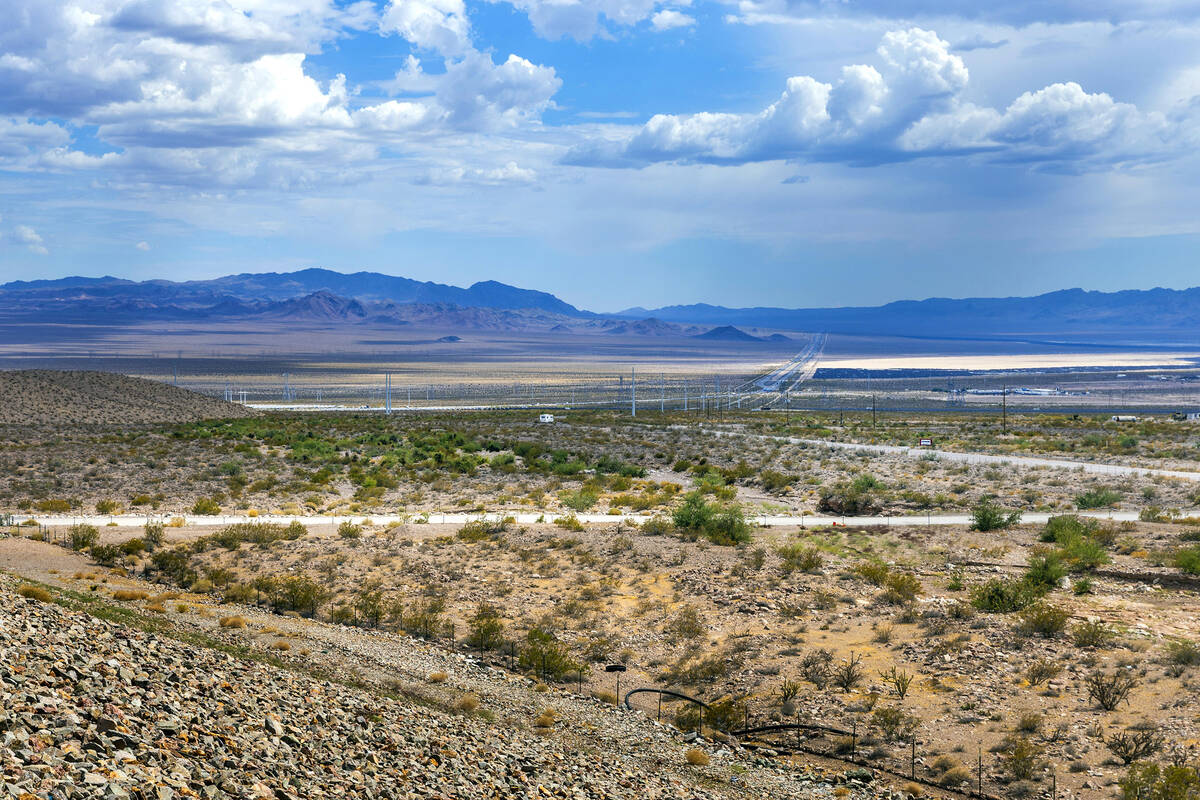
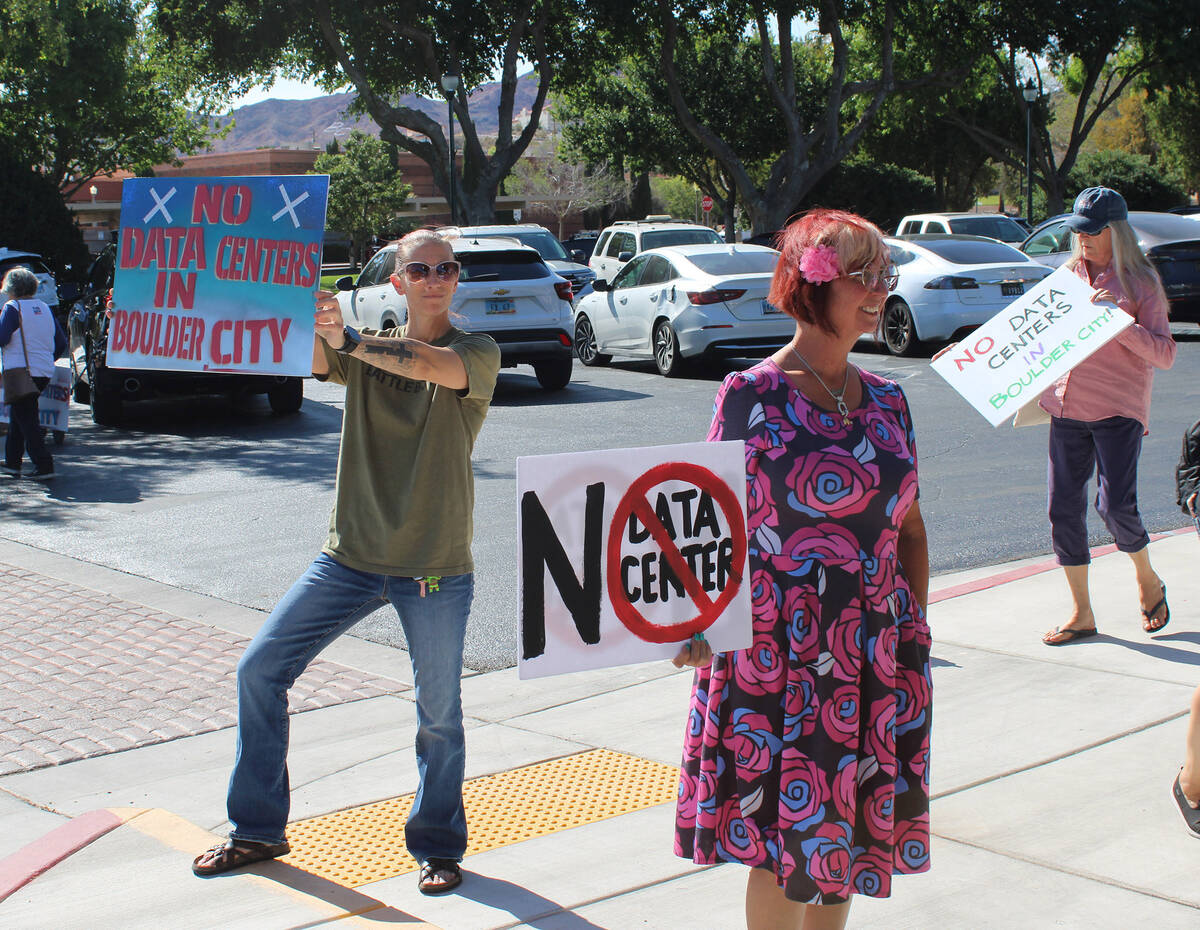





An administrative judge ruled in favor of Boulder City leaders and environmentalists on Tuesday, pausing the construction of a data center on public land near the city until an appeal can be fully processed.
The Center for Biological Diversity, the Sierra Club and Boulder City officials took their fight to the Interior Board of Land Appeals in late July. They requested a stay to halt a Texas-based developer from using its federal permits — ones that the developer sought privately from the Bureau of Land Management while publicly courting favor from residents to support a city lease.
In what many residents described as a backroom deal, the BLM awarded developer Townsite Solar 2 an amendment to an existing permit it held for a solar farm. The BLM’s Las Vegas field office determined the environmental review of the solar project was “substantially the same” and transferable to the data center, sparking outcry.
“The two projects are fundamentally dissimilar in ways that affect the environment and require meaningful analysis under NEPA (the National Environmental Policy Act), yet BLM concluded that they are essentially alike,” Judge David Gunter wrote.
Gunter wrote that the Townsite Solar 2 data center near the intersection of Interstate 11 and U.S. Highway 95 is the first permitted on BLM land, noting that the environmental harms of a data center have never been analyzed in any BLM document.
One former BLM official told the Las Vegas Review-Journal that the approval was unprecedented and an unjust interpretation of federal law undertaken to comply with President Donald Trump’s 2025 executive order that directed agencies to speed up permitting for data centers on public land.
“The Trump administration is pulling out all the stops to let tech companies build massive data centers on our public lands,” said Patrick Donnelly, Great Basin director at the Center for Biological Diversity, in a statement. “This tremendous victory proves communities have the power to fight back and win.”
A Boulder City spokeswoman wrote in a statement that city officials continue to believe the BLM failed to adequately consult them or the public, as required by federal law, before the data center’s approval.
Developer Townsite Solar 2 said in a statement that executives respect the board’s decision and will keep engaging with the BLM, Boulder City and other stakeholders to see the project through.
“Since the beginning, TS2 has committed to responsible development on public land and will conduct a comprehensive environmental review to evaluate project impacts, confirm compliance with federal standards and provide clear information to the community,” the statement said.
The Interior Department, the parent agency of the BLM, declined to comment.
Could a pause kill the project?
In the ruling, Gunter referenced a declaration from the developer that said granting a stay would “materially damage the perception of this project in the market” and “put pressure on [Townsite] to abandon the project.”
Gunter wrote that Boulder City’s potential loss of an estimated $2.3 million in annual tax revenue outweighed any temporary harm the company may suffer during the delay.
Data centers and their impacts on communities are likely to be debated during the Nevada Legislature’s 2027 session. An interim committee agreed last month to draft a bill to consider a statewide pause on data center projects and a rollback of Nevada’s generous tax abatement program for those facilities.
Gov. Joe Lombardo, whose office did not reply to a request for comment on Tuesday, has said the tax break that the state previously awarded Townsite Solar 2 for a solar project cannot be transferred to the data center.
Boulder City, one of the only cities with its own public utility provider, has raised concerns about the strain a data center requiring 167 megawatts — more than three times the city’s peak energy demand — could place on the energy grid. The developer planned to buy energy through the open market, not the city, and use backup diesel or natural gas generators for emergencies.
The facility would use a closed-loop system to cool its servers and comply with the Southern Nevada Water Authority’s ban on evaporative cooling systems.
A stay may not matter much if the company and land managers are committed to getting the project off the ground, said Ethan Blevins, a senior legal fellow at the Pacific Legal Foundation, a libertarian nonprofit public-interest law firm. Judges often give wide deference to the BLM on issues related to environmental review, Blevins said.
“The BLM could just go back and supplement the environmental assessment, run another comment period, then go forward regardless of local opposition,” Blevins said. “BLM’s discretion on these matters is near absolute, so much so that courts often refuse to even review BLM judgment calls under its multiple-use mandate.”
Whether a stay leads to any real action in preventing construction altogether remains to be seen.
Rep. Dina Titus, D-Nev., who represents Boulder City in Congress, praised the judge’s decision in a Tuesday statement.
“The judge ruled for transparency and public accountability in granting a stay based on the BLM’s misuse of an environmental impact statement for a solar farm as justification for a data center,” Titus said. “I’ve said since day one that this was not only improper but illegal.”
Contact Alan Halaly at ahalaly@reviewjournal.com. Follow @AlanHalaly on X.