Cortez Masto updated on Boulder City Hospital




Talk about perfect timing.
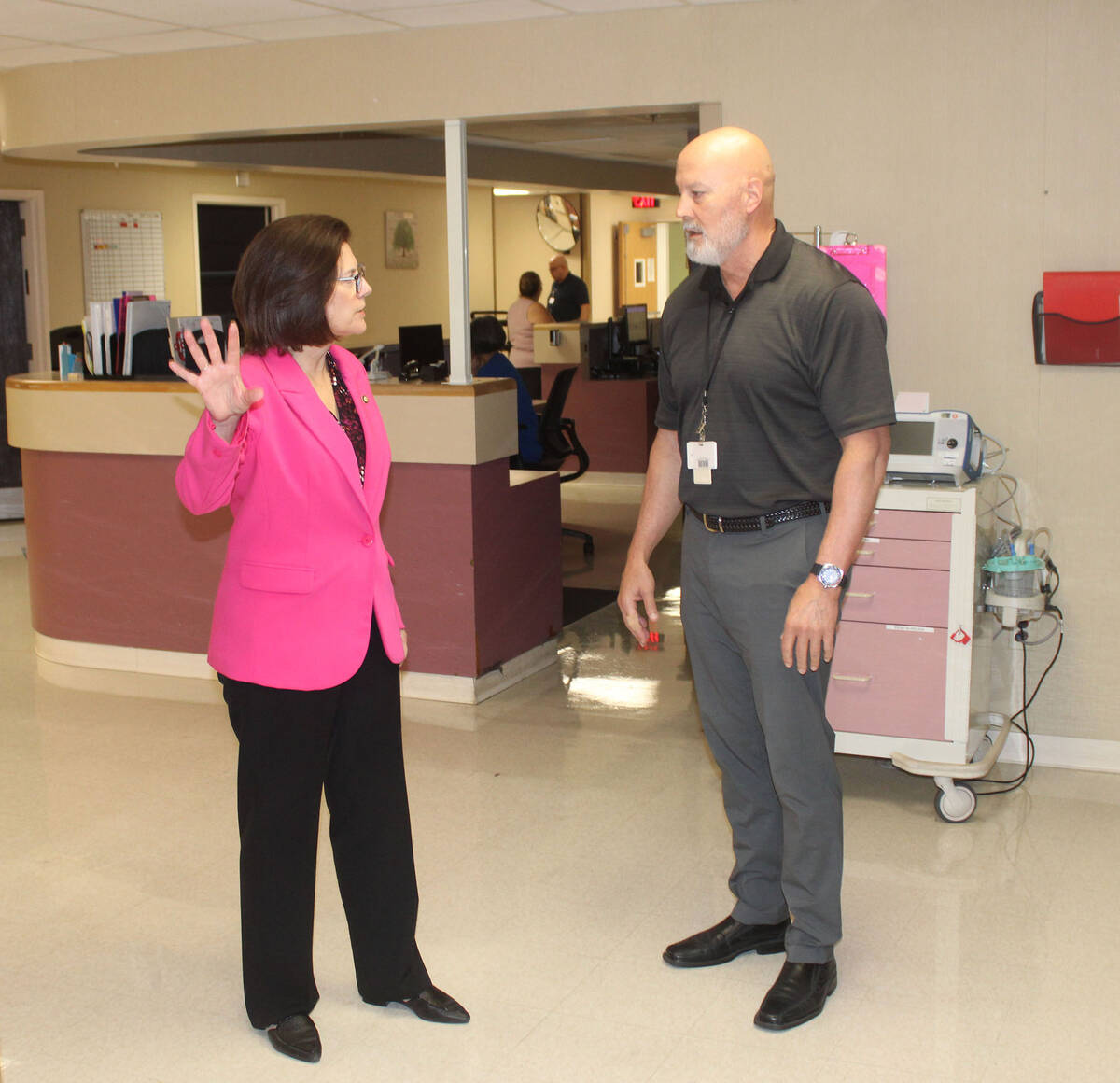
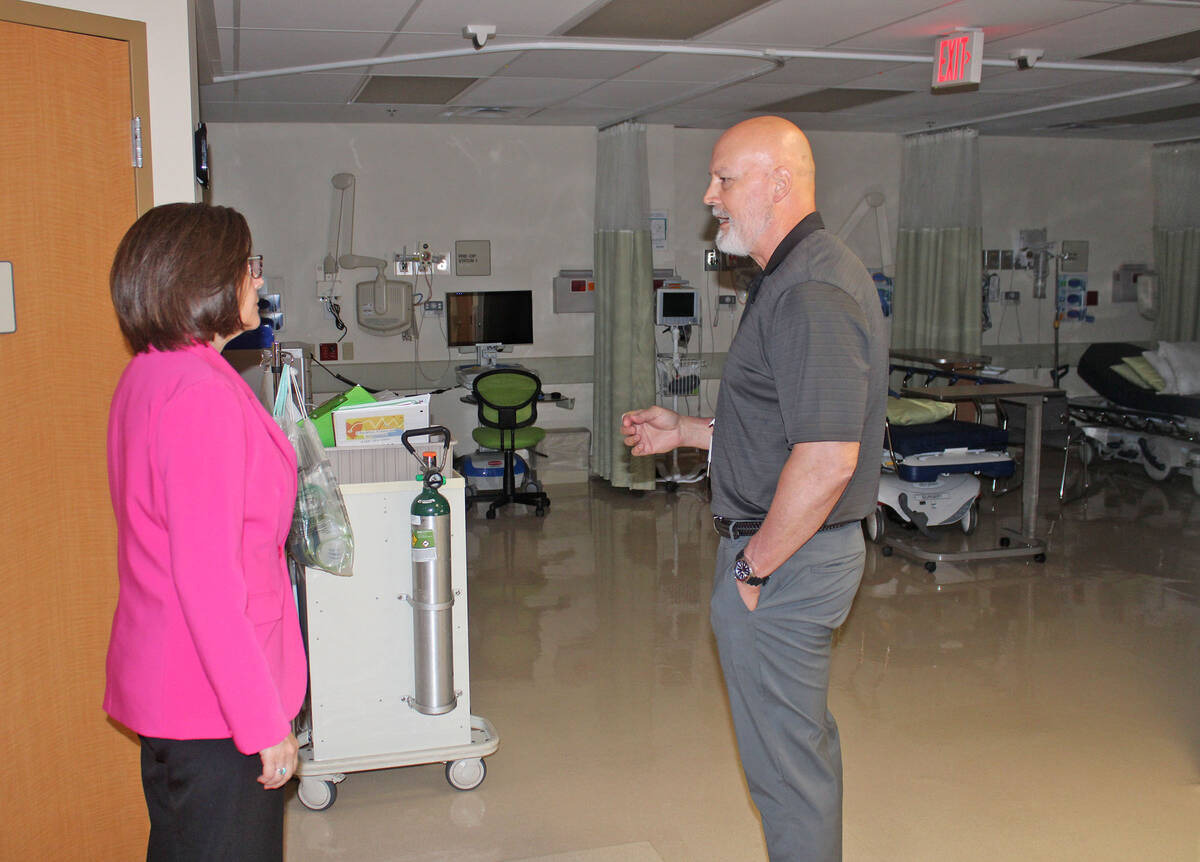
Just prior to Monday’s visit from U.S. Sen. Catherine Cortez Masto, Boulder City Hospital CEO Tom Maher received an email he’d been waiting on.
It was from the Centers for Medicare and Medicaid Services stating that the hospital had met the needs to convert to a rural emergency hospital, which has been in the works since February. This worked perfectly into the main reason Cortez Masto was at the hospital — to discuss the rural status and how things have been going since going into effect May 1.
This transition is designed to ensure that essential healthcare services remain available and sustainable for the community for years to come, Maher has said.
“Thank you for your support during our REH (rural emergency hospital) conversion, which was a big deal for us,” Maher said. “As we discussed, it’s something we had to do given the fact we had these cuts in Medicaid during the HR1 bill passing.
“We made our announcement at the end of February and six months and nine days later we finally got our email that we’re REH designated. That’s a good thing for us. It’s been a difficult transition for us at times but I’m proud of how the organization adjusted to the new reality.”
In a 20-minute meeting with Maher and some of the hospital’s board members, foundation members and executive staff, the discussion focused mostly on the rural status and what that’s meant in terms of the hospital and the care it has provided the past three months.
“I want to thank you all for taking the time,” Cortez Masto said. “I want to make sure that whatever support you need, we’re here. So don’t hesitate in any way, whatsoever. We’re here today to reach out and support the hospital.”
Maher said one thing on the federal level that’s been an uphill battle is Medicaid reimbursement as well as Medicare HMOs not paying in a timely manner. He said it’s one thing when a hospital has the backing of a corporation with very deep pockets but as a rural, nonprofit hospital, falling behind in received payments is not a luxury they can afford. Cortez Masto asked if this is a recent problem, to which Maher said, it’s been an ongoing one that has gotten worse with time.
What REH means to BC
According to the hospital, a Rural Emergency Hospital is a new Medicare provider-type created to keep essential 24/7 emergency care, lab services, radiology, and outpatient services available in rural areas facing financial hardship or potential hospital closures.
This model does not include inpatient hospital beds, but it prioritizes rapid emergency care, stabilization, and seamless transfer to partner hospitals when inpatient admission is needed.
If a patient needs to be hospitalized longer than 24 hours, they will be given the option as to which hospital in the Vegas Valley they wish to be moved to, based upon their needs and available beds. There are some exceptions to this. Some of this may be determined by insurance coverage. If the patient is not able to articulate a preference, the emergency room physician will make that decision, again, based on the patient’s medical needs and space availability.
The closure of inpatient care services is expected to be permanent, Maher has said.
In addition to emergency room services, the long-term, 47-bed care facility remains. Other services that continue to be available include:
■ Primary care clinic
■ Laboratory services
■ Rehabilitation therapy
■ Radiology
■ Community resources
■ Respiratory therapy
■ Outpatient behavioral health
■ Outpatient Surgery
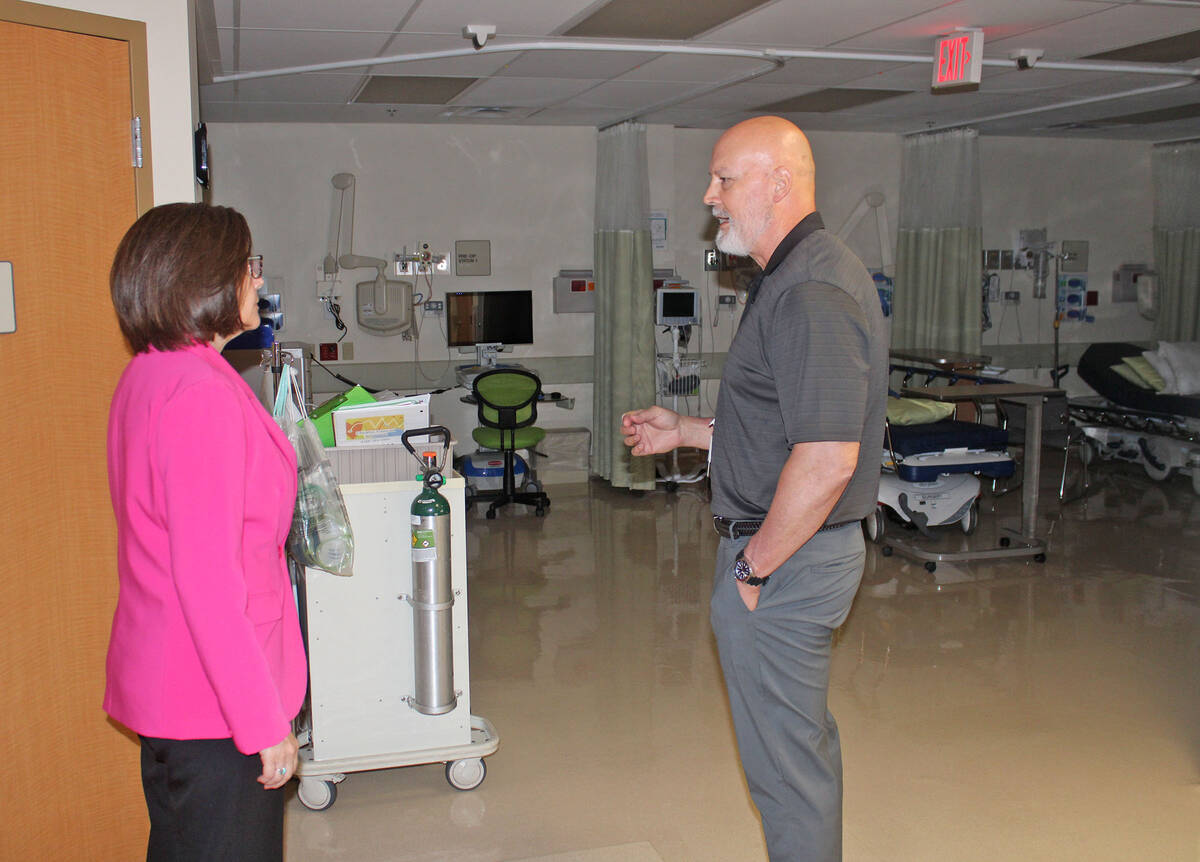
Following a tour of the hospital, Cortez Masto, who sits on the Senate Finance Committee, told the Review that a priority of hers is working to address not only the gaps in services but how to actually bring access to affordable healthcare to all Nevadans. Boulder City, being a rural community, faces unique challenges to achieving that as do many other communities in the Silver State.
“With the cuts in Medicaid, which I did not support, we are seeing challenges to our entire hospital system throughout the state,” she said. “But some of the hardest hit are the rural ones. My concern is, particularly in rural Nevada, how do we ensure they (hospitals) can still thrive and survive in order to provide that essential healthcare to Nevadans who live in our rural communities?”