Private heliport gets green light from city





Casey Craig is becoming somewhat of a familiar face within the City Hall meeting chambers.
He was back again last week as he came before the Boulder City Planning Commission seeking a conditional use permit for a unique request – a private heliport on his property.
The commission voted 4-0 in favor of the CUP request. Three of the commissioners were absent from the meeting.
Now approved, this opens the door for construction of the helipad. The matter can be appealed by anyone taking part in the public hearing. If this occurs, it would go back to city council for a final decision, as long as that appeal comes within a specified amount of time following the commission’s vote.
If there is no appeal, next up is the building permit process.
Last fall, Craig applied for a zoning text amendment for his property, which sits on more than 11 acres. It’s believed to be the largest single-home lot within the city limits.
In February, the planning commission voted unanimously to approve a zoning ordinance text amendment, which cleared the way for it to come before council.
By a 6-1 vote, the Boulder City Council approved Bill No. 2096, a zoning ordinance text amendment in late April. Approval came with the stipulation that no refueling, or fuel storage, take place at the heliport.
In past meetings while some, including neighbors, spoke in favor of Craig’s plan, others spoke against it. They cited noise, dust, decrease in home value, safety, and its need considering the close proximity to the Boulder City Airport. However, during last week’s meeting, all who spoke were in favor.
Craig’s property, located at 1001 Villa Grande Way, is adjacent to Lake Mead View Estates, and is zoned R1-80. It’s been noted in a past city meeting that the addition of “heliport, private” as a conditional use in the R1-80 zone would be subject to the following requirements:
• A letter from the FAA to determine that the proposed heliport will not adversely affect the safe and efficient use of airspace. The letter must state no objections, with or without conditions. Any conditions required must be met and maintained.
• Must conduct all flight operations in the daytime (between 7 a.m. and 9 p.m.).
• The perimeter of the developed helipad must maintain a minimum distance of 500 feet from any adjoining real property boundary of a residential or noise-sensitive use. It’s 642 feet away.
• The private heliport can only be operated by the property owner or occupant. Commercial, public transport, charter or rental helicopter operations are not permitted.
Craig, who bought the land nearly four years ago, said he’s received the required letter of approval from the FAA.
• Aircraft fueling shall not occur at the heliport.
“We checked all the boxes,” Craig told the commission.
As required, the helipad would be used for his personal use, with flights occurring a couple of times a week when family or friends are visiting but that the helicopter could sit in the hangar unused for five or six weeks at a time.
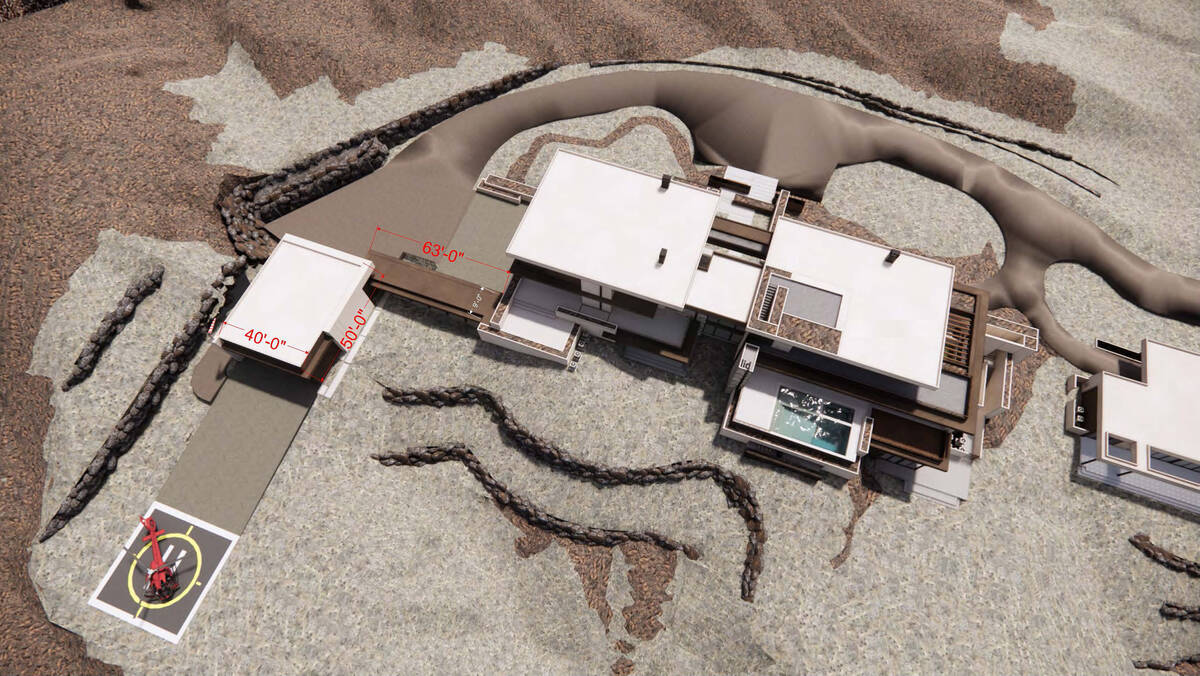
Craig said the nearest neighbor is 642 feet away (more than two football fields in length) and that his own home, along with a large brick wall and the helicopter hangar, which are currently being built, will help serve as a buffer for sound to the rest of the neighborhood.
The concrete helipad would be surrounded by compacted gravel to help reduce the amount of potential dust, he said. In addition, his flight pattern to and from the 40-foot by 40-foot pad would be to the east, opposite of other homes.