Nevada’s game wardens investigate poaching, enforce boating laws
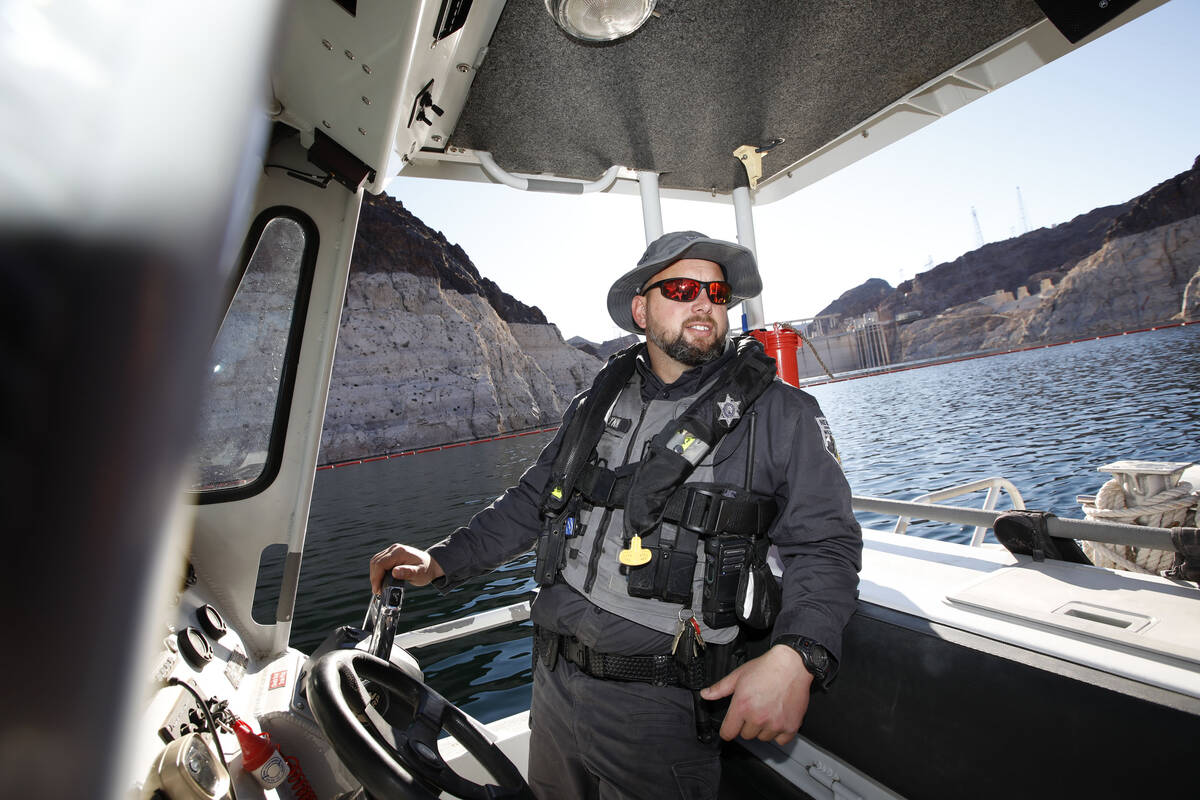
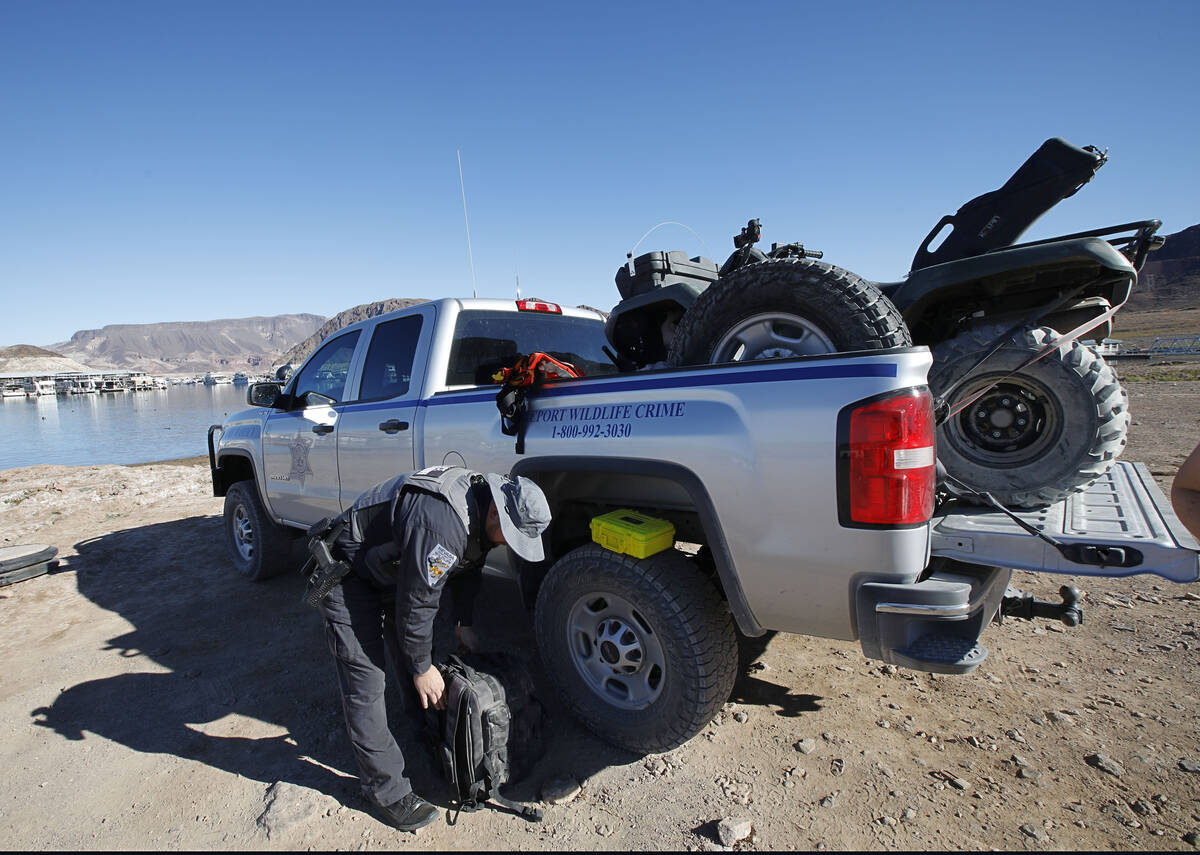





Being a Nevada game warden is a lonely job, but Sean Flynn is used to the solitude.
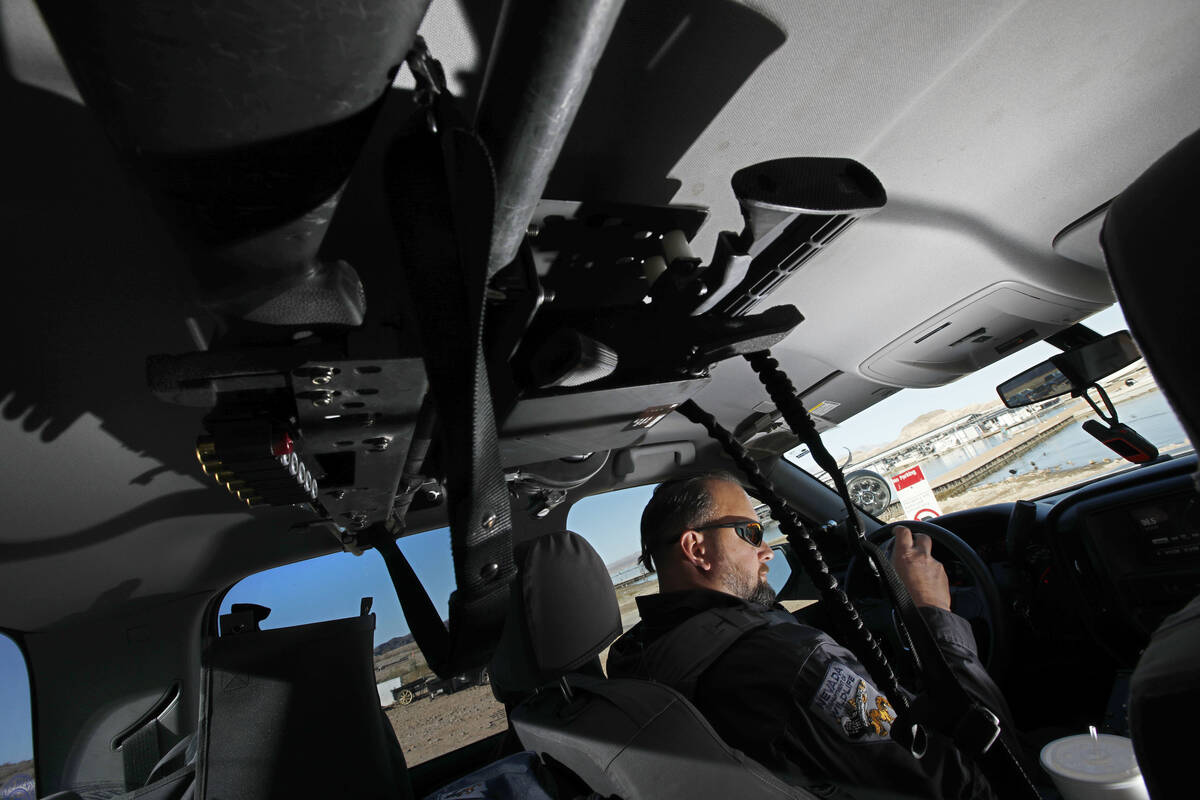
In the fall and winter, Flynn drives hours into rural Nevada to investigate poaching, with only audiobooks to keep him company. Sometimes he camps alone for the weekend near remote hunting spots to enforce poaching laws. At other times, Flynn can be found driving a boat by himself on Lake Mead, where he may be the only law enforcement officer for all the visitors on the water.
With thousands of square miles to patrol on land and in the lake, Flynn has to stay constantly vigilant.
“It’s kind of a cat-and-mouse game,” he said while driving his boat on Lake Mead during an unusually busy Friday in November.
The Department of Wildlife’s Division of Law Enforcement may be the smallest of Nevada’s law enforcement agencies. Its 31 Nevada game wardens are responsible for patrolling about 110,000 square miles, leaving just over 3,000 square miles per officer.
As of November, the southern division had nine game wardens responsible for Clark, Nye, Lincoln and Esmeralda counties, meaning the region has more than 270,000 people per game warden.
Lt. Game Warden Christopher Walther said his officers are responsible for a small section of Nevada law, and must be everything from the boating equivalent of a traffic officer to detectives investigating cases and submitting charges to district attorneys.
He said no other agency in Nevada routinely enforces the specific laws enforced by the game wardens.
Boating enforcement
Lake Mead National Recreation Area was the fifth-most popular National Park Service site last year, with more than 8 million visitors. While park rangers are in charge of policing the land, game wardens are ultimately responsible for enforcing boating laws on Lake Mead and Nevada’s other waterways.
The game wardens patrol Lake Mead nearly every day from Memorial Day to Labor Day due to the influx of summer visitors, with two officers on the water at a time in separate boats. When boating decreases in the fall, Flynn said he will patrol the water about twice a month.
“Down here on the water in the summertime, you’re more of a police officer,” Flynn said on Nov. 12, when more people than usual were on the water enjoying the mild weather on Veterans Day weekend.
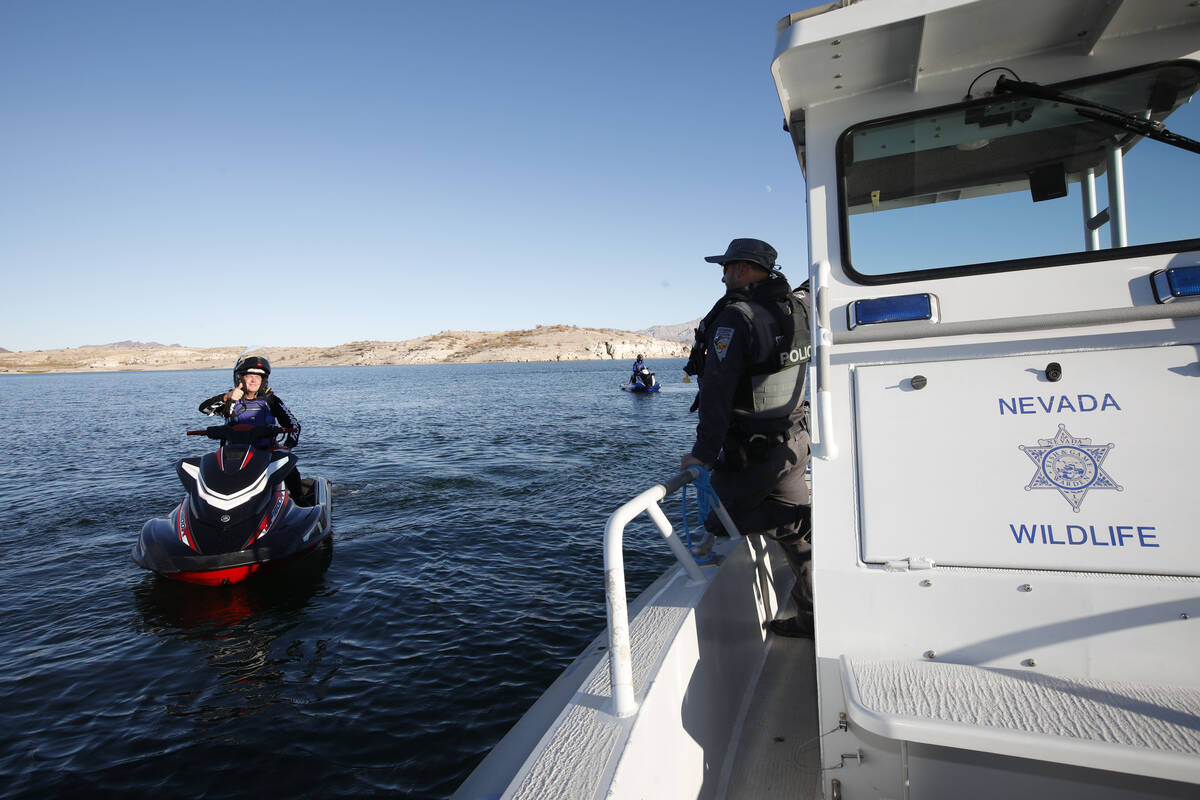
While patrolling, game wardens look for boating violations, including overcrowded crafts or people operating boats while intoxicated. Flynn pulled one man over for creating a wake too close to the dock and issued him a citation for not having a circular rescue buoy on board.
The game wardens also stumble across abandoned crafts, boating accidents and people in need of rescue. In August, Flynn received a silver life-saving medal from the U.S. Coast Guard for his part in rescuing a drowning 3-year-old girl who was trapped under a boat in the lake the year prior.
Donnie Beale stopped his jet ski near Government Wash on Nov. 12 to say hi to Flynn as the game warden checked fishing licenses. Beale, whose assigned spot at the Las Vegas Boat Harbor is near the game wardens’ dock, said he’s grateful for the officers who save the lives of people who “take the water for granted.”
“They put their lives at risk to save people who miscalculate,” Beale said.
Hunting in Nevada
The game wardens in Southern Nevada handle about 20 to 30 cases a year involving violations such as poaching or illegal trapping, although hunting is more popular in the northern portion of the state.
People may apply to hunt in the areas surrounding the Las Vegas Valley for big game such as bighorn sheep, elk, mule deer and mountain lions, according to information from the Department of Wildlife. But hunters first must apply and pay for tags, which are awarded through a lottery system.
The tags directly correlate to each animal killed by a hunter, and they are handed out based on area and population.
Flynn said he spends more time educating people about laws than the average police officer because hunting is a highly regulated activity. The job can be dangerous, since Flynn is often by himself, miles from backup, talking with people who almost always have at least one gun.
Walther said no game warden has fired a weapon in the line of duty in the seven years he’s been with the agency.
“The majority of people that we contact with guns are the recreating public,” he said. “They’re aware of what we do and the job we do.”
Flynn, who is a military veteran and grew up hunting and fishing, tries to be friendly whenever he stops someone.
Compliance common
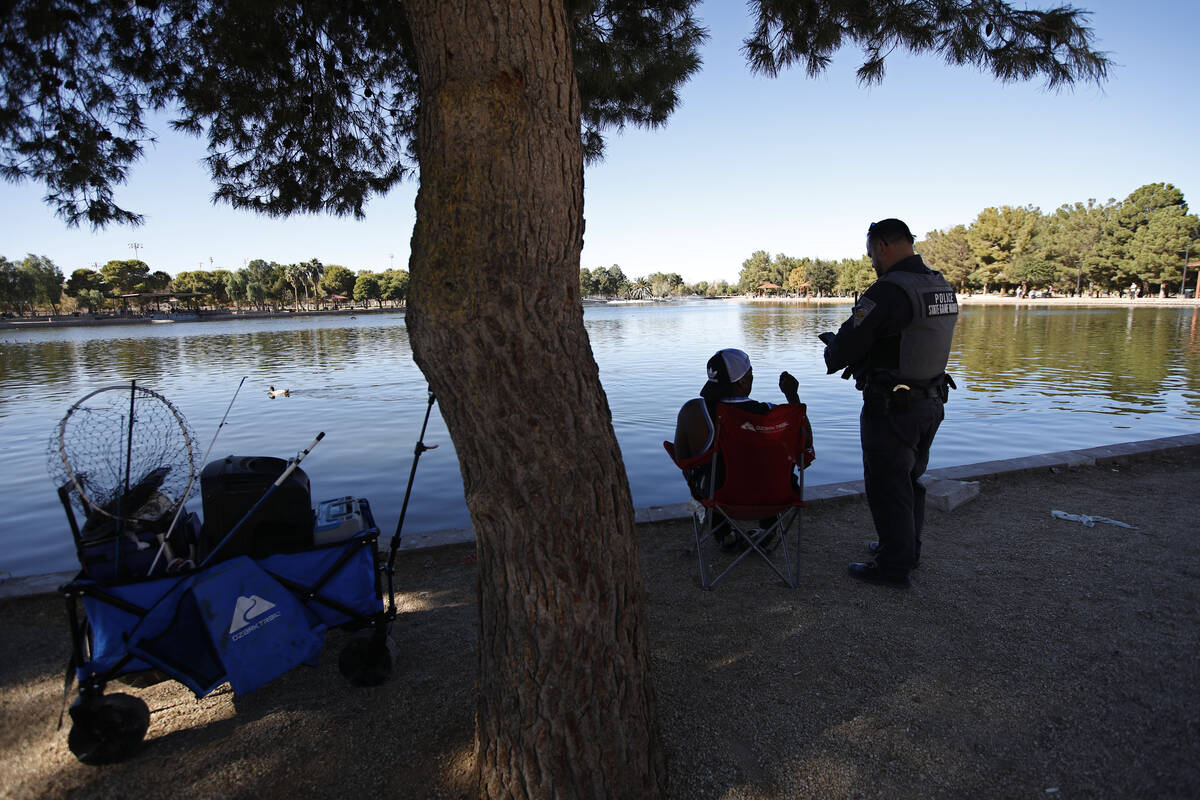
While checking fishing licenses at Sunset Park’s lake, Flynn chatted with people about their catches and hunting season. He warned people about using the incorrect bait or renewing their licenses, but everyone complied with his requests.
Flynn said that when he patrols during hunting seasons, he occasionally finds groups of hunters who question why they need licenses or why they have to answer to a game warden. But those encounters are an exception, he said.
“The majority of them are the law-abiding hunters,” he said.
In October, the agency announced that a tip about possible poaching led to convictions for two men, one who illegally killed a doe antelope and a bull elk, and another who illegally killed two mule deer in rural central Nevada, according to a news release from the Department of Wildlife.
Both men were convicted of a gross misdemeanor and had to pay thousands of dollars in fines, the agency said.
Animal populations could become overhunted if the game wardens don’t enforce poaching laws, Flynn said. The agency must rely on Department of Wildlife biologists who count animal populations to determine how many tags can be given out each year.
Game wardens will be present during the start of popular seasons, but it’s impossible to monitor all of Nevada’s vast wilderness. Most investigations begin with information they receive from a civilian, Walther said.
“We rely on the sportsmen for tips and information probably more so than any other agency,” he said. “Because there are so few of us, and we have to cover such a vast area of Nevada, we need all the help we can get.”
Contact Katelyn Newberg at knewberg@reviewjournal.com or 702-383-0240. Follow @k_newberg on Twitter.
Operation Game Thief
The game wardens have a free NDOW Tip app for people to submit anonymous tips regarding wildlife crime. People also may call 1-800-992-3030 to report information about wildlife violations. Tips can be anonymous, and information leading to a conviction could come with a reward up to $1,000, according to the Department of Wildlife website.