Distrust of scientists has a history

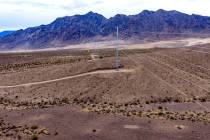
Last week’s dedication of Nevada’s third national monument, Tule Springs Fossil Beds, brought out a name from the past. News reports noted that Willard Libby, a Nobel chemist who developed carbon dating, had done some fossil work at Tule Springs in 1962.
But that is the least of what Libby did in Nevada.
He was one of the rent-a-scientists the federal government used to convince the public – particularly Westerners downwind of the atomic tests – that fallout produced by testing in Nevada was harmless. From 1945-52, Libby was a member of the Committee of Senior Reviewers of the Atomic Energy Commission. From 1954-59, he was a member of the commission itself.
“People have got to learn to live with the facts of life, and part of the facts of life are fallout,” Libby famously said at one point.
After Albert Schweitzer called for an end to atomic weapons in 1957, Libby responded with the usual commission line: “Exposures from fallout are very much smaller than those which would be required to produce observable effects in the population.”
This was nonsense, and was known as such at the time. Three weeks later, rain that fell in the District of Columbia was found to be hot with radiation. Libby was trotted out to say it was “not dangerous and nothing to be frightened about.”
He also said the radiation was from Soviet tests. The U.S. at that time had detonated 88 atomic tests, 50 of them in Nevada. The Soviets detonated fewer than 50.
Libby is credited by some with the scheme of measuring radiation in “sunshine units” to make it seem less dangerous to the public.
The lengths to which he would go to keep from the public the dangers of radiation could be seen in his advocacy of methods to secretly obtain human tissue for detection of radiation. In one secret meeting, the record of which was declassified in the 1990s, Libby said, “So human samples are of prime importance and if anybody knows how to do a good job of body snatching, they will really be serving their country. … I don’t know how to snatch bodies. In the original study on the Sunshine at Rand (the Rand Corp.) in the summer of 1953, we hired an expensive law firm to look up the law of body snatching.”
Although Libby and his colleagues misled the public, they also left scientists who told the public the truth – such as radiology expert Ray Lanier and biophysicist Theodore Puck – to twist in the wind when they were attacked by politicians and red-baited by the Hearst press.
The behavior of Libby and his Cold War allies in putting science in the service of government and ideology instead of truth, lends support to those industries today that try to undercut science. In their book “Merchants of Doubt,” Naomi Oreskes and Eric Conway have shown how rent-a-scientists have made the case for tobacco, for pesticides, against acid rain, and so on.
The efforts to undercut climate science, well funded by fossil fuel corporations and investors, and the efforts to discredit transgenic foods, well funded by the organic foods industry, find precedent in the Atomic Energy Commission scientists.
The fallout scientists makes it easier to suspect all scientists. Earlier this year, Heather Pilkington wrote about Downwinders afflicted in the fallout zones: “The story of the Downwinders is not a new one, but it does serve as a cautionary reminder in today’s times, when certain actions and products, such as fracking and genetically modified foods, are on the radar. People have repeatedly been told both are ‘safe,’ but when looking at the results of ‘safe’ in the Downwinders, ‘safe’ is a word that needs a whole lot of consideration.”
She’s right that we have to be cautious, and that’s unfortunate. We’re supposed to be able to trust scientists, and those who turn their loyalties over to government or commerce instead of science make that difficult to do.
Dennis Myers is a veteran Nevada journalist.